
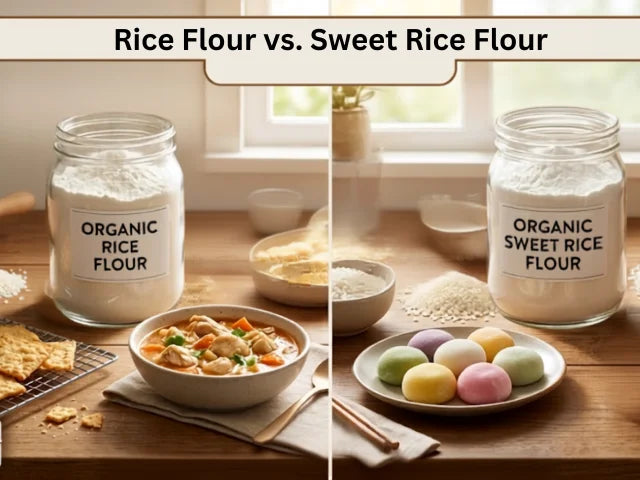
Standing in the gluten-free aisle staring at two bags that both say "rice flour" on the label is a familiar moment for anyone building out a gluten-free pantry. As demand for gluten-free flour options keeps climbing, rice flour and sweet rice flour have become two of the most popular whole-grain alternatives to wheat flour, and they're often mistaken for each other.
They're not. At SFMart, we get asked about the difference between these two flours often enough that it's worth breaking down clearly, because using the wrong one in a recipe can mean the difference between a light, crumbly texture and a dense, gummy one.
This guide covers what each flour actually is, how they differ in texture and nutrition, and how to use both effectively in your kitchen.
What Is Rice Flour?
Rice flour, sometimes called white rice flour, is made by grinding long-grain or medium-grain white rice into a fine powder. Because rice is one of the most widely grown and consumed crops in the world, rice flour is affordable, widely available, and a reliable everyday gluten-free flour.
It has a mild, slightly nutty flavor with almost no aroma, which is part of what makes it so versatile: it lets other flavors in a dish come through rather than competing with them. Its fine, slightly gritty texture makes it well suited for gluten-free baking, and it also works well as a thickener for soups, stews, and sauces. That said, rice flour is generally best combined with other gluten-free starches rather than used entirely on its own, since it lacks the binding properties that gluten normally provides in traditional baking.
Organic rice flour carries an added benefit here: it's processed without synthetic pesticides or chemical additives, which matters to anyone trying to keep their pantry as clean as the ingredients on the label suggest.
What Is Sweet Rice Flour?
Sweet rice flour, also known as glutinous rice flour, is ground from glutinous short-grain rice, more commonly known as sticky rice. The "glutinous" name refers entirely to the rice's sticky texture once cooked, not to gluten content. Despite the name, sweet rice flour contains no gluten at all.
It's also not actually sweet. Its flavor is mild, almost neutral, similar to rice flour, which again lets other ingredients take center stage. What sets sweet rice flour apart nutritionally and texturally is its starch composition: it's unusually high in amylopectin, the starch responsible for that chewy, clingy texture, and lower in amylose, the starch that keeps grains firm and separate. This is the same starch relationship that shows up in whole grains too. If you're curious how it plays out beyond rice, our guide on hulled millet vs. glutinous millet breaks down the same sticky-versus-non-sticky distinction in a different grain.
Sweet rice flour is a staple in traditional Asian desserts and snacks, most famously mochi, the chewy Japanese rice cake. It also absorbs water noticeably faster than rice flour, which is part of why it's less commonly used as a standalone baking flour and more often used to create a bouncy, chewy texture in specific dishes, or as a thickener where a jello-like consistency is the goal.
Rice Flour vs. Sweet Rice Flour: Key Differences
While both flours start from rice ground to a fine consistency, several real differences separate them:
- Type of rice used: Rice flour comes from medium- or long-grain white rice. Sweet rice flour comes from glutinous rice.
- Texture after cooking or baking: Rice flour produces a crisper, crunchier result. Sweet rice flour produces a moist, chewy, sticky result.
- Starch composition: Rice flour has a more balanced starch profile suited to structure. Sweet rice flour is starch-heavy and higher in amylopectin, which drives its stickiness.
- Water absorption: Sweet rice flour absorbs liquid faster and in greater quantity than rice flour, which affects how it behaves in recipes.
- Typical uses: Rice flour fits general gluten-free baking and thickening. Sweet rice flour is better suited to mochi, rice cakes, dumplings, and dishes calling for a distinctly chewy bite.
Neither flour should be swapped in for the other without adjusting the recipe, since the difference in starch and water absorption will noticeably change the final texture.
How to Use Rice Flour and Sweet Rice Flour
Both flours perform best when combined with other gluten-free flours rather than used entirely on their own.
Rice flour works well:
- Blended into gluten-free flour mixes for breads, cakes, and cookies
- As a thickener for soups, stews, and sauces
- In pancake and waffle batters for a lighter texture
Sweet rice flour works well:
- In mochi and traditional rice cakes
- As a binder or thickener where a smooth, jello-like consistency is desired
- In chewy brownies or other desserts where a dense, moist crumb is the goal
- Blended with all-purpose or other gluten-free flours, since it isn't typically used as a 100% wheat flour replacement on its own
Our organic sweet rice flour is a good starting point if mochi or chewy baked goods are on your list, while our organic brown rice flour offers a fiber-richer alternative to white rice flour for everyday baking and thickening. Both are part of our broader organic rice flours collection if you want to compare varieties side by side.
Final Thoughts
Rice flour and sweet rice flour may sound like variations of the same thing, but they behave differently enough in the kitchen that knowing the distinction matters. Rice flour is your everyday, all-purpose gluten-free flour for baking and thickening, while sweet rice flour is the one to reach for when a recipe calls for that unmistakable chewy, sticky texture.
Both are available in organic varieties, which makes them a cleaner alternative to conventional flour for daily cooking and baking. If you're building out your gluten-free pantry, SFMart carries both organic rice flour and organic sweet rice flour, and our full organic rice collection has premium, whole-grain varieties to round out your everyday meals. If you're also deciding which whole rice to keep alongside your flour, our guide on which rice is best for consumption is a useful next read.


