
"Ancient grain" has become one of the most quietly misleading phrases on a grocery shelf. It sounds inherently wholesome, and for a lot of grains, it is. But the label gives no indication of gluten content, and that gap trips people up constantly. Kamut, in particular, gets marketed with exactly the kind of health halo that makes newly diagnosed celiacs assume it must be a safer alternative to modern wheat.
It isn't. Kamut is wheat, just an older variety of it, and it contains just as much gluten as the loaf of bread it's supposedly healthier than. At SFMart, we get versions of this question regularly from customers navigating a new celiac diagnosis, so here's the direct, accurate answer: which ancient grains are actually gluten-free, and which ones are gluten in a nicer wrapper.
Quick Answer
Kamut, barley, and rye all contain gluten and are not safe for celiac disease, regardless of how they're marketed. Kamut is actually a variety of wheat (khorasan wheat), not a separate grain, so it contains the same gluten proteins as regular wheat. The ancient and modern grains that are naturally gluten-free include rice, millet, sorghum, quinoa, buckwheat, teff, amaranth, corn, and Job's tears.
Oats are naturally gluten-free too, but they're frequently cross-contaminated with wheat during growing and processing, so celiacs should only eat oats specifically labeled or certified gluten-free, and should check with their doctor first, since a small subset of people with celiac disease react to a protein in oats called avenin even when cross-contact isn't an issue.
Gluten 101: What Actually Contains It
Gluten is a family of proteins found specifically in wheat, barley, and rye, along with triticale, a wheat-rye hybrid. That's the actual list. Everything else that gets lumped in as a "gluten grain" is almost always a variety or derivative of wheat sold under a different name, which is exactly where the confusion around ancient grains comes from.
Kamut: Ancient Name, Modern Wheat Problem
Kamut is a trademarked name for khorasan wheat, an older, larger-grained wheat variety that's been marketed heavily as an ancient superfood alternative to modern bread wheat. Nutritionally, it does have some advantages, generally more protein and minerals per serving than standard wheat. But none of that changes the fact that it's still wheat. It contains gluten, full stop, and it is absolutely not safe for anyone with celiac disease or a wheat allergy, regardless of how it's positioned on a health food shelf. If you see Kamut, khorasan wheat, or Kamut flour on an ingredient label, treat it exactly the way you'd treat regular wheat flour.
Barley and Rye: The Other Two Everyone Misses
Barley is a genuinely common blind spot, largely because it doesn't look or taste like bread. It contains a gluten protein called hordein, and it shows up in more places than people expect: malt extract, malt vinegar, beer, and some soups and broths, in addition to the whole grain itself, which is used in dishes ranging from soups to Korean multigrain rice. Rye contains its own gluten protein, secalin, and turns up most often in rye bread, crackers, and some whiskeys. Both are unambiguously off-limits on a gluten-free diet, whole grain, flour, or flake form alike.
Which Ancient Grains Are Actually Gluten-Free?
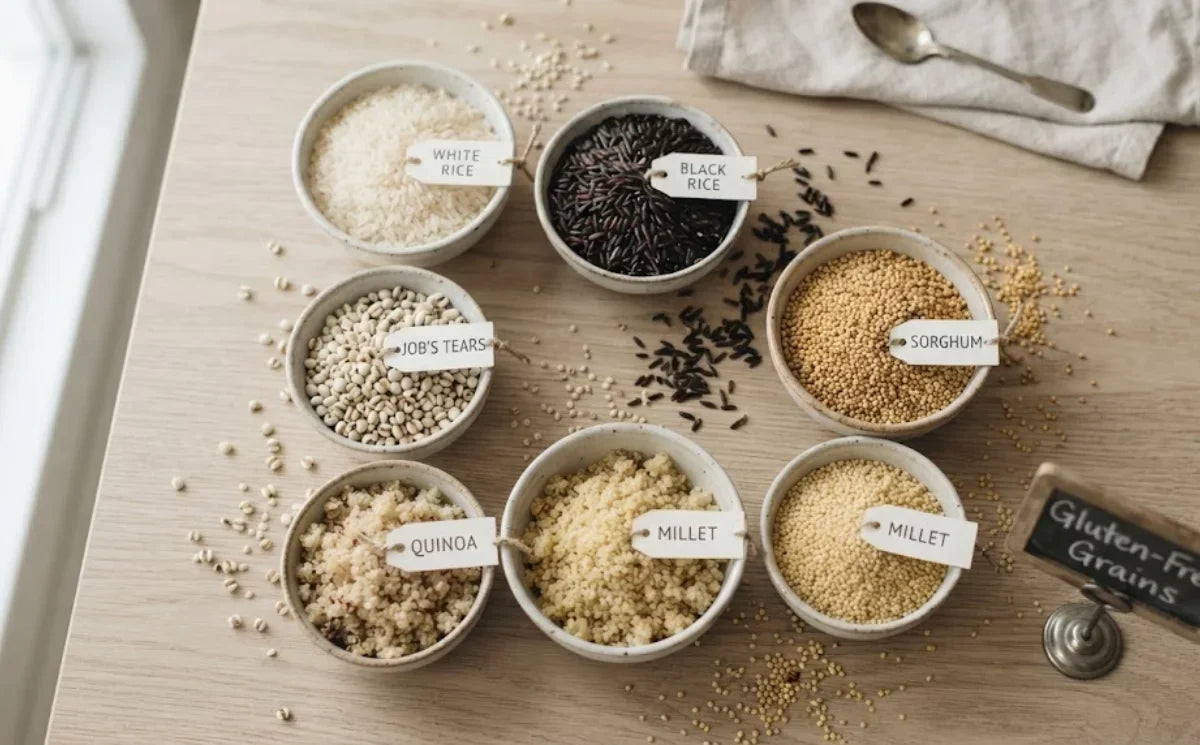
This is the encouraging part. Once you set aside wheat, barley, rye, and their various aliases, there's a genuinely long list of ancient and traditional grains that are naturally gluten-free and worth building a pantry around.
Sorghum is one of the most consistently recommended gluten-free grains among celiac resources, both nutritionally solid and naturally free of gluten proteins. Our organic glutinous sorghum works well as a chewy, higher-starch alternative to rice or barley in grain bowls and porridge.
Millet is another naturally gluten-free staple, light and easy to digest, and increasingly common in gluten-free grain blends. Our organic hulled millet cooks up quickly and works well anywhere you'd use couscous or a light rice.
Quinoa, technically a seed rather than a true cereal grain, is naturally gluten-free and brings a complete protein profile that most grains on this list don't offer. Our organic quinoa is a reliable, protein-forward base for a gluten-free grain bowl.
Rice, in all its forms, white, brown, black, and sweet, is naturally gluten-free and remains one of the most reliable staples for anyone managing celiac disease, since it rarely carries the same cross-contact risk that oats do. Our organic rice collection covers the full range if you're building a gluten-free pantry from the ground up.
Job's tears (also called coix seed, adlay, or Chinese pearl barley, despite the misleading name) are another naturally gluten-free ancient grain, closely related to corn rather than to actual barley. They carry a nutty, slightly chewy texture similar to pearl barley, which makes them a useful substitute in soups and grain dishes for anyone who misses barley's texture specifically. We go into more detail on this grain's other health properties in our guide on how coix seed supports your immune system.
Beyond what SFMart carries, buckwheat, teff, and amaranth round out the broader list of naturally gluten-free ancient grains worth knowing, even though they're less central to a Korean or Asian-style pantry.
A Necessary Caution: Cross-Contact Still Matters
Here's the part that gets glossed over in a lot of "gluten-free grains" content, and it matters enough to spell out clearly. A grain being naturally, botanically gluten-free doesn't automatically mean every bag of it on a shelf is safe for celiac disease. Cross-contact can happen at multiple points: shared farming equipment, shared transport, and, most commonly, shared processing or packaging facilities. Research has found that a meaningful percentage of naturally gluten-free grains tested in independent studies contained detectable gluten from cross-contact, not from the grain itself.
This is why the FDA's gluten-free labeling standard exists in the first place: a product labeled "gluten-free" in the US must test below 20 parts per million of gluten, a threshold considered safe for the overwhelming majority of people with celiac disease.
If a package doesn't carry that specific certification, it's worth checking the label for allergen or facility disclosures. As one practical example, worth being transparent about: our own organic Job's tears is manufactured in a facility that also processes wheat, alongside peanuts, soybeans, sesame, and perilla seeds.
The grain itself is naturally gluten-free, but that shared facility is exactly the kind of detail a strict celiac diet needs to account for. If your celiac disease requires zero cross-contact tolerance, look specifically for products certified gluten-free rather than relying on a grain's natural composition alone, and don't buy any grain, gluten-free or otherwise, from bulk bins, where scoops are frequently shared across bins.
If you're rotating gluten-free grains beyond the usual rice-and-quinoa routine, SFMart's whole-grain and flour lineup makes it easy to cover both the pantry and the mixing bowl. Start with the grains themselves: organic hulled millet for a light, fluffy base and organic glutinous millet when you want a stickier, chewier bite instead.
Pair either with organic glutinous sorghum for a heartier, more filling grain bowl, or reach for organic quinoa and its more colorful sibling, organic multicolor quinoa, when you want a complete-protein grain with genuine visual appeal on the plate. For something a little further off the beaten path, organic coix seed (Job's tears) brings a nutty, slightly chewy texture that's been a staple in Asian cooking for centuries.
And when you're ready to move from the stovetop to the oven, organic millet flour, organic milo sorghum flour, and organic white quinoa flour all bake up naturally gluten-free, whether you're making flatbreads, pancakes, or muffins. Together, this lineup covers everything from a simple weeknight side dish to a full gluten-free baking swap, all grown and milled without synthetic pesticides or chemical fertilizers.
One accuracy note worth flagging: the millet flour and Job's tears product pages both disclose they're manufactured in a facility that also processes wheat, peanuts, soybeans, sesame, and perilla seeds. The grains themselves are naturally gluten-free, but if this paragraph is going anywhere near celiac or strict gluten-free audiences, that shared-facility detail should stay visible rather than get smoothed over in the pitch.
Can Celiacs Eat Oats?
This is one of the most searched, and most genuinely nuanced, questions in gluten-free eating, and it deserves a direct answer rather than a blanket yes or no.
Oats are naturally gluten-free. The complication is twofold. First, oats are very commonly grown, harvested, and processed using the same equipment as wheat, barley, and rye, which means standard oats carry a real risk of cross-contact unless specifically labeled or certified gluten-free. Second, a small subset of people with celiac disease react to avenin, a protein found in oats themselves, even when cross-contact isn't a factor at all. Mayo Clinic and celiac disease organizations both recommend that people with celiac disease only eat oats and oat products specifically labeled gluten-free, and that they check with their doctor before adding oats back into their diet, since individual tolerance genuinely varies.
Gluten-Free Grains That Aren't Rice
Rice is the obvious, reliable default for a lot of gluten-free cooking, but leaning on it exclusively gets repetitive fast, and it isn't your only option. Sorghum, millet, quinoa, and Job's tears all offer a genuinely different texture and flavor profile from rice while remaining naturally gluten-free, which makes them worth rotating into a gluten-free diet both for variety and for the different nutrient profiles each one brings. Sorghum and Job's tears in particular scratch the chewy, heartier texture that a lot of people miss from barley or wheat berries once those are off the table.
A List of Grains Celiacs Can Eat Safely
As a starting reference, the following grains and pseudo-grains are naturally gluten-free:
- Rice (white, brown, black, sweet)
- Sorghum
- Millet
- Quinoa
- Job's tears (coix seed)
- Buckwheat
- Teff
- Amaranth
- Corn
- Oats (only if specifically labeled or certified gluten-free)
And the following must always be avoided on a celiac diet:
- Wheat, in all forms and varieties, including Kamut (khorasan wheat), spelt, einkorn, emmer, farro, durum, semolina, and bulgur
- Barley, including malt, malt extract, and malt vinegar
- Rye
- Triticale
Final Thoughts
The "ancient grain" label tells you almost nothing about gluten content, and Kamut is the clearest example of how that marketing gap can lead someone with celiac disease astray. The actual list to memorize is short: wheat, barley, and rye (and their many aliases) are out, while rice, sorghum, millet, quinoa, and Job's tears are genuinely, naturally gluten-free options worth building a varied pantry around.
If you're putting together a gluten-free pantry, SFMart's organic grain and organic rice collections cover most of the naturally gluten-free staples in this guide. For more on one of the lesser-known options covered here, our deeper dive into coix seed and its health benefits is worth reading next.
A Note on Medical Guidance
This article is intended as general nutrition information and is not a substitute for medical advice. Celiac disease management should always be guided by your physician or a registered dietitian familiar with your specific diagnosis and sensitivity level, particularly around cross-contact tolerance and whether oats are appropriate for your diet.


