
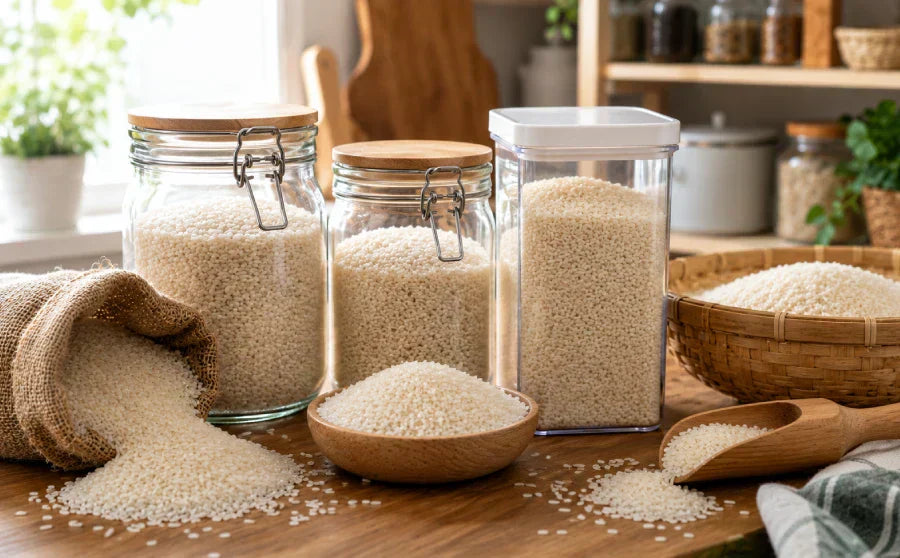
Rice is one of the most versatile pantry staples in American households. Whether you’re meal prepping for the week, stocking your pantry with organic staples, or buying in bulk to save money, you’ve probably wondered: Can rice go bad or expire?
The answer is yes. While dry rice has an impressive shelf life, it doesn’t last forever. The type of rice, how it’s stored, and whether it’s cooked or uncooked all determine how long it stays safe and maintains its quality.
In this guide, you’ll learn how long different types of rice last, how to tell if rice has gone bad, the best storage methods, and practical tips to reduce food waste while keeping your pantry stocked with fresh, high-quality grains.
Does Rice Expire?
Technically, rice doesn’t always “expire” on the date printed on the package. Instead, most packages have a best-by date, which indicates when the rice is expected to maintain its best flavor and texture.
If stored correctly, many types of dry rice remain safe to eat well beyond the best-by date. However, whole grain varieties such as brown or black rice contain natural oils that eventually become rancid, giving them a much shorter shelf life than white rice.
How Long Does Rice Last?
The shelf life depends on the variety and storage conditions.
|
Type of Rice |
Pantry Shelf Life |
|
White rice |
Up to 2–5 years when stored properly |
|
Brown rice |
About 6–12 months |
|
Black rice |
About 6–12 months |
|
Red rice |
About 6–12 months |
|
Cooked rice |
3–4 days in the refrigerator |
White rice lasts much longer because the bran and germ have been removed, reducing its natural oil content. Whole grain varieties retain these nutritious layers, which also makes them more susceptible to spoilage over time.
Why Does Rice Go Bad?
Several factors can shorten the shelf life of rice.
Moisture
Moisture is one of the biggest causes of spoilage. Even small amounts can encourage mold growth and bacteria.
Heat
Warm temperatures speed up the breakdown of natural oils found in whole grain rice.
Air Exposure
Oxygen gradually affects the flavor and freshness of rice, especially organic varieties that don’t contain preservatives.
Pantry Pests
Weevils, moths, and insects may infest improperly stored rice if containers aren’t sealed.
Does Organic Rice Go Bad Faster?
In many cases, yes.
Organic rice is produced without synthetic preservatives and is minimally processed. While this makes it an excellent choice for clean eating, proper storage becomes even more important to preserve freshness.
SFMart’s collection of organic rice, grains, beans, lentils, and flours is designed for wholesome home cooking, making airtight storage and stock rotation essential for maintaining quality over time. Choosing high-quality organic pantry staples and storing them correctly helps reduce food waste while preserving flavor and nutrition.
Signs Your Rice Has Gone Bad
Even if rice is within its best-by date, inspect it before cooking.
Discard dry rice if you notice:
- A sour or rancid smell
- Mold or discoloration
- Small insects or larvae
- Holes in the packaging
- Damp or clumped grains
For cooked rice, throw it away if it develops:
- A sour odor
- Slimy texture
- Visible mold
- Unusual discoloration
Never taste rice to determine whether it is spoiled.
Can Cooked Rice Go Bad?
Absolutely.
Cooked rice contains moisture, making it much more vulnerable to bacterial growth than dry rice.
For food safety:
- Refrigerate cooked rice within two hours of cooking.
- Store it in a sealed container.
- Eat it within 3–4 days.
- Reheat only once and ensure it reaches 165°F (74°C) before eating.
What’s the Best Way to Store Rice?
Proper storage can significantly extend the shelf life of rice.
For everyday storage:
- Use airtight glass or food-grade plastic containers.
- Keep rice in a cool, dry, dark pantry.
- Avoid storing it near heat sources or direct sunlight.
- Label containers with the purchase date.
- Use older rice before opening new packages.
For bulk storage, vacuum-sealed bags or Mylar bags with oxygen absorbers provide excellent long-term protection.
Can You Freeze Rice?
Yes.
Freezing is an excellent option for both uncooked and cooked rice.
For uncooked rice, freezing can help eliminate insect eggs before transferring it to long-term storage containers.
For cooked rice, cool it quickly, divide it into portions, and freeze it in airtight freezer bags. Frozen cooked rice maintains good quality for several months when stored properly.
Rice Storage Tips for Other Pantry Staples
The same storage principles apply to many pantry essentials.
Organic grains, flours, beans, and lentils should all be kept in airtight containers away from moisture and excessive heat. Since many organic products are minimally processed, proper storage helps preserve their natural flavor, texture, and nutritional value.
Organizing pantry staples by purchase date and following a first-in, first-out system makes it easier to minimize waste and enjoy fresher ingredients throughout the year.
Common Myths About Rice Expiration
Myth: Dry rice lasts forever.
Not always. White rice has an exceptionally long shelf life, but whole grain rice varieties eventually become rancid because of their natural oils.
Myth: The expiration date means the rice is unsafe.
Most packages display a best-by date rather than a safety deadline. Rice may still be safe beyond that date if stored correctly and shows no signs of spoilage.
Myth: Refrigerating dry rice is always necessary.
Most dry rice stores perfectly well in a cool pantry. Refrigeration is more beneficial for brown rice or in humid climates where spoilage occurs more quickly.
Related Resources from SFMart
If you’re looking to get the most from your pantry staples, SFMart offers several helpful guides that complement this topic.
If you’re planning to buy rice in bulk, the blog “How to Store Rice Long Term: Storage Tips for Fresh Grains” explains the best containers, storage environments, and techniques for preserving rice for months or even years. It’s a valuable companion if you want to reduce food waste and keep organic grains fresh.
If you’re choosing between conventional and organic pantry staples, the article “Is Organic Rice Good for You?” explores the nutritional benefits of organic rice and how different varieties fit into a healthy diet. It pairs well with understanding why whole grain rice has a shorter shelf life.
You may also find “Which Rice Is Best for Consumption?” helpful when deciding between brown, white, black, and red rice based on nutrition, cooking preferences, and everyday use.
Final Thoughts
So, can rice go bad or expire?
Yes; but proper storage makes all the difference. While white rice can stay fresh for years under ideal conditions, whole grain varieties like brown, black, and red rice have shorter shelf lives because of their natural oils. Cooked rice requires even greater care and should always be refrigerated promptly and consumed within a few days.
Whether you’re stocking up on organic rice, grains, flours, lentils, or beans, storing pantry staples correctly helps preserve freshness, reduce waste, and ensure you always have wholesome ingredients ready for your next meal.


