
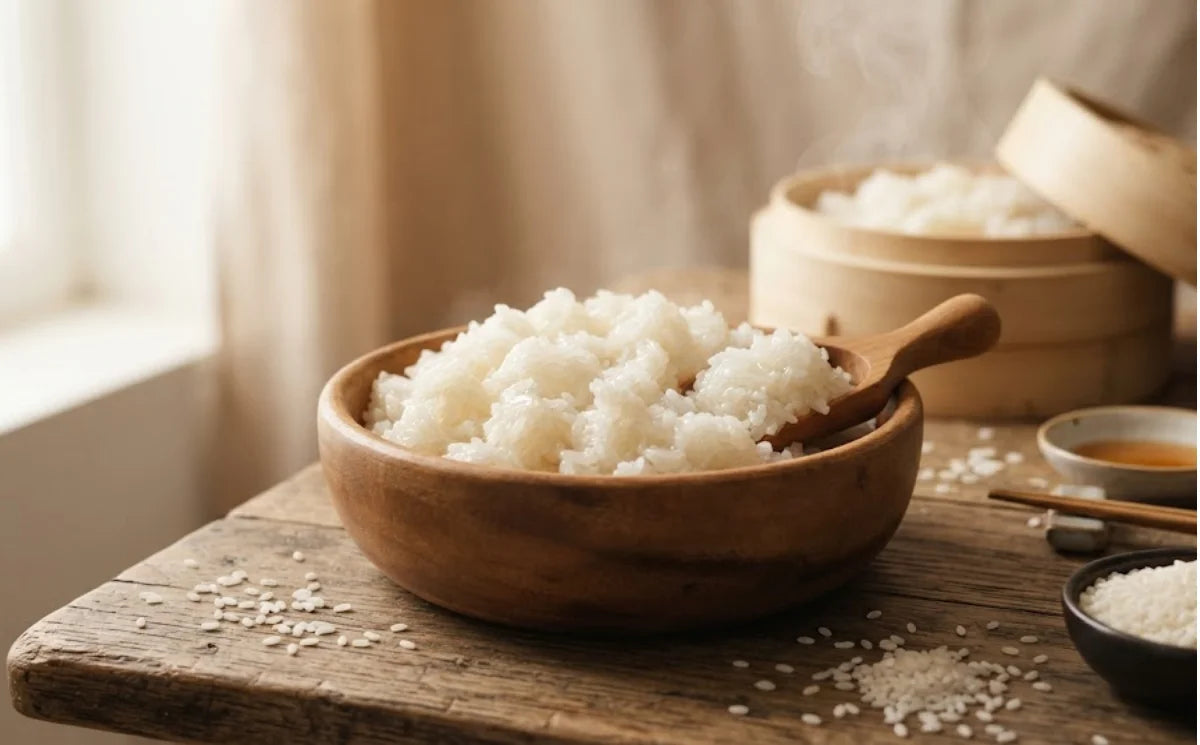
Rice is one of the world's most popular staple foods, but not all rice varieties are the same. One type that often raises questions is glutinous rice. Despite its name, many people are surprised to learn that it does not contain gluten. Instead, the word glutinous refers to its sticky, glue-like texture after cooking. What you're searching for as 'glutinous rice' is the same product we sell in SFMart as organic sweet rice’.
Known as sweet rice or sticky rice, glutinous rice is a pantry staple in many Asian cuisines. It's used to make everything from sushi-inspired dishes and savoury rice dumplings to desserts like mochi and mango sticky rice.
Whether you're trying glutinous rice for the first time or looking for high-quality organic options, choosing premium grains makes all the difference. At SFMart, you'll find a carefully selected range of organic sweet rice, along with organic grains, beans, lentils, and flours that help you prepare authentic meals at home.
In this guide, we'll explain exactly what glutinous rice is, how it's different from other rice varieties, its nutritional value, health benefits, cooking tips, and the best ways to use it.
What Is Glutinous Rice?
Glutinous rice is a short- or medium-grain rice variety that becomes soft, chewy, and sticky when cooked. It has been cultivated in East and Southeast Asia for thousands of years and remains an essential ingredient in cuisines from countries such as China, Japan, Korea, Thailand, Laos, and Vietnam.
Despite its name, glutinous rice is completely gluten-free. The name comes from its sticky consistency, not because it contains gluten.
Unlike regular rice, glutinous rice contains very little amylose and a high amount of amylopectin. This unique starch composition is responsible for its signature chewy texture.
You'll often hear glutinous rice referred to as:
- Sweet rice
- Sticky rice
- Waxy rice
- Mochi rice (Japanese varieties)
These names generally describe the same family of rice, although specific varieties may differ depending on the country and recipe.
Does Glutinous Rice Contain Gluten?
This is one of the most searched questions about glutinous rice.
The answer is no.
Glutinous rice is naturally gluten-free. It does not contain the wheat protein known as gluten.
The term glutinous simply describes its sticky texture after cooking.
People following a gluten-free diet can generally enjoy glutinous rice, provided it hasn't been processed or packaged alongside gluten-containing ingredients. Always check product labels if you have coeliac disease or severe gluten sensitivity.
Why Is It Called Glutinous Rice?
The word "glutinous" originates from the Latin word for glue.
When cooked, these rice grains cling together because of their high amylopectin content.
This sticky consistency makes it perfect for recipes where the rice needs to hold its shape, such as:
- Rice balls
- Dumplings
- Sushi-style preparations
- Mochi
- Stuffed lotus leaves
- Sticky rice desserts
Why Is Glutinous Rice Sticky?
Rice contains two natural starches:
- Amylose
- Amylopectin
Regular long-grain rice contains more amylose, which keeps the grains separate after cooking.
Glutinous rice contains almost no amylose and is composed almost entirely of amylopectin.
As the starch absorbs water during cooking, the grains become soft, chewy, and naturally sticky.
This texture is exactly what makes glutinous rice unique.
Types of Glutinous Rice
White Glutinous Rice
The most common variety, white glutinous rice, has a mild flavour and soft texture. It's commonly used for desserts, dumplings, and traditional Asian meals.
If you're looking for premium-quality white sweet rice, SFMart offers Glutinous Rice that's ideal for both savoury and sweet recipes.
Brown Glutinous Rice
Brown sweet rice retains its bran layer, giving it a slightly nutty flavour and more fibre than white varieties.
It's a good option for those looking to include more whole grains in their diet.
Black Glutinous Rice
Sometimes called purple sticky rice, this variety is naturally rich in anthocyanins, the same antioxidants found in blueberries.
It's commonly served in puddings and desserts throughout Southeast Asia. This sticky-vs-non-sticky distinction isn't unique to rice either, grains like millet follow a similar pattern. See our comparison on hulled millet vs glutinous millet.
Glutinous Rice vs Sticky Rice
Many people think these are different products.
They're actually the same thing.
"Sticky rice" is the everyday term, while "glutinous rice" is the more technical name.
Glutinous Rice vs Sushi Rice
Although both glutinous and sushi rice become slightly sticky after cooking, they aren't interchangeable.
|
Glutinous Rice |
Sushi Rice |
|
Naturally very sticky |
Moderately sticky |
|
High amylopectin |
Balanced starch |
|
Used for desserts and sticky rice dishes |
Used for sushi |
|
Usually steamed |
Usually boiled |
Is Glutinous Rice Healthy?
Like most organic rice varieties, glutinous rice can be part of a balanced diet when enjoyed in moderation.
It provides:
- Complex carbohydrates
- Small amounts of protein
- B vitamins
- Manganese
- Selenium
Brown glutinous rice also offers more dietary fibre than white glutinous rice.
For balanced meals, pair glutinous rice with vegetables, lean protein, beans, or lentils.
SFMart offers a wide range of organic beans, lentils, and whole grains that complement sticky rice perfectly.
Nutrition
One cooked cup typically contains:
- Calories: approximately 170–200
- Carbohydrates: 36–45g
- Protein: 3–4g
- Fat: less than 1g
- Fibre: varies depending on the variety
Popular Ways to Use Glutinous Rice
Glutinous rice is incredibly versatile, showing up in desserts, savory dishes, and even baking. Its neutral flavor makes it just as suitable for savory meals as it is for sweets.
In Asian Desserts
- Mango sticky rice
- Japanese mochi
- Korean sweet rice dishes (tteok)
- Rice cakes
- Sweet porridge
In Savory Dishes
- Sticky rice dumplings
- Chinese zongzi
- Thai sticky rice with grilled meats
- Stuffed vegetables
In Baking
Glutinous rice flour (made from ground glutinous rice) is a staple in gluten-free baking, giving cakes and pastries a soft, chewy texture. Curious how it compares to regular rice flour? Check out our guide on rice flour vs sweet rice flour.
How to Cook Glutinous Rice
For the best texture:
- Rinse the rice thoroughly.
- Soak it for 6–8 hours or overnight.
- Drain the water.
- Steam for 20–30 minutes.
- Fluff gently before serving.
Steaming creates the authentic chewy texture that glutinous rice is known for.
Where to Buy Organic Glutinous Rice
The quality of your rice plays an important role in the final dish. Choosing organically grown rice can also be a great option if you prefer products cultivated without synthetic pesticides or fertilisers.
At SFMart, you can shop a selection of organic sweet rice that's perfect for making traditional Asian recipes at home. While you're browsing, you can also explore the store's collection of organic rice, beans, lentils, grains, and rice flours to stock your pantry with wholesome ingredients for everyday cooking.
If you're interested in learning more about rice and pantry staples, SFMart also shares helpful guides such as The Most Popular Beans in the U.S., Is Organic Rice Good for You? and How to Store Rice Long Term making it easier to choose the right ingredients for your meals.


