
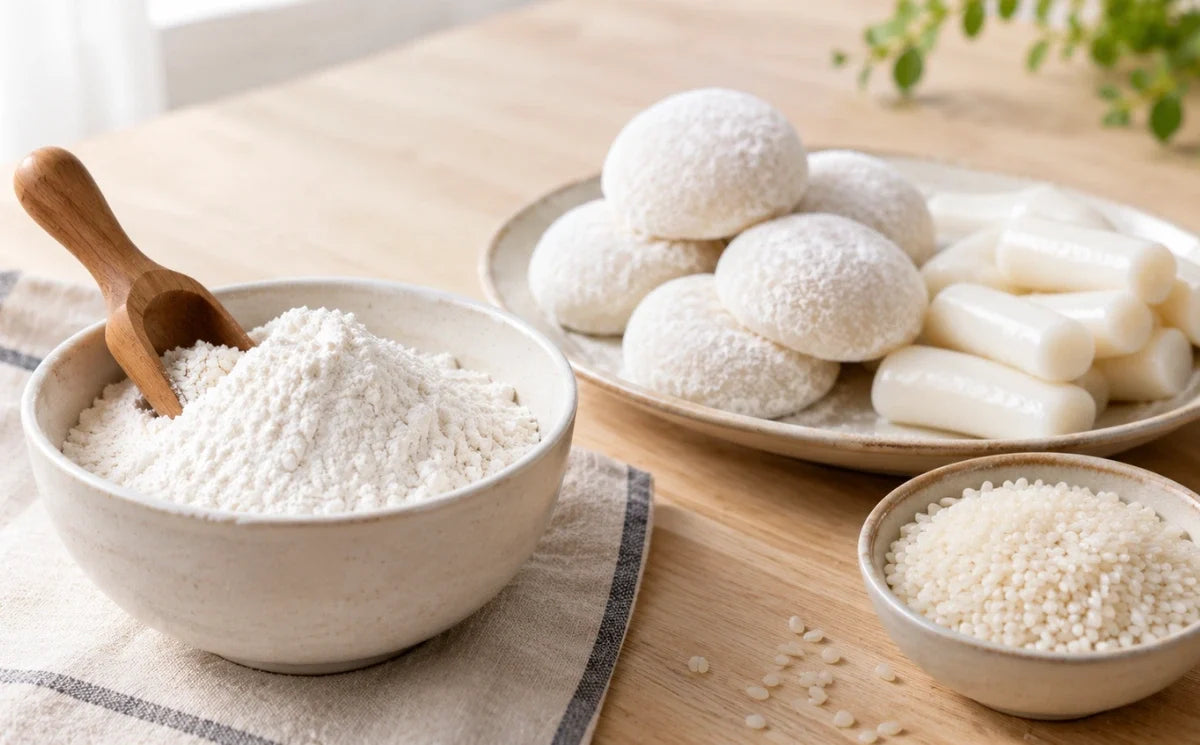
If you've ever tried to make Korean rice cakes, mochi or a chewy gluten-free dessert, you've probably come across sweet rice flour, also sold as chapssal-garu (찹쌀가루), glutinous rice flour or mochiko. It looks just like regular rice flour, but it behaves completely differently. This guide by SFMart explains what sweet rice flour is made of, how it differs from regular rice flour, what it's best used for, whether it's gluten-free, and what to use if you can't find it.
Quick Answer
Sweet rice flour is a fine white flour made from glutinous (sticky) rice. In Korean it's called chapssal-garu, in Japanese mochiko, and it's also sold as glutinous rice flour. Despite the name, it isn't sweet and contains no gluten. Because glutinous rice is high in a sticky starch called amylopectin, the flour turns soft, chewy and elastic when cooked, which makes it the best flour for mochi, tteok (Korean rice cakes) and dumplings. Regular rice flour is not a good substitute for those recipes, but works well for crisp batters and as part of a gluten-free baking blend.
What Is Sweet Rice Flour Made Of?
Sweet rice flour is made from glutinous rice, a short-grain variety also called sweet rice, sticky rice or waxy rice. The rice is milled into a very fine powder. Our guide to what glutinous rice is explains why it's so sticky: it's made up of almost entirely amylopectin and very little amylose, so the starch clings together as it cooks instead of staying separate and fluffy.
The result is a flour that turns chewy, sticky and slightly stretchy once it's cooked with water, whether it's steamed, boiled, baked or pan-fried.
Sweet Rice Flour vs Glutinous Rice Flour vs Chapssal-Garu vs Mochiko
These names can be confusing, but they largely refer to the same type of flour:
|
Name |
Where it's used |
What it means |
|
Sweet rice flour |
US labels and recipes |
Flour from glutinous (sweet) rice |
|
Glutinous rice flour |
Many Asian groceries |
The same flour, named for the sticky texture |
|
Chapssal-garu (찹쌀가루) |
Korean |
Korean name for sweet rice flour |
|
Mochiko |
Japanese |
The Japanese word for sweet rice flour; also a well-known brand style |
|
Shiratamako |
Japanese |
Made from the same rice, but coarser and granular, used for very smooth, bouncy dumplings |
Mochiko is milled much finer than shiratamako, so while both are glutinous rice flours, they aren't always interchangeable in a recipe. Check your recipe to see which it calls for.
How Is Sweet Rice Flour Different from Regular Rice Flour?
Regular rice flour (called mepssal-garu in Korean) is made from ordinary non-glutinous rice, which has more amylose and less amylopectin. That means:
- Texture: regular rice flour gives a lighter, crisper, slightly sandy result. Sweet rice flour gives a chewy, sticky, elastic one.
- Behavior with water: sweet rice flour absorbs water quickly and becomes gluey, while regular rice flour stays looser.
- Best uses: regular rice flour suits batters, noodles, shortbread and gluten-free blends. Sweet rice flour suits mochi, tteok and chewy desserts.
They are not interchangeable. In Korean cooking, for example, sweet rice flour is used for chewy chapssal-tteok and gyeongdan, while regular rice flour is used for songpyeon, where the dough needs to be firm enough to shape.
For a full side-by-side, see our article on rice flour vs sweet rice flour.
Is Sweet Rice Flour Gluten-Free?
Yes. Sweet rice flour is naturally gluten-free. "Glutinous" describes the glue-like stickiness of the cooked rice, not the presence of gluten, and rice doesn't contain gluten. If you have celiac disease or a serious sensitivity, check the label for a gluten-free claim, because flours can be cross-contaminated during processing. SFMart's organic sweet rice flour lists USDA Organic, CCOF, gluten-free and non-GMO marks on its product page, and notes it may be processed in a facility that handles other allergens.
What Is Sweet Rice Flour Best Used For?
1. Mochi and Japanese Sweets
Mochiko is used for dango (rice dumplings that are shaped, steamed or boiled, then served with a sweet sauce or filling) and for homemade mochi. If you want to know the best flour for mochi, sweet rice flour (mochiko) is the answer, because regular rice flour or cornstarch won't give you the chew.
2. Tteok (Korean Rice Cakes)
Chapssal-garu is the base for many Korean rice cakes, including chapssal-tteok (Korean-style mochi), injeolmi and gyeongdan (rice cake balls). The same flour is also used to make a rice porridge for kimchi, which helps the seasoning paste cling to the cabbage.
3. Dumplings and Sweet Soups
Chinese-style sweet rice dumplings and sweet soups use glutinous rice flour for a soft, bouncy wrapper. See the other classic uses of the rice itself in our guide to glutinous rice.
4. Gluten-Free Baking
Sweet rice flour can add softness and chew to gluten-free cakes, cookies and muffins. It's best used as part of a flour blend with other gluten-free flours or starches, not as a one-to-one replacement for wheat flour.
5. A Gluten-Free Thickener
Sweet rice flour is a popular gluten-free thickener for soups, sauces and gravies. Mix it with a little cold water first, then stir it in, so it doesn't clump.
How to Use Sweet Rice Flour
- Mix with liquid first: It absorbs water quickly and can clump if added dry to hot liquid.
- Cook it thoroughly: Raw dough made with sweet rice flour should be steamed, boiled, microwaved or baked until it's cooked through and looks translucent or set, depending on the recipe.
- Use the right flour for the recipe: If a recipe doesn't say "glutinous" or "sweet", it probably wants regular rice flour.
- Follow a tested recipe for ratios: Water, sugar and starch amounts matter a lot in mochi and tteok, so it's best to use a trusted recipe.
- Work with starch on your hands: Sticky doughs are easier to shape with a little starch dusted on the surface.
Can I Substitute Regular Rice Flour for Sweet Rice Flour?
Not for recipes that rely on chew, such as mochi, tteok or dango. Regular rice flour is too low in sticky starch, so you'll get a crumbly, dry or firm result instead of a stretchy one.
What you can substitute depends on the recipe:
- Mochi, tteok and dumplings: use another glutinous rice flour, such as mochiko or chapssal-garu. There isn't a true substitute. Cornstarch can't replace glutinous rice flour in mochi.
- Thickening soups and sauces: regular rice flour, cornstarch or tapioca starch can work, though the texture and shine will differ.
- Kimchi porridge: some cooks use regular rice flour if sweet rice flour isn't available, but the paste will be less sticky.
- Gluten-free baking: follow the blend in your recipe. If it calls for sweet rice flour, substituting regular rice flour will usually make the result less soft and chewy.
If you want the reverse, using sweet rice flour in place of regular rice flour, it generally makes baked goods denser and gummier, and songpyeon dough too sticky to shape.
Is Mochiko the Same as Sweet Rice Flour?
Mochiko is the Japanese name for sweet rice flour, made from short-grain glutinous rice (mochigome). In practice, sweet rice flour and mochiko can be used interchangeably in most recipes, though brands vary in fineness. Shiratamako is a different, coarser glutinous rice flour, so don't assume it behaves the same way.
How to Store Sweet Rice Flour
Keep sweet rice flour in an airtight container in a cool, dry place, away from moisture and direct sunlight. Check the date on the package, as fresher flour gives better results. Our guide on how to store rice long term has more storage tips.
Where to Buy Organic Sweet Rice Flour
SFMart carries organic sweet rice flour (1 lb), as well as regular organic rice flour and organic brown rice flour. Browse the full organic rice flour collection, the organic sweet glutinous rice collection for whole grain sweet rice, or the wider powder and flour collection.
Per 30 g serving, SFMart lists its sweet rice flour at about 110 calories, 25 g carbohydrates, 2 g protein and no fat or fiber.
Final Thoughts
Sweet rice flour is one of the most useful flours to keep in a gluten-free or Korean and Japanese pantry. Know your names (chapssal-garu, mochiko, glutinous rice flour), remember that it's not interchangeable with regular rice flour, and you'll get the soft, chewy texture that mochi, tteok and dumplings are known for.
Ready to cook? Shop SFMart's organic rice flours and organic sweet glutinous rice, or learn more about hulled millet vs glutinous millet, another sticky-grain pairing.


