
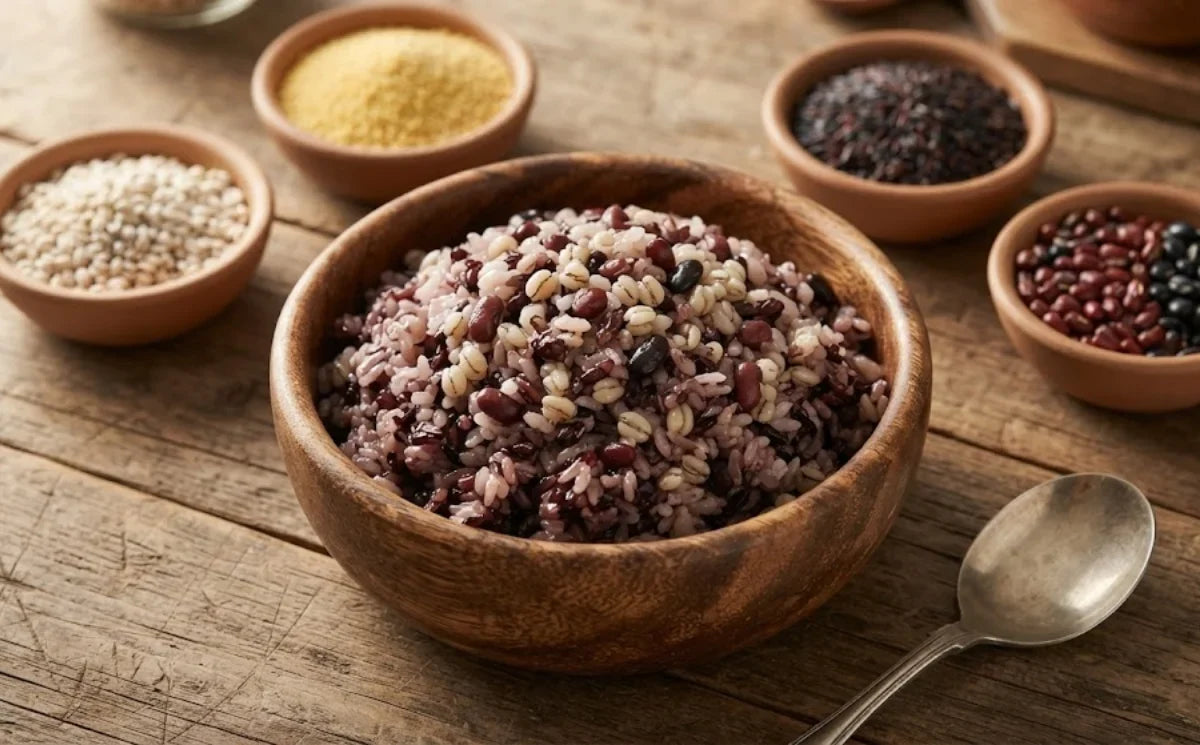
If you've ever bitten into a bowl of homemade japgokbap and hit a hard, chalky piece of barley sitting right next to grains of rice that have gone completely mushy, you're not doing anything wrong exactly, you're just running into the single biggest challenge of Korean multigrain rice: every grain in the pot cooks at a different rate. At SFMart, we hear this exact frustration constantly from customers who loved the idea of japgokbap after reading about its fiber and nutrition benefits, then got a pot of unevenly cooked grains on the first try and gave up.
The good news is that this is a fixable, well-understood problem, not a sign you need better technique overall. This guide breaks down exactly why multigrain rice fails, what's happening with each individual grain, and how to fix your ratios, soaking times, and cooking method so your next pot comes out evenly tender, not a mix of crunchy and gluey.
Quick Answer
The reason multigrain rice comes out hard, mushy, or both in the same pot is that different grains absorb water at different speeds, but most home cooks soak and cook them all together for the same amount of time. Rice, especially glutinous rice, cooks quickly and needs little to no soaking. Denser grains like barley and sorghum have a tough outer bran layer and need 4 to 6 hours of soaking, or longer, before they'll cook through in the same window as the rice. Beans need the longest soak of all, both for texture and food safety. The fix is to treat each grain in your mix as its own variable: soak the dense grains and beans separately and longer, rinse and soak the rice only briefly (or not at all), then combine everything with the right water ratio for your specific cooking method, whether that's stovetop, rice cooker, or Instant Pot.
Why Multigrain Rice Fails: One Pot, Different Cooking Speeds
Japgokbap, Korean multigrain rice, typically combines a base of white or brown rice with a rotating cast of denser whole grains and legumes: barley, black rice, millet, sorghum, and beans like black beans, kidney beans, or adzuki beans. Each of these has a completely different structure. Rice grains are relatively soft and low in fiber compared to barley or sorghum, which still carry more of their original bran layer. That bran acts almost like a barrier, slowing down how quickly water can penetrate the grain.
When everything goes into the pot dry, or soaks together for the same short window, the rice reaches doneness well before the barley or sorghum does. If you then add more water or cook longer to finish off the tougher grains, the rice, which was already done, breaks down further and turns gluey or mushy. That's the mechanism behind the classic "hard barley, mushy rice" complaint in almost every multigrain rice recipe review online. The fix isn't more water or more time across the board, it's giving each grain the individual head start it actually needs.
A Grain-by-Grain Breakdown
White and Sweet Rice
Both cook quickly and don't need meaningful soaking. A quick rinse to remove surface starch is enough; if you want to soak, 15 to 30 minutes is plenty. Oversoaking white rice actually works against you here, since it will be fully hydrated and ready to overcook well before your denser grains catch up. The same logic applies if you're using sweet rice in your mix, since it also hydrates and cooks fast.
Brown Rice
Brown rice sits in between white rice and the tougher whole grains. It benefits from a 30-minute to 1-hour soak, since its bran layer is intact but not as dense as barley's. If you're using organic brown rice as your base instead of white rice, plan on it needing roughly the same soak time as your barley, not the shorter soak white rice gets away with.
Barley: Pearled, Pressed, and Hulled Are Not the Same
This is where most multigrain rice goes wrong, because "barley" isn't one ingredient with one cook-time.
- Pearled barley has had its outer hull and bran polished away, so it cooks faster, generally in 25 to 30 minutes on the stovetop, but it isn't considered a true whole grain since much of its fiber has been removed in processing. Our organic pearled barley is a reliable, faster-cooking option if evenness across the pot is your priority.
- Pressed barley is steamed and flattened, similar to how rolled oats are made from whole oat groats. That flattening process shortens the cooking time noticeably compared to whole pearled barley, while still holding its texture and absorbing flavor. This is genuinely the single most useful fix if barley keeps coming out hard in your pot, since the flattening does most of the work that a long soak would otherwise need to do. McCabe Organic Pressed Barley is available in 2lb, 3lb, and 10lb sizes, all the same California-grown barley, so it's worth sizing up once you know it's solved your texture problem.
- Baby pearled barley (쌀보리) is a smaller, more compact pearled barley variety popular in Korean cooking, sometimes labeled "rice barley" for how closely its size and shape resemble rice grains once cooked. It still benefits from a few hours of soaking before cooking, similar to standard pearled barley, but its smaller size means it tends to blend into a rice-based mix more seamlessly than the larger pearled barley grain. Our organic baby pearled barley is worth trying if you want barley's texture without individual grains standing out visually against the rice.
- Hulled barley retains its bran and germ, making it the true whole-grain version, but it's also the densest and slowest to cook, generally needing a full 4 to 6 hour soak, or overnight, and 45 to 60 minutes of active cooking time even after soaking. Our organic hulless barley is the true whole-grain version if you want to build in the longer soak on purpose.
If your barley keeps coming out hard while everything else is done, the most likely culprit is using hulled barley without soaking it long enough, or without accounting for the fact that it simply needs more time than pearled or pressed barley in the same recipe.
Black Rice and Colored Rice Blends
Black rice, sometimes called forbidden rice or heukmi, has a tough outer bran layer similar to brown rice and needs a comparable soak, generally 30 minutes to an hour. It's also concentrated in color and flavor, so most japgokbap recipes recommend keeping it under roughly 20 percent of your total grain mix, since too much turns the whole pot an overpowering deep purple with a heavier, earthier taste. If you'd rather skip measuring this out yourself, McCabe Organic Mixed Barley & Black Rice comes pre-portioned to a workable ratio. If you'd rather add plain organic black rice yourself and control the ratio, that's an option too.
Millet
Millet is one of the lighter, faster-cooking grains in a typical multigrain mix, generally needing only a 30-minute soak, if that. It's a forgiving addition if you're worried about overcomplicating your soak schedule. Our organic hulled millet cooks up light and fluffy in under 20 minutes once soaked, which makes it easy to add without throwing off your overall timing. If you're after a chewier, stickier bite instead, McCabe Organic Glutinous Millet (차조) is the waxy variety, closer in behavior to sweet rice than to hulled millet, and it holds together well in a mixed pot rather than staying loose and separate.
Sorghum
Sorghum behaves more like barley than like rice: it's dense, chewy, and needs a real soak, generally 4 to 6 hours minimum, to cook through evenly in the same pot as your rice. Skipping this step is one of the more common reasons sorghum specifically turns up hard and chalky in a finished bowl. McCabe Organic Glutinous Sorghum has a stickier, higher-starch profile that holds together well once properly soaked, closer to the texture of glutinous rice.
Beans and Legumes
Beans need the longest lead time of anything in the pot, both for texture and for food safety, since raw or undersoaked beans, particularly kidney beans, can retain compounds that are harder to digest if not properly soaked and cooked. Plan on 6 to 12 hours of soaking for beans like black beans, adzuki beans, or kidney beans. Older, drier beans may need the longer end of that range or slightly more active cooking time. Our organic red lentils are one exception worth knowing, since lentils generally don't require soaking and cook in 15 to 20 minutes, making them a lower-effort way to add legume protein to a mix without extending your prep time.
Do You Need to Soak Barley Before Cooking With Rice?
For pearled or pressed barley, a soak isn't strictly required, but it noticeably improves evenness, especially when it's cooking alongside quicker grains like white rice. For hulled barley, soaking is close to essential if you want it to finish in the same window as the rest of your pot rather than staying noticeably firmer than everything around it.
Water Ratios for Multigrain Rice
Water ratios shift depending on your cooking method, and getting this wrong is the other major reason multigrain rice comes out too dry or too mushy.
- Stovetop: A general starting ratio is 1 part total grain mix to roughly 1.2 to 1.3 parts water, slightly more than a standard white rice ratio, since the denser grains and beans absorb more liquid.
- Rice cooker: Most rice cookers with a mixed grain or brown rice setting use a similar ratio to stovetop cooking, generally 1:1.2, though it's worth checking your specific model's guidance since absorption rates vary by machine.
- Instant Pot: This is where the ratio actually drops. Because pressure cooking loses far less water to evaporation than stovetop or standard rice cooker methods, most Instant Pot japgokbap recipes use a lower ratio of around 1 part grain mix to 0.8 to 0.9 parts water, noticeably less than the 1:1 or higher ratio used for stovetop cooking. Using a stovetop ratio in an Instant Pot is a common reason multigrain rice comes out mushy in a pressure cooker specifically.
Multigrain Rice in the Instant Pot Without Overnight Soaking
If overnight soaking isn't realistic for your schedule, the Instant Pot genuinely helps here, since pressure cooking can compensate for a shorter soak by cooking denser grains more thoroughly than stovetop methods can in the same amount of time. A workable approach:
- Rinse rice and quicker grains (millet, pressed barley) with no soak needed, or a brief 15 to 30 minute soak if you have time.
- Give barley, sorghum, and black rice at least a 1 to 2 hour soak if you're short on time, understanding that a longer soak still produces more even results.
- Always soak beans separately for several hours minimum, since pressure cooking alone doesn't fully substitute for adequate bean soaking.
- Combine everything with a 1:0.8 to 1:0.9 grain-to-water ratio.
- Cook on high pressure for 18 to 20 minutes, then allow a natural pressure release rather than a quick release, which gives the denser grains extra time to finish absorbing residual steam and moisture.
Common Mistakes That Cause Hard or Mushy Multigrain Rice
- Soaking everything together for the same amount of time, which leaves dense grains undersoaked while rice is fully hydrated and ready to overcook.
- Using a stovetop water ratio in an Instant Pot, which consistently produces mushy results since pressure cooking needs less water.
- Skipping the soak on hulled barley or sorghum specifically, the two grains most likely to stay hard even after a full cook cycle.
- Using too much black rice or sweet rice, which can turn the texture gummy if it makes up more than roughly 20 percent of your total mix.
- Quick-releasing pressure instead of letting it release naturally, which can leave denser grains slightly underdone even when the timing was otherwise correct.
Building Your Own Japgokbap Mix (Without Overthinking It)
A dependable starting ratio for a homemade mix is roughly 2 parts rice to 1 part whole grains to 1 part beans or legumes, adjusted to taste over time. If measuring out five or six separate ingredients isn't realistic on a weeknight, a pre-mixed blend solves the ratio problem entirely. Our 8 Mixed Grain blend combines rice, sweet rice, pearled barley, and four bean varieties in one bag, already balanced to cook evenly together, which removes most of the soaking-time guesswork covered in this guide. If you'd rather build your own barley pairing without buying full-size bags of each, our grain bundle multipacks, like the pressed barley and baby pearled barley 2-pack, are a practical way to compare two barley textures side by side before committing to a larger bag of either. For more on why this style of rice is worth the effort in the first place, our companion guide on Korean multigrain rice mix benefits covers the nutritional case in more detail.
Final Thoughts
Hard barley sitting next to mushy rice isn't a sign your multigrain rice technique needs an overhaul, it's almost always a soaking and ratio mismatch between grains that cook at genuinely different speeds. Once you start treating barley, sorghum, millet, and beans as separate variables rather than one uniform "grain mix," the fix is mostly just planning your soak times a little further ahead.
If you'd rather skip the grain-by-grain math on your first few attempts, SFMart's pre-portioned blends, including the 8 Mixed Grain, Mixed Barley & Black Rice, and grain bundle multipacks, are built with workable ratios already in mind. For everything else, our organic grain, organic rice, and organic lentils and beans collections have the individual components covered in this guide if you'd rather build your own mix from scratch.


