
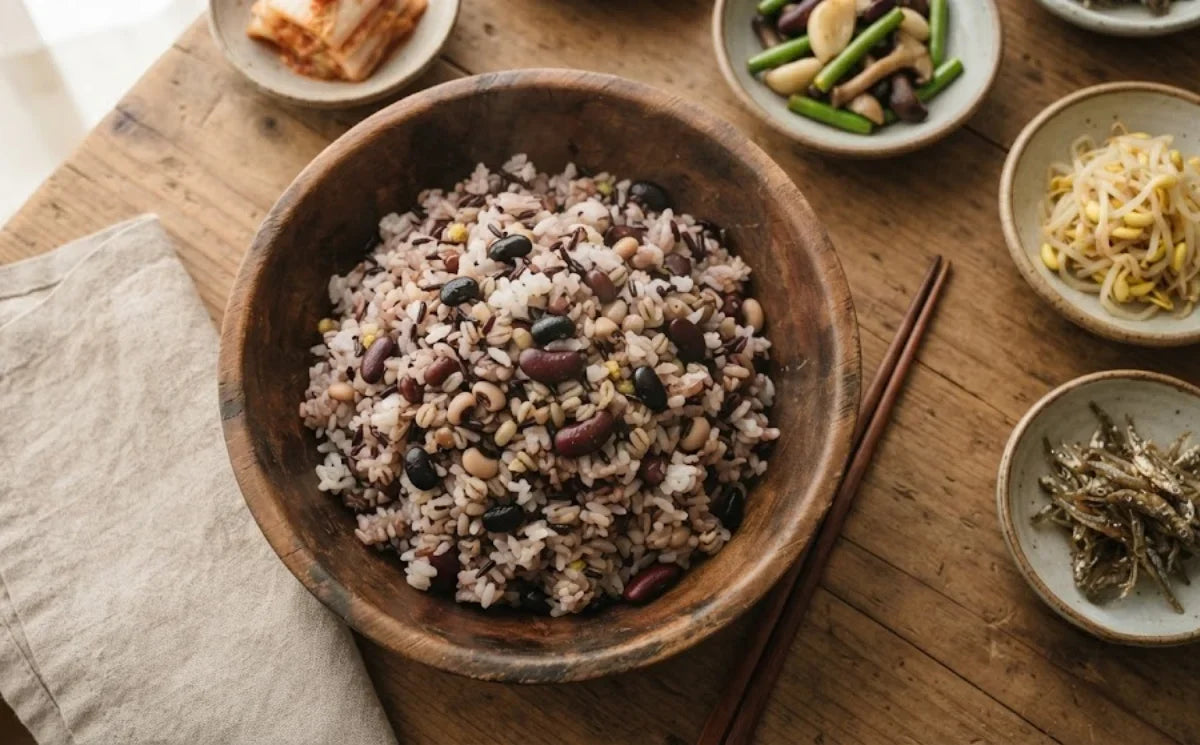
Plain white rice is the ultimate kitchen workhorse: fast, familiar, and endlessly adaptable. But if you've eaten it as your daily starch for years, you've probably noticed it doesn't do much for you nutritionally beyond filling you up. Korean home cooks solved this problem generations ago with japgokbap, or multi-grain rice, a blend of rice, whole grains, and legumes cooked together in one pot. At SFMart, we've seen a steady rise in home cooks looking to bring this staple into their own kitchens, not just for the flavor, but because it's one of the simplest ways to add more fiber to a meal meaningfully without changing how you actually cook.
This guide breaks down what Korean multi-grain rice actually is, why it stacks up so much better nutritionally than plain white rice, and how to make the switch without adding real time to your routine.
What Is Korean Multi-Grain Rice (Japgokbap)?
Japgokbap (잡곡밥) is a Korean staple made by cooking white or brown rice together with a mix of whole grains and legumes, typically in the same pot or rice cooker, using the same basic method as plain rice. Depending on the household, the blend might include barley, black rice, millet, sorghum, and beans like black beans, kidney beans, or chickpeas. In many Korean homes, this is everyday rice, not a special-occasion dish, and it's common to see 5-grain, 8-grain, or even 12-grain versions on grocery shelves.
The name changes slightly depending on the exact grain mix. Ogokbap refers to a 5-grain version, while blends built around black or purple rice are sometimes called Korean purple rice for their deep color. Regardless of the name, the underlying idea is the same: instead of relying on one refined grain, you're combining several whole grains and legumes into a single dish. If you'd like to see what a black-rice version looks like in practice, our piece on transforming your meals with organic black rice is a good companion read.
For more on choosing the right rice for your kitchen, our guides on which rice is best for consumption and the 3 healthiest organic grains are worth a read next.
Why Multi-Grain Rice Has So Much More Fiber Than White Rice
White rice is milled to remove the bran and germ, the two layers where most of a grain's fiber, B vitamins, and minerals actually live. What's left is mostly starch. A cup of cooked white rice has roughly 0.6 grams of fiber, while a cup of cooked brown rice has closer to 3.5 grams, and that gap widens further once you add barley, millet, or legumes into the mix. For a deeper look at the numbers, our article on brown rice's 5 health benefits covers this in more detail.
Each grain in a typical multi-grain blend contributes something different:
- Barley is one of the richest sources of beta-glucan, a soluble fiber linked to lower LDL cholesterol and steadier blood sugar. If you're curious how different forms of barley compare, see our guide on hulled vs. pearl barley.
- Black rice and black beans bring anthocyanins, the same antioxidant compounds found in blueberries, along with extra fiber and protein. You can read more about beans specifically in our roundup of 7 health benefits of black beans.
- Millet adds a light, slightly alkaline grain that's naturally gluten-free and easy to digest. Our guide to organic millet breaks down the different types and their uses if you want to go deeper.
- Legumes like kidney beans, chickpeas, or black-eyed peas add plant-based protein and additional fiber, rounding the dish out into something closer to a complete meal than a simple side.
If you want to add millet for extra texture and its naturally alkaline profile, organic hulled millet is a light, easy addition that cooks quickly alongside rice. Round it out with a scoop from our organic lentils or organic beans collection for the legume component.
Combined, this is why a bowl of japgokbap can easily contain two to three times the fiber of the same portion of plain white rice, plus meaningfully more protein, iron, and B vitamins.
Does Multi-Grain Rice Actually Take More Time to Cook?
This is the part that surprises most people. The extra prep is almost entirely upfront and hands-off. Grains like barley and beans do best with a soak of several hours (or overnight) before cooking, which softens them enough to cook evenly alongside rice. But soaking isn't active work. You rinse the grains, cover them in water, and walk away.
Once soaked, the cooking step itself is no different from cooking plain rice. Add the soaked rice-and-grain mix to a rice cooker on the "mixed grain" or "brown rice" setting, or simmer it covered on the stovetop, and it cooks in roughly the same window as brown rice. If you're using a rice cooker, which most households already do, the hands-on time is identical: rinse, add water, press a button. For an easier version, pre-mixed multi-grain blends are ready to soak and cook without any measuring, which cuts the prep step down even further.
How to Make Your Own Korean Multi-Grain Rice at Home
A simple, beginner-friendly ratio to start with is 2 parts rice, 1 part whole grains, and 1 part legumes. A few tips for getting a good result the first time:
- Start light on the grains: If you're new to multi-grain rice, use more white or brown rice and less of the grain-and-bean mix, then adjust the ratio up over time as your taste (and digestion) adjust.
- Soak everything together: Rinse the rice, grains, and legumes, then soak for at least 4 hours, or overnight for firmer beans like chickpeas or kidney beans.
- Use less water than you would for plain rice: Because the grains have already absorbed water while soaking, you'll typically need slightly less cooking liquid than a standard rice-to-water ratio.
- Cook on your rice cooker's mixed grain setting: or simmer covered on the stovetop for 40 to 50 minutes if you don't have a rice cooker.
For the base, organic brown rice works well alongside organic pearled barley, which is one of the most common starting points for a homemade blend thanks to its mild flavor and short cook time relative to other whole grains. For more on why pearled barley in particular is worth keeping stocked, see our piece on the health benefits of regular pearled barley.
Skip the Measuring With a Pre-Mixed Blend
If measuring out four or five separate ingredients isn't realistic on a weeknight, a pre-mixed grain blend solves that without sacrificing the nutritional upside. SFMart's 8 Mixed Grain blend combines organic rice, (also known as glutinous rice), organic pearled barley, and four kinds of organic beans (black, lima, dark red kidney, and black-eyed) in one bag, so you get the full fiber and protein benefit of a traditional Korean multi-grain mix without hand-measuring each grain. It's worth keeping in the pantry alongside our broader organic mixed grains rice and organic mixed grain blends collections if you want to rotate between a few different combinations.
Health Benefits of Switching to Multi-Grain Rice
- More fiber per serving, which supports digestion, helps you feel full longer, and can support healthy cholesterol levels thanks to the soluble fiber in barley and beans. Our overview of the 11 healthiest whole grains has more on which grains offer the biggest fiber boost.
- A lower glycemic impact than white rice, since the added fiber and protein slow down how quickly the meal raises blood sugar, which is one reason multi-grain rice is often recommended for people managing blood sugar.
- More complete plant-based protein, especially when legumes are part of the mix, making the rice itself more filling as a standalone side. See our guide on the benefits of eating lentils for more on the legume side of the equation.
- A broader range of micronutrients, including iron, magnesium, and B vitamins, that get stripped out of rice during the milling process that creates white rice.
- Naturally gluten-free, as long as you stick to grains like rice, millet, and legumes rather than adding barley for anyone who needs to avoid gluten specifically, since barley does contain it.
Ways to Use Korean Multi-Grain Rice
Once cooked, multi-grain rice works anywhere plain rice would, but with more texture and staying power:
- As a bibimbap base, where the chewy grains hold up well under sautéed vegetables, egg, and gochujang.
- In grain bowls, paired with roasted vegetables and a protein for a filling, high-fiber lunch.
- As an everyday side dish, served with banchan (Korean side dishes) the way it traditionally appears at Korean meals.
- Reheated throughout the week, since a batch keeps well refrigerated for several days, making it an easy meal-prep base.
Final Thoughts
Swapping plain white rice for a Korean-style multi-grain blend is one of the easiest nutrition upgrades you can make to a meal you're probably already eating daily. The extra fiber, protein, and micronutrients come almost entirely from ingredient choice rather than added kitchen effort, since the soaking happens ahead of time and the cooking itself takes no longer than a pot of brown rice.
If you're ready to build your own blend, SFMart's organic rice, organic grains, and organic lentils and beans collections have everything you need to put together a mix that fits your taste, or you can start simple with the pre-portioned 8 Mixed Grain blend.


