
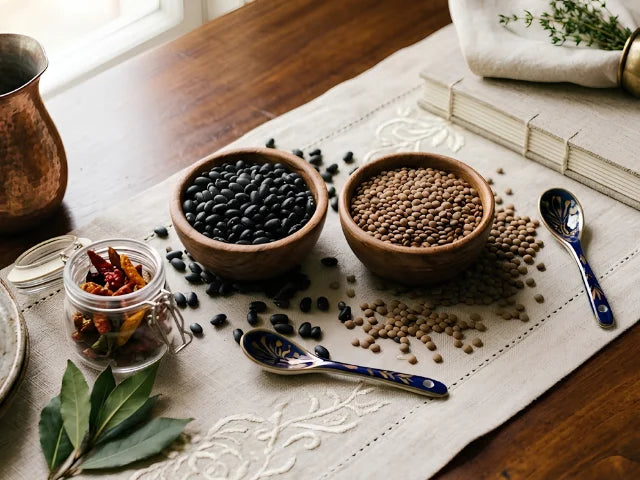
Black beans are cheap, filling and packed with fiber and plant protein, which is why dietitians recommend them so often. One cup of cooked black beans has about 15 g of protein and 15 g of fiber for around 227 calories, along with folate, magnesium, iron, potassium and antioxidants. This guide covers the 7 main health benefits of black beans, the full nutrition facts, what the research actually shows, side effects to watch for, and how to prepare them. We'll also explain how common black turtle beans differ from the Korean black soybeans sold at SFMart, so you buy the right one.
Quick Answer
Yes, black beans are good for you. One cup (172 g) of cooked black beans has about 227 calories, 15 g of protein and 15 g of fiber, plus folate (64% DV), copper, thiamine, manganese and magnesium. They have a low glycemic index of about 29 to 38. Bean eating is linked in studies to better blood sugar control, lower cholesterol and a lower risk of heart disease. Soak and cook dried beans thoroughly, rinse canned beans to cut sodium, and increase your portions gradually to limit gas.
What Are Black Beans?
Black beans, also called black turtle beans or frijoles negros, are a variety of the common bean (Phaseolus vulgaris). They belong to the legume family, alongside lentils, chickpeas and peas. They're native to Central and South America and have been grown in the Americas for thousands of years. Today they're a staple in Latin American, Caribbean and Southwestern cooking, and a popular plant-based protein around the world. Despite the name, the skin is a very deep purple-black, and that dark color comes from antioxidant pigments called anthocyanins.
Black Bean Nutrition Facts
Per 1 cup (172 g) of boiled, unsalted black beans (USDA data as reported by Healthline):
|
Nutrient |
Amount |
|
Calories |
227 |
|
Protein |
15 g |
|
Carbohydrates |
41 g |
|
Fiber |
15 g |
|
Fat |
1 g |
|
Folate |
64% DV |
|
Copper |
40% DV |
|
Thiamine (B1) |
35% DV |
|
Manganese |
33% DV |
|
Magnesium |
29% DV |
|
Iron |
20% DV |
|
Phosphorus |
19% DV |
|
Potassium |
13% DV |
A smaller half-cup (86 g) serving has about 114 calories, 7.6 g of protein and 7.5 g of fiber, with 60 mg of magnesium, 120 mg of phosphorus, 305 mg of potassium and almost no sodium when unsalted (USDA FoodData Central). Black beans are cholesterol-free and low in saturated fat. They also contain flavonoids such as quercetin and kaempferol, plus saponins, in addition to anthocyanins.
7 Health Benefits of Black Beans
1. They support heart health and healthy blood pressure
Black beans are rich in soluble fiber, which binds cholesterol in the gut and helps lower LDL ("bad") cholesterol. One analysis linked each 10 g of total fiber to a 27% lower risk of dying from heart disease, and another found 5 to 10 g of soluble fiber a day was linked to a 5% drop in LDL. Beans also supply potassium and magnesium, which support healthy blood pressure, and they're naturally low in sodium when you cook them yourself. In one analysis, bean eaters had an 11% lower risk of heart disease than non-eaters.
Not every study agrees. One trial found half a cup a day made no significant difference to cholesterol, so larger or more regular portions may be needed to see a benefit.
2. They may help control blood sugar
Black beans have a low glycemic index (about 29 to 38) and are rich in fiber and resistant starch, so they digest slowly and cause a gentler rise in blood sugar. Research suggests that adding about half a cup of black beans to a meal can lower that meal's glycemic response, and a meal of black beans with rice has been shown to raise blood sugar less than rice alone. That makes beans a useful swap for refined carbohydrates if you're managing blood sugar, though portion size still matters. If you have diabetes, check with your doctor or dietitian about your own plan.
3. They're great for digestion and gut health
Black beans provide both soluble and insoluble fiber, which keep things moving and help ease constipation. They're also a source of resistant starch, a prebiotic that feeds beneficial gut bacteria, which in turn produce short-chain fatty acids that nourish the cells lining the colon. Increase your intake gradually (see the gas section below).
4. They help you feel full and may support weight management
Fiber and protein together make beans very satisfying, and the slow-digesting carbohydrates keep you fuller for longer. Population studies link regular bean eating to lower body weight and a smaller waist circumference, though this is an association rather than proof. Beans work best as a filling, low-fat swap for some of the meat or refined grains in a meal, as part of an overall balanced diet.
5. They contribute to strong bones
Around 99% of your body's calcium, 60% of its magnesium and 80% of its phosphorus are stored in your bones, according to the NIH Office of Dietary Supplements. Black beans supply magnesium, phosphorus, iron, manganese, copper and zinc, all of which play a role in bone health. Their calcium content is modest, so pair them with other calcium sources in your diet.
6. They're a rich source of folate for nerves and pregnancy
A cup of black beans provides about 64% of your daily folate. Folate helps your body make and repair DNA and process the amino acid homocysteine, and it supports normal nervous system function. It's especially important before and during pregnancy, when it supports the development of the baby's brain and spinal cord. Beans are a good food source of folate, but they don't replace the folic acid supplement that health authorities recommend for people who could become pregnant, so talk to your doctor about your plan. Black beans are also a good source of magnesium and iron; to help your body absorb the iron, eat them with vitamin C foods like peppers, tomatoes or a squeeze of lime.
7. They're packed with antioxidants and may play a role in lowering disease risk
The dark seed coat of black beans is rich in anthocyanins, plus flavonoids such as quercetin. These antioxidants are studied for their possible role in reducing inflammation and protecting cells. Diets rich in legumes and fiber are associated with a lower risk of several chronic diseases, including colorectal cancer, and folate and selenium may play a part in DNA repair. Keep this in perspective: much of the evidence is observational or from lab and animal studies, so it shows an association, not proof that black beans prevent or treat any disease. Think of beans as one part of an overall healthy diet.
Antioxidant levels can fall with high-heat cooking and long storage, so keep dried beans in a cool, dry pantry. Our guide to the advantages of eating beans covers the wider benefits of legumes.
Black Beans vs Pinto Beans
Searching for black bean benefits often leads to the question of how they compare with pinto beans. Nutritionally, they're very close: nearly identical protein, carbohydrates, fiber and fat per serving. Pinto beans have slightly more folate, calcium and copper, while black beans have more anthocyanins thanks to their dark skin. For health purposes, either is a good choice, and varying your beans is the best strategy. See the most popular beans in the US for more options.
Side Effects of Black Beans (and How to Avoid Them)
For most people, black beans are very safe. A few things to know:
- Gas and bloating. Beans contain oligosaccharides (such as raffinose and stachyose) that gut bacteria ferment. Start with small portions, eat beans regularly so your gut adapts, soak dried beans and discard the soaking water, and rinse canned beans.
- Lectins and other antinutrients. Raw or undercooked beans contain lectins, plus protease inhibitors, tannins and phytic acid, which can upset the stomach and reduce the absorption of minerals like iron, calcium and zinc. Soaking and boiling thoroughly reduces them. Cook dried beans on the stove or in a pressure cooker, and avoid cooking them only in a slow cooker, which may not get hot enough to break down lectins. In a normal, varied diet with properly cooked beans, antinutrients aren't a concern for most people.
- Sodium in canned beans. Canned beans can be high in sodium. Choose "no salt added" or low-sodium cans and drain and rinse them.
- Carbohydrates. Beans are a high-carb food, so they don't suit very low-carb diets.
- Incomplete protein. On their own, black beans are low in one essential amino acid (methionine), so pair them with grains, nuts or seeds across the day.
- Medical conditions. If you have kidney disease, take blood thinners or follow a restricted diet, ask your doctor or dietitian how many beans are right for you.
How to Prepare Black Beans
Dried black beans
- Sort and rinse the beans, discarding any stones or damaged ones.
- Soak them. For an overnight soak, cover with plenty of water for 8 to 12 hours. For a quick soak, boil for 2 minutes, then let them stand for a couple of hours. Drain and discard the soaking water, which also helps reduce the gas-causing sugars.
- Cook in fresh water at a gentle boil until completely tender. This usually takes 45 to 90 minutes after soaking, longer if you skip the soak.
- Season once they're soft, and add salt near the end if you prefer.
Canned black beans. A convenient option when cooking from dry isn't practical. Choose no-salt-added or low-sodium cans, then drain and rinse.
Easy ways to eat them: tacos, burrito bowls, soups, chili, salads, dips and veggie burgers. For more recipe ideas, read 11 delicious ways to eat black beans.
Pair them with whole grains. Rice and beans together provide a more complete set of amino acids. Try them with organic brown rice or other whole grains from our organic grains collection, or add organic quinoa. To choose between rice types, see the health benefits of brown rice and white rice, quinoa vs rice and is organic rice good for you. If you're buying rice for your bean dishes, browse our organic rice collection, and see how to know if rice is organic and does organic rice have arsenic.
How Many Black Beans Should You Eat?
There's no single right amount. A typical serving is half a cup to one cup of cooked beans, and eating beans a few times a week is a realistic goal for most people. The Dietary Guidelines for Americans recommend about 1½ cups of beans, peas and lentils a week for a 2,000-calorie diet. If you're new to beans, start with a quarter to half a cup and build up over a few weeks.
Black Beans vs Korean Black Soybeans (What SFMart Sells)
This is worth knowing if you're shopping. The nutrition facts above are for black turtle beans, the small black beans used in Latin American and Caribbean cooking. The black beans on SFMart's organic bean collection are mostly Korean black soybeans, traditional varieties like seoritae (the "green kernel" black soybean) that are used in mixed rice, teas, porridges and side dishes.
They're a different bean with a different nutrition profile. For example, SFMart lists its organic seoritae at about 190 calories, 16 g of protein, 8 g of fat and 5 g of fiber per 45 g serving (representative values; check the package), so more protein and fat per serving than turtle beans. Prepare them by soaking overnight, then simmering 1 cup of beans in about 3 cups of water for 60 to 90 minutes until tender.
Try them in a pot of mixed rice, in a simmered side dish, or in our Korean multi-grain rice mix. Browse the options:
- Organic Black Bean, Green Kernel (seoritae), 2 lb
- Organic Black Bean, Yellow Kernel, 2 lb
- The full organic beans and lentils collection
For other nutritious whole foods, see our guides to hulled vs unhulled sesame seeds and oat groats.
Final Thoughts
Black beans are one of the most affordable and nutritious foods you can eat: rich in fiber, protein, folate and antioxidants, with benefits for heart health, blood sugar, digestion and bones. Cook them properly, enjoy them in a variety of dishes, and pair them with whole grains and vegetables for a balanced plate.
Ready to cook? Explore SFMart's organic beans, organic beans and lentils and organic grains, or read our wider guide to the health benefits of beans.


