
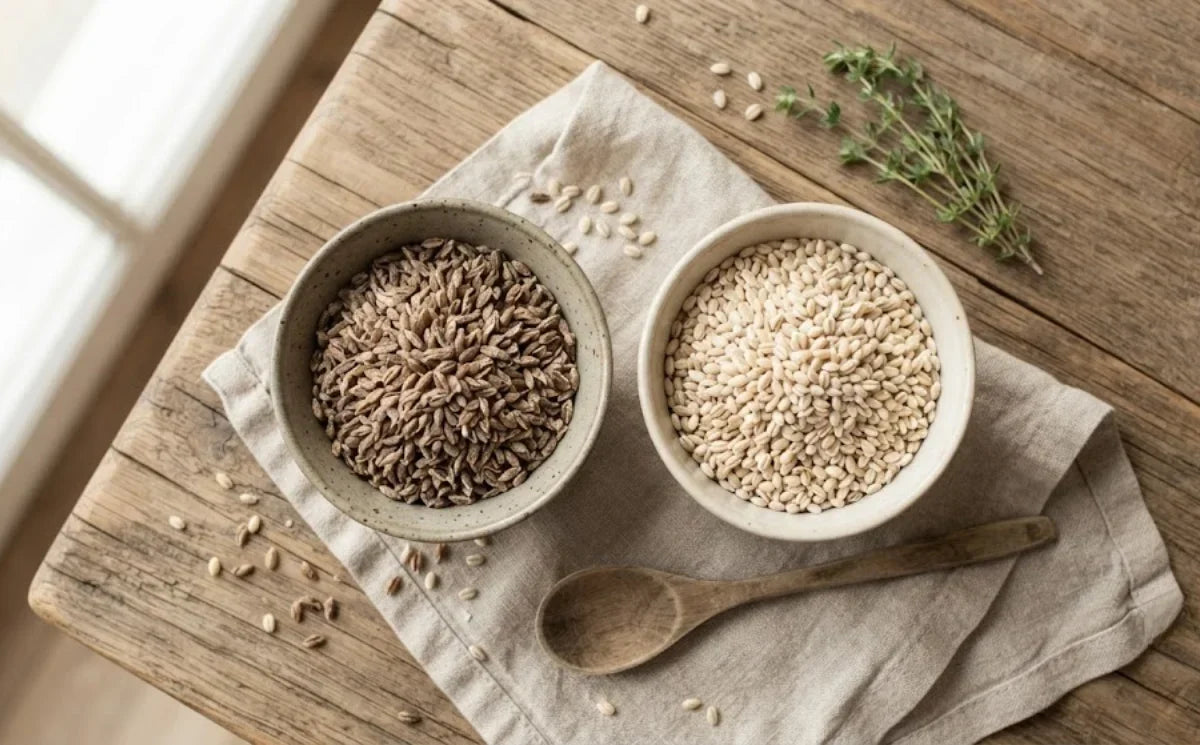
If you've stood in front of a shelf of barley wondering which bag to buy, you're not alone. Hulled barley and pearl barley look alike, but they're processed differently, cook differently and deliver different amounts of fibre. This guide by SFMart explains the difference between hulled and pearl barley, how long each takes to cook, which is healthier, whether you can swap one for the other, and which to choose for soups, risotto, grain bowls and salads.
Quick Answer
Hulled barley has only its tough outer hull removed, so it keeps its bran and germ and counts as a whole grain. It is chewier, higher in fibre and takes about 50 to 60 minutes to cook. Pearl barley is polished to remove the hull and bran, so it is a refined grain that is paler, softer, lower in fibre and cooks in about 40 to 45 minutes. Hulled is the healthier pick, while pearl is faster and creamier. Both contain gluten.
What Is Barley?
Barley (Hordeum vulgare) is one of the oldest cultivated grains, valued for its nutty flavour, chewy bite and fibre, including a soluble fibre called beta-glucan. It's used in soups, stews, salads, risottos, porridge, and even drinks, from malted beverages to roasted barley tea. Before you cook it, though, it helps to know which type you have, because the name on the bag tells you how much of the grain has been removed.
Hulled vs Pearl Barley at a Glance
|
Feature |
Hulled barley |
Pearl barley |
|
Processing |
Minimal: only the inedible outer hull is removed |
Polished: hull and bran layer removed |
|
Whole grain? |
Yes |
No |
|
Fibre |
Higher |
Lower |
|
Cooking time |
About 50 to 60 minutes |
About 40 to 45 minutes |
|
Soaking |
Helpful, especially if short on time |
Not needed |
|
Texture |
Chewy, grains stay distinct |
Soft, tender, creamy |
|
Colour |
Tan to brown |
Pale cream |
|
Best for |
Grain bowls, salads, hearty soups, pilaf |
Soups, stews, risotto-style dishes, porridge |
What Is Hulled Barley?
Hulled barley (sometimes sold as "dehulled" or "whole-grain" barley) is barley that has had only its inedible outer husk removed. The bran layer and germ stay intact, which is why it's classed as a whole grain. That gives it a darker colour, a chewier bite and more fibre, protein, vitamins and minerals than pearl barley.
Hulled vs hulless barley: These two terms get confused. Hulled barley has a tough hull that has to be milled off. Hulless (or naked) barley is a variety whose hull falls off naturally during harvest, so it needs little or no hulling and keeps more of its bran. In the kitchen they behave much alike, with a chewy texture and longer cooking time. If you're shopping for a whole-grain option, SFMart's McCabe Organic Hulless Barley is a good place to start.
What Is Pearl Barley?
Pearl (or pearled) barley is polished to remove both the hull and the bran layer, and sometimes part of the grain underneath. The result is the smooth, pale, rounded "pearl" you see on shelves. It cooks faster, becomes tender and creamy, and thickens soups and stews as it releases starch. The trade-off is that polishing removes much of the fibre and some of the nutrients, so it's usually considered a refined grain. It's still a source of fibre and a perfectly good ingredient, just not a whole grain. You'll find it in SFMart's organic pearled barley.
Where do pot, Scotch and quick barley fit? Pot barley is a lightly polished barley that sits between hulled and pearl, and Scotch barley is a coarsely ground form often used in broths. Quick barley is pearl barley that has been steamed or pre-cooked to shorten the cooking time. Check the packet instructions for those.
The Key Differences in Detail
1. Nutrition and fibre
Hulled barley keeps its bran, so a serving has noticeably more fibre than pearl barley, along with more protein, B vitamins and minerals such as selenium, magnesium and iron. That extra fibre helps you feel full for longer and supports digestion. Pearl barley still provides fibre, since barley is fibre-rich all the way through, but it's lower than hulled.
Barley is well known for beta-glucan, a soluble fibre linked to lower cholesterol. In the US, the FDA allows a health claim for whole-grain and dry-milled barley products, based on getting at least 3 grams of beta-glucan soluble fibre a day as part of a diet low in saturated fat and cholesterol. That's a useful reason to choose a whole-grain barley when you can. If you're managing a medical condition, speak with your doctor or dietitian about your diet.
2. Cooking time and soaking
Both types use roughly three parts liquid to one part barley, and both swell a lot, about two to three times their dry volume.
- Pearl barley: about 40 to 45 minutes of simmering, with no soaking needed.
- Hulled barley: about 50 to 60 minutes. Soaking for a few hours or overnight shortens the cooking time and gives a more even texture.
Times vary by brand and how vigorously you simmer, so taste a few grains near the end. Rinse before cooking, and drain any extra liquid if you want separate grains for a salad or pilaf.
3. Texture and taste
Hulled barley is chewy, with distinct grains and a nutty, slightly earthy flavour. Pearl barley is soft, creamy and mild. That's why pearl barley works well in risotto-style dishes, and why hulled barley holds up better in salads and bowls.
4. Behaviour in soups and meal prep
Pearl barley keeps absorbing liquid as it sits, so a soup made with it can turn thick and stodgy by the next day, and you may need to thin it with stock. Hulled barley expands less and holds its shape better, which makes it a better choice for soups you plan to reheat or freeze. Cooked barley keeps in the fridge for three to four days, and it freezes well for about a month.
Which Barley Is Healthier?
If you want the most fibre and nutrients, hulled (or hulless) barley is the healthier choice because it's a whole grain. Pearl barley is more processed, but it's still a good source of fibre and a smart swap for white rice or pasta in many meals. The best barley is the one you'll actually cook and eat, so choose hulled when you have time and pearl when you want something quick and creamy.
Can You Substitute Pearl Barley for Hulled Barley?
Yes, with a few adjustments:
- Pearl for hulled: shorten the cooking time by 10 to 15 minutes, expect a softer texture and check for doneness early.
- Hulled for pearl: cook longer (soak first if you can), add a little extra liquid, and expect a chewier result. For creamy dishes like risotto, the result will be less silky.
Which Barley Is Best for Soup, Risotto, Salad and Porridge?
- Soup and stew: pearl barley thickens as it cooks, so it suits quick, creamy soups. Hulled holds its shape and suits reheated or frozen batches.
- Risotto-style dishes: pearl barley gives the creamiest result.
- Grain bowls and salads: hulled barley, for its chewy bite.
- Pilaf and side dishes: either, depending on how much time you have.
- Porridge: pearl barley cooks faster and turns soft, so it's a good breakfast option.
Is Barley Gluten-Free?
No. Both hulled and pearl barley naturally contain gluten and aren't suitable for people with coeliac disease or a gluten allergy or sensitivity. See which ancient grains are gluten-free for safer options. If you're looking for a gluten-free grain with a similar chewy texture, read our guide to Job's tears and how it differs from barley, which explains why it's a different plant. For rice-based options, see SFMart's organic brown rice, and our article on five health benefits of brown rice.
Beyond the Pot: Other Barley Varieties and Uses
Barley comes in more forms than hulled and pearl. SFMart stocks pressed barley, black barley, purple and tri-colour barley, so it's easy to try something new. Our guide to organic barley varieties describes them and how they taste.
Roasted barley also makes a caffeine-free drink. Learn about the health benefits of barley tea, how it's brewed, and how it's used in Korean harmony tea. Our organic tea collection has the teas ready to brew.
If you like to mix up your whole grains, compare barley with oats in our guide to organic oats vs regular oats, or browse the organic oat collection and the wider organic grains collection.
Final Thoughts
For maximum fibre and a satisfying, chewy bite, choose hulled or hulless barley. For a faster, creamier dish, choose pearl barley. Either way, rinse it, use plenty of liquid and taste near the end of the cooking time.
Ready to cook? Browse SFMart's organic barley collection, including hulless, pearled and pressed barley, or explore the full organic grains collection.


