
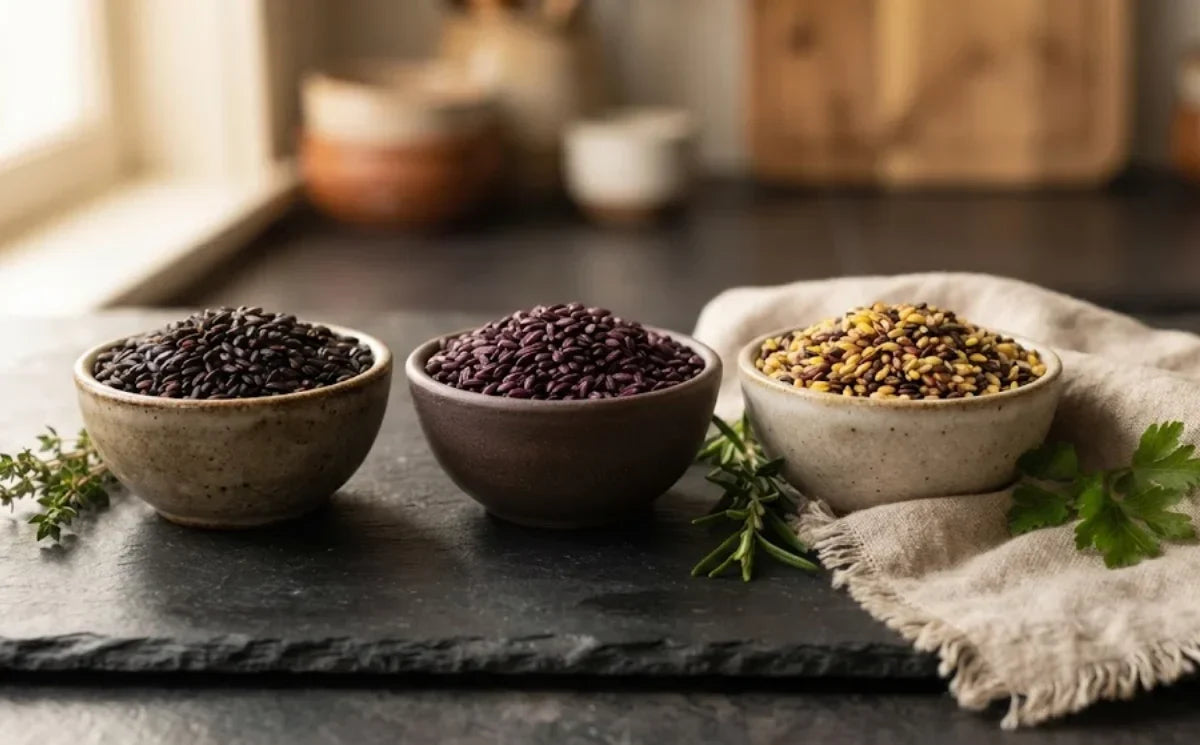
Walk down the grain aisle, or scroll through an online grain shop, and you'll notice regular pearled barley sitting at one price point while black and purple barley sit noticeably higher, sometimes close to double. It's a fair question to ask before paying more for a bag of grain that just looks different: is the color actually doing anything nutritionally, or is it mostly a novelty markup? At SFMart, we sell all three, standard pearled, black, and purple barley, and the honest answer is that the color is doing real, measurable nutritional work, though whether it's worth the price premium depends on what you're actually looking for.
Quick Answer
The dark color in black and purple barley comes from anthocyanins, the same class of antioxidant pigment found in blueberries, purple cabbage, and red beets. Research directly comparing colored barley varieties has found that black barley tends to have the highest overall polyphenol content and the strongest antioxidant activity, while purple barley leads specifically in anthocyanin concentration. Both offer meaningfully more antioxidant activity than standard pearled barley, which has had its bran, where these pigments concentrate, removed during processing. Whether the price premium is worth it depends on your goal: for everyday cooking, standard pearled barley remains the more practical, faster-cooking choice, while black and purple barley are worth the extra cost specifically for their antioxidant density and as a genuinely more nutrient-dense whole grain.
What Anthocyanins Actually Are
Anthocyanins are a class of flavonoid pigment responsible for the deep red, purple, and near-black coloring found across a wide range of fruits, vegetables, and grains, blueberries, purple cabbage, red beets, and cherries all get their color from the same general pigment family. In barley specifically, these pigments concentrate in the outer layers of the grain, which is exactly why they show up in whole, unpearled varieties and are largely absent from standard pearled barley, where that outer layer has been polished away during processing.
Beyond their visual appeal, anthocyanins function as antioxidants in the body, helping neutralize free radicals linked to oxidative stress, a process implicated in a wide range of chronic health conditions over time.
Black Barley vs. Purple Barley: What the Research Actually Shows
These two get lumped together constantly, but research comparing colored barley varieties directly has found some genuine differences worth knowing.
Black barley consistently tests highest for total polyphenol content and overall antioxidant capacity among colored barley varieties studied, with research specifically identifying black barley's antioxidant activity, measured through lab assays like DPPH and ABTS radical scavenging tests, as the strongest among the colors tested. Black barley's dominant anthocyanin compound is delphinidin-3-glucoside, distinct from the anthocyanin profile found in purple varieties. Culinarily, it has a rich, earthy flavor that some describe as almost coffee-like, and it cooks similarly to hulled barley, meaning it retains more bran and takes longer to cook than pearled barley.
Purple barley leads specifically in anthocyanin concentration itself, even where black barley wins on total polyphenol content and some antioxidant assays. Research has found purple barley's phenolic fractions to have the strongest overall radical scavenging and iron-reduction capacity in some comparisons, alongside high alpha-glucosidase inhibiting activity, a marker relevant to blood sugar regulation. Purple barley tends to have a slightly sweeter, more pronounced nutty flavor than black barley, and it cooks up noticeably more glutinous, sticky and viscous, which makes it particularly good for thickening soups and stews.
In short: if antioxidant density in the most general sense is your priority, black barley edges ahead. If anthocyanin concentration specifically, and a sweeter flavor, is what you're after, purple barley has the edge.
Is Black Barley Actually Healthier Than Regular Pearled Barley?
In most meaningful respects, yes. Regular pearled barley has had its bran and germ polished away, which is exactly where black barley's anthocyanins and much of its fiber content live. This makes pearled barley faster-cooking and more neutral in flavor, but nutritionally lighter than black barley, which retains its full bran layer and is generally regarded as a true whole grain rather than a refined one. Research on colored barley protein content specifically found that black barley groups tested highest in protein among the colors studied, adding another point in its favor beyond antioxidants alone.
If keeping the bran matters to you but black or purple barley's flavor isn't what you're after, it's worth knowing they're not the only whole-grain option. Organic hulless barley keeps the same intact bran layer as black and purple barley, and the same higher fiber and nutrient density that comes with it, but in barley's natural tan color and a milder, more neutral flavor closer to pearled barley. It's a genuinely underrated middle option: all the "keep the bran" nutritional upside of a true whole grain, without the deeper, more assertive flavor of black or purple barley.
Does Colored Barley Actually Taste Different?
Genuinely, yes, and not just in a subtle way. Black barley brings an earthy, almost coffee-like depth that stands up well in savory pilafs and grain bowls. Purple barley leans sweeter and nuttier, with a stickier, more glutinous texture once cooked that makes it particularly well suited to soups, stews, or any dish where you want the grain to help thicken the liquid rather than stay separate. Standard pearled barley, by comparison, is the most neutral of the three, which is exactly why it remains the more versatile, everyday choice for recipes where barley's flavor shouldn't compete with everything else on the plate.
How Anthocyanins in Barley Compare to Blueberries
This is a genuinely surprising comparison that shows up in barley research more than most people expect. In ORAC (Oxygen Radical Absorption Capacity) testing, some heirloom colored barley varieties have tested over 26 percent higher in antioxidant activity than blueberries, a fruit widely regarded as an antioxidant benchmark. This doesn't mean barley should replace blueberries in your diet, the two offer different, complementary nutrient profiles, but it does illustrate that a humble, often-overlooked grain can genuinely rival a well-known superfood in this specific respect.
Black Barley Cooking Time: What to Expect
Because black barley retains its full bran layer, it cooks more like hulled barley than pearled barley, meaning it takes noticeably longer and benefits from soaking beforehand. Soaking black or purple barley for several hours, or ideally overnight, before cooking softens the bran enough to cook through evenly, generally landing in the 45 to 60 minute range on the stovetop after soaking, compared to pearled barley's faster 25 to 30 minutes with little to no soaking required. If you're used to pearled barley's convenience, this longer lead time is the real tradeoff that comes with the added nutrition and color.
What About Tri-Color Barley?
If choosing between black and purple feels unnecessary, a tri-color blend sidesteps the decision entirely. Our Tri-Color Barley combines multiple barley varieties in one bag, giving you the visual appeal and combined antioxidant benefits of both black and purple barley without needing to buy, and cook, two separate bags. It's a practical middle ground for anyone who wants the nutritional upside of colored barley without committing to a single variety's specific flavor profile.
Is Purple Barley Worth the Price?
This comes down to how you weigh the tradeoffs. Purple and black barley genuinely cost more than standard pearled barley, generally reflecting lower yields and more limited cultivation of these heirloom varieties compared to mass-produced pearled barley. For everyday, high-frequency cooking, standard pearled barley remains the more practical, budget-friendly choice, especially in recipes like soups where barley is a supporting ingredient rather than the star. But for dishes where barley is more central, a pilaf, a grain bowl, a dedicated side dish, the added antioxidant density, distinct flavor, and visual appeal of black or purple barley make a genuinely reasonable case for the higher price, particularly if you're already prioritizing nutrient-dense whole grains elsewhere in your diet.
Final Thoughts
The color in black and purple barley isn't just for show, it reflects genuine differences in antioxidant content, protein, and flavor compared to standard pearled barley. Whether that's worth the price premium depends on how central barley is to the dish you're making and how much you're prioritizing nutrient density over convenience and cook time.
If you want to try all three without committing to a single variety, our Tri-Color Barley is a practical way to sample the range, and if you'd rather keep the bran without the bolder color or flavor, hulless barley is worth a look. Our full organic barley collection covers everything from black and purple to pressed and hulless varieties. For a broader look at how these varieties compare, our guide on exploring organic barley varieties is worth reading next.


