
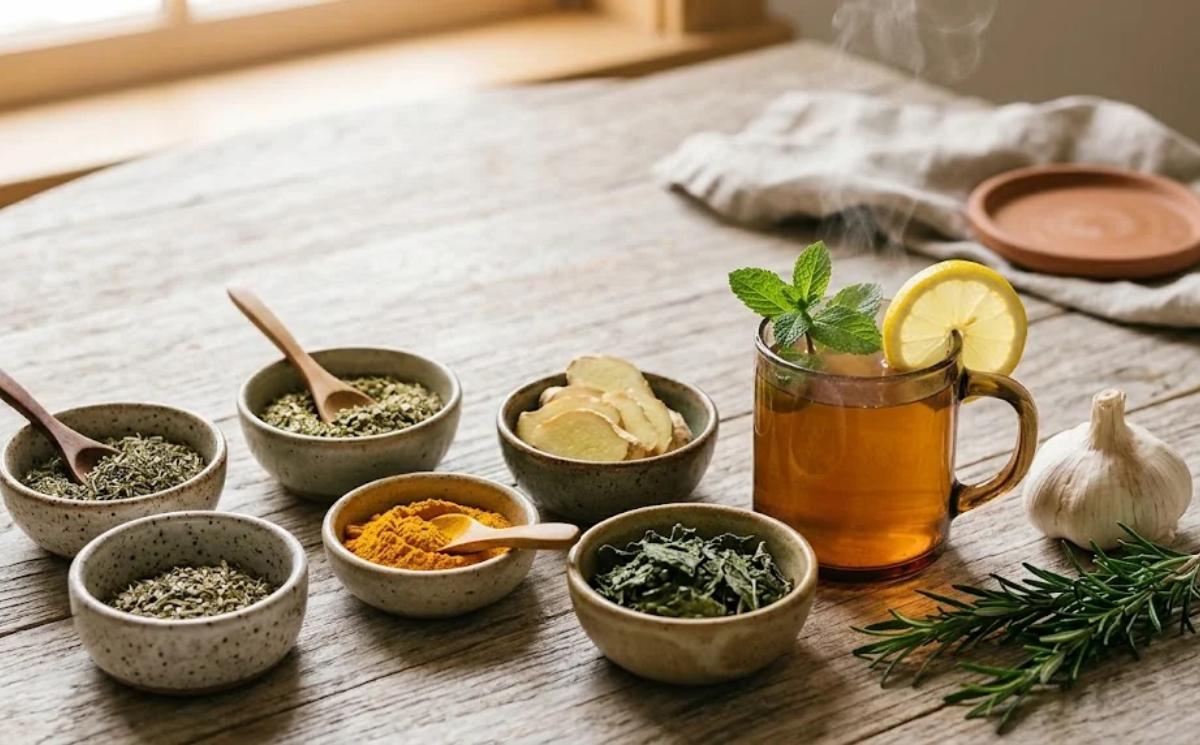
Every cold season the same question comes back: is there something in the pantry that can help? What herbs are good for a healthy immune system? Do they really work? And which ones are worth adding to your meals and teas? The honest answer is that no herb can "boost" your immune system on its own, and none can prevent or cure illness. But several everyday herbs, spices and teas are rich in plant compounds, taste good, and make it easier to build the kind of varied, plant-rich diet that supports normal immune function. This guide covers the herbs people reach for most (thyme, oregano, garlic, ginger, turmeric, mint, rosemary and sage, plus echinacea, elderberry and astragalus), what the research actually says about each, how to use them in cooking and tea, and the safety points worth knowing.
Quick Answer
No herb can boost or cure your immune system, but several support a healthy diet and are worth using daily. Thyme, oregano, garlic, ginger, turmeric, rosemary, sage and mint are all culinary herbs and spices with long traditions of use and a lot of natural plant compounds. Research on echinacea, elderberry, garlic and astragalus is mixed or limited, so treat them as optional extras, not treatments. The habits that matter most for immunity are sleep, a varied diet, regular movement, not smoking and staying up to date with recommended vaccines. Check with your doctor or pharmacist before using herbs in larger amounts, especially if you are pregnant, breastfeeding or take medication.
Herbs for Immune Support at a Glance
| Herb or spice | How it's usually used | What the research says | Take care if |
|---|---|---|---|
| Thyme | Dried or fresh in soups, roasts, tea | Contains plant compounds studied in the lab; human evidence for immunity is limited | Large amounts or concentrated extracts |
| Oregano | Dried in sauces, marinades, beans | Plant compounds studied in the lab; limited human evidence | Concentrated oils and extracts |
| Garlic | Fresh, powder, cooked | A Cochrane review found insufficient evidence for preventing or treating colds | On blood-thinning medication |
| Ginger | Fresh, dried, tea | Widely used for comfort; evidence for immunity is limited | Large amounts, medication, pregnancy |
| Turmeric | Powder, curries, golden milk | Curcumin is heavily studied for inflammation; immune evidence is limited | Medication, gallbladder problems |
| Rosemary and sage | Dried in roasts, soups, tea | Mostly traditional use and lab research | Large amounts, pregnancy |
| Mint | Dried, in tea | Soothing as a warm drink; little direct immune evidence | Acid reflux in some people |
| Echinacea | Tea, capsules | Mixed results in cold studies | Allergies to daisy-family plants, autoimmune conditions |
| Elderberry | Syrups, cooked berries | Limited small studies | Must be cooked; pregnancy |
| Astragalus | Root in soups and tea | Limited evidence | Immune conditions, medication |
This table is general information, not medical advice.
Can Herbs Really Boost Your Immune System?
Not in the way marketing suggests. Your immune system is a complex network, and it works best when balanced, not "boosted". A review of echinacea, ginseng and astragalus found that although they show immune activity in lab studies, more research is needed to confirm that they help people resist infections.
What herbs can do is:
- Add flavor to nutritious meals, so you eat more beans, vegetables, whole grains and soups.
- Provide plant compounds, such as antioxidants and polyphenols, that are part of a healthy diet.
- Make warm drinks and broths more appealing during colder months.
Think of herbs as helpers in a healthy lifestyle, not as a shortcut around one. In the US, statements about herbs and supplements haven't been evaluated by the FDA, and they aren't intended to diagnose, treat, cure or prevent any disease.
Thyme
Thyme is a classic soup, roast and sauce herb and a popular ingredient in herbal teas. It contains plant compounds such as thymol that are studied in laboratories. Human evidence that thyme supports immunity is limited, but it is a flavorful way to season broths, beans and vegetables with little salt.
How to use it: add dried thyme early in cooking so the flavor opens up, rub it onto roasted vegetables or chicken, or steep a pinch in hot water for tea. Try organic sun-dried herbs and our guide to McCabe Organic Crushed Thyme.
Oregano
Oregano is a staple in Italian, Mediterranean and Mexican cooking. It contains compounds such as carvacrol that researchers study in the lab. Concentrated "oregano oil" supplements are much stronger than the dried herb you cook with, and they are not the same thing. For everyday use, the dried herb in food is the simple, safe choice.
How to use it: stir it into tomato sauce, sprinkle it over roasted potatoes, or add it to marinades and bean dishes. See Boost Your Meals with McCabe Organic Crushed Oregano for more ideas.
Garlic
Garlic is one of the most popular "immune" foods. A Cochrane review looked for trials on garlic and the common cold and found only one that met its standards, which suggested garlic might reduce colds but was too small to be sure. The reviewers concluded there was insufficient evidence either way. That doesn't make garlic a bad choice. It is a flavorful, nutritious ingredient that makes savory food taste great, but it shouldn't be relied on to prevent colds.
How to use it: add fresh garlic to soups, stir-fries and dressings, or use garlic powder when you want an easy, shelf-stable option. Read why McCabe Organic Garlic Powder should be a pantry essential. If you take blood-thinning medication, ask your doctor before eating large amounts or using garlic supplements.
Ginger
Ginger is a warming root that people sip as tea when they feel run down. It is widely used for comfort, and fresh slices in hot water are a pleasant way to stay hydrated. Evidence that ginger improves immune function is limited, and it should be seen as a comforting food rather than a remedy.
How to use it: slice fresh ginger into hot water with lemon and honey, grate it into stir-fries and soups, or use dried ginger in baking and spice blends. Browse organic sun-dried spices for pantry staples. Large amounts can upset the stomach, and people on medication or who are pregnant should check with their doctor first.
Turmeric
Turmeric, the golden spice in curry, is rich in curcumin, a compound studied for its role in inflammation. Much of the research uses concentrated extracts, which are very different from the small amount in a spoonful of curry powder. Immune-specific evidence in people is limited. A pinch of black pepper in your cooking is often used to go with turmeric.
How to use it: stir it into rice, lentils, roasted vegetables, soups or warm "golden" milk. If you take medication, have gallbladder problems or are pregnant, ask your doctor before using turmeric supplements.
Rosemary and Sage
These woody herbs are traditional in roasts, stuffings and soups, and both make fragrant teas. They contain plant compounds and have a long history of use, but there is little high-quality human research on immunity. Their value in the kitchen is that they make simple, nutritious food, such as roasted root vegetables and bean soups, taste rich enough that you want to eat it.
How to use them: use sparingly, because both have a strong flavor. Crumble dried sage into soups and stuffing, and add rosemary to roasted vegetables, potatoes or focaccia. Pregnant women should check with a doctor before using these herbs in large or medicinal amounts.
Mint
Mint, especially peppermint, is best known as a soothing tea. A hot mug of mint tea is comforting when you have a stuffy nose or sore throat, though that is about comfort and hydration more than treating anything. Some people with acid reflux find mint makes symptoms worse.
How to use it: steep dried mint in hot water, sprinkle it over yogurt or salads, or add it to sauces. Read more in Enhance Your Meals and Wellness With McCabe Organic Crushed Mint and How McCabe Organic Crushed Mint Can Freshen Up Your Cooking.
Echinacea
Echinacea is probably the best-known "immune herb" in the US, usually taken as tea or capsules. The research is mixed. A Cochrane review of 24 studies found no overall benefit for preventing colds, although some products showed a small effect, and results vary a lot because products differ in species, plant parts and strength. Side effects are usually mild, but people allergic to plants in the daisy family, or with autoimmune conditions, should avoid it, and it can interact with some medicines. Check with your doctor first.
Elderberry
Elderberry syrups and lozenges are popular during cold and flu season. Small studies suggest they may ease symptoms, but the National Center for Complementary and Integrative Health says larger studies are needed. Raw elderberries, bark, leaves and seeds contain a toxin that can cause nausea, vomiting and diarrhea, so home preparations of the berries must be cooked. Commercial products are generally considered safe, but pregnant and breastfeeding women should avoid elderberry because there is no safety research.
Astragalus
Astragalus is a root used in Traditional Chinese Medicine, often simmered in soups and teas. Lab research shows interesting immune activity, but human evidence is limited. If you have an immune-related condition or take medication, ask a healthcare provider first.
Herbal Teas and Other Pantry Helpers
Warm drinks make it easier to stay hydrated, which matters when you're feeling under the weather. Beyond herbs, other pantry foods fit well into an immune-friendly routine:
- Herbal and sun-dried teas, such as ginger, mint and thyme. Browse our organic tea collection and sun-dried tea. For more on what a good cup offers, see organic tea: some health benefits.
- Barley tea, a caffeine-free, toasty brew. Read the health benefits of barley tea.
- Coix seed (Job's tears), a traditional grain-like seed. Our post on how coix seed supports your immune system explains the traditional uses.
- Beans and lentils, which pair well with herbs. See our organic bean and lentil collection.
- Sun-dried vegetables, for soups and stews, in the organic sun-dried vegetables collection.
Dried vs Fresh Herbs: Which Is Better?
Both have a place. Fresh herbs have bright flavor and are best added at the end of cooking. Dried herbs are concentrated, last far longer, and are ideal for soups, stews, sauces and tea. Because dried herbs are more concentrated, use about one third of the amount you'd use fresh. Read our guide on fresh vs dried herbs to see how quality drying affects flavor.
Look for herbs that are fragrant and green, not pale, dusty or musty. Quality sun-drying helps keep aroma and color. Choosing certified organic means the herbs were grown without synthetic pesticides. Our guides on what organic food is and organic vs conventional food explain what the label means. If you cook with spices often, you may also wonder about processing, so see are organic spices irradiation-free.
How to Store Dried Herbs So They Stay Potent
Heat, light and moisture all weaken herbs. To keep them at their best:
- Store them in airtight containers, away from the stove and sunlight.
- Keep them in a cool, dark, dry cupboard.
- Use a dry spoon every time. Moisture is also why herb and garlic powders clump (see why garlic powder clumps).
- Label with the date you opened them, and replace herbs that have lost their smell.
Our guide on how to store dried vegetables so they never go moldy has tips that also work for dried herbs, and how to store rice, oats and grains covers the rest of your pantry.
Simple Ways to Use Immune-Friendly Herbs Every Day
- Herb-and-bean soup. Simmer beans or lentils with garlic, thyme, rosemary and sun-dried vegetables.
- Golden rice. Cook rice with turmeric and a pinch of black pepper. Browse organic rice.
- Ginger-mint tea. Steep fresh ginger and dried mint in hot water.
- Oregano roasted vegetables. Toss with olive oil, oregano and garlic powder.
- Everyday seasoning. Try McCabe Organic Everything Bagel Seasoning on eggs, avocado toast or roasted vegetables.
What Really Supports a Healthy Immune System?
Herbs are the cherry on top. The big wins are:
- Sleep: most adults need seven or more hours.
- A varied diet: plenty of vegetables, fruit, beans, whole grains, nuts and seeds. Compare staples in our guide to oats vs rice vs barley vs millet.
- Movement: regular physical activity.
- Not smoking and limiting alcohol.
- Managing stress.
- Staying up to date with recommended vaccines.
- Washing your hands regularly.
Our post on why organic food matters for health covers how organic ingredients fit into a healthy diet.
Safety First: Who Should Be Careful With Herbs?
Culinary amounts of herbs in food are generally fine for most people. Be more careful with concentrated extracts, capsules, oils and strong teas. Talk to a doctor or pharmacist before using herbs medicinally if you:
- Are pregnant or breastfeeding.
- Take prescription medication, especially blood thinners, immune-suppressing drugs or medicines for diabetes.
- Have an autoimmune condition, allergies, or a medical condition.
- Are giving herbs to children.
- Are about to have surgery.
Stop using an herb and seek medical advice if you have an allergic reaction, such as hives, swelling or difficulty breathing. Herbs are not a substitute for medical care. If you have a high fever, trouble breathing, or symptoms that are severe or don't improve, see a healthcare provider.
Final Thoughts
The best herbs for a healthy immune system are the ones you'll actually use every day. Thyme in a soup, garlic in a stir-fry, ginger and mint in a mug, turmeric in rice. None is a miracle, but together with sleep, movement, a varied diet and good medical care, they make a healthy routine taste good. Choose herbs that are fragrant and well stored, and use concentrated extracts only with a healthcare provider's advice.
Ready to stock your pantry? Browse SFMart's organic sun-dried herbs, organic sun-dried spices, organic teas and the full organic sun-dried collection.
This article is for general information and is not medical advice. Statements about herbs have not been evaluated by the Food and Drug Administration. These products are not intended to diagnose, treat, cure or prevent any disease. Talk to a healthcare provider before using herbs medicinally.


