
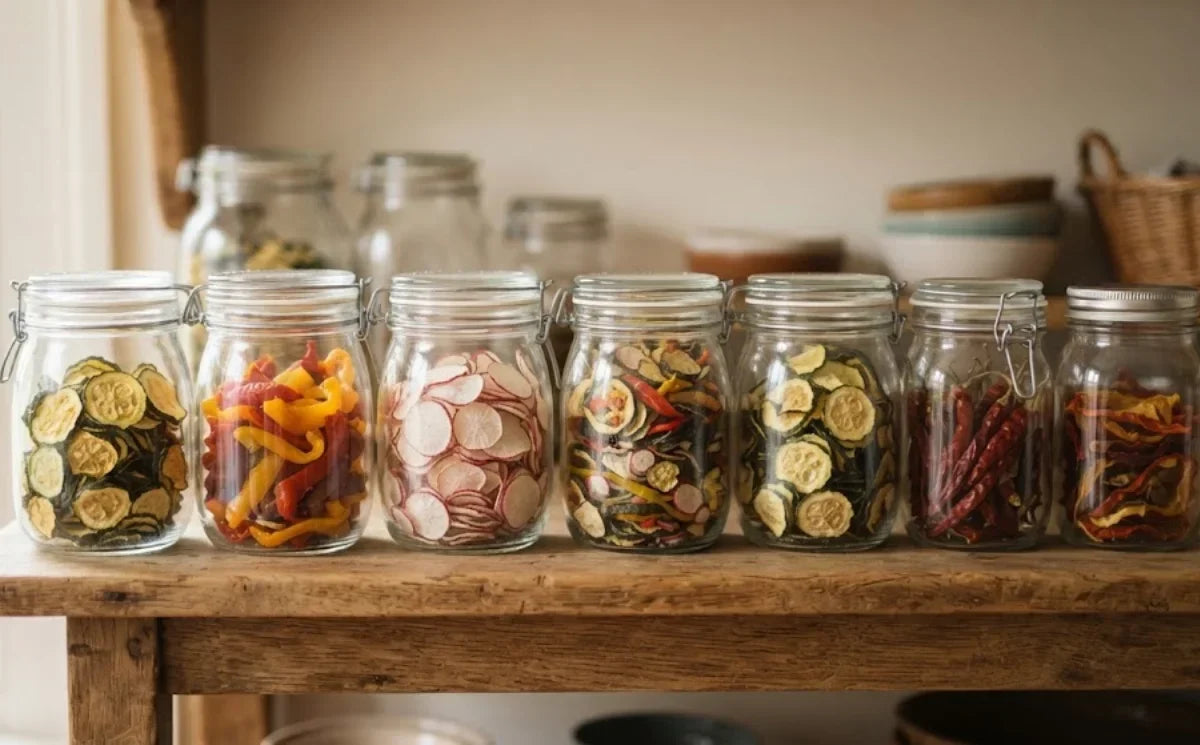
Dried vegetables are one of the most forgiving pantry staples out there, until they aren't. A container that looked perfectly fine a few months ago can suddenly turn up with a musty smell, a strange softness, or worse, visible mold, and it usually comes down to one or two storage details that got overlooked along the way. At SFMart, our sun-dried vegetables are meant to last, but that only holds true if they're stored the right way once they get to your kitchen. This guide covers exactly how long dried vegetables actually last, what causes them to spoil, and how to store them so mold never becomes a problem in the first place.
Quick Answer
Properly dried vegetables, stored in an airtight container in a cool, dark place, generally last 6 to 12 months at peak quality, and can remain safe well beyond that if kept fully sealed and dry, though flavor and nutrients decline gradually over time. Mold almost always comes down to one of two causes: the vegetables weren't fully dried before storage, or moisture got back into the container afterward. Warning signs include a musty or off smell, visible mold, a sticky or softened texture instead of a crisp, brittle one, and condensation on the inside of the container. If you see any mold at all, the safest approach is to discard the entire container's contents rather than trying to remove the affected pieces, since mold can spread through porous, dried food well beyond what's visible.
How Long Do Dried Vegetables Actually Last?
This depends heavily on how well they were dried in the first place and how they're stored afterward, but general guidance from food preservation extension services puts properly dried, well-sealed dried vegetables at their best quality for around 6 to 12 months. Vegetables generally have about half the shelf life of dried fruit, since fruit's natural sugars act as an additional preservative that most vegetables don't have.
Temperature plays a genuinely significant role too: dried vegetables stored at around 60°F can last up to a year, while the same vegetables stored at 80°F may only hold peak quality for around three to six months, since higher temperatures accelerate the gradual breakdown of flavor, color, and nutrients even in fully dried, properly sealed food. The same core storage principles, airtight containers and a cool, dark spot, apply across most dry pantry staples, including bulk rice, even though the exact shelf-life numbers differ by food type.
It's worth being clear that "shelf life" in this context is mostly about quality, not safety. Fully dried, properly stored vegetables don't necessarily become dangerous the day they cross the 12-month mark, they simply continue losing flavor, color, and nutritional value the longer they sit, which is why rotating through your stock within the first year is generally recommended if flavor and nutrition are priorities.
Do Dried Vegetables Go Bad? Understanding the Real Risk
Yes, they can, though the path to spoilage in dried food is a little different from fresh produce. Dried vegetables spoil primarily through moisture reintroduction, either because they weren't dried thoroughly enough to begin with, or because they picked up humidity from the air after drying, both of which create exactly the damp conditions mold needs to take hold. This is why "dried" isn't automatically synonymous with "shelf-stable indefinitely."
A vegetable that looks and feels dry when it goes into a container can still spoil if that container isn't genuinely airtight, or if the vegetable wasn't dried evenly all the way through in the first place. This overlaps with a related, if less dangerous, issue affecting dried herbs, where poor storage doesn't cause mold as often but does cause a steady, ongoing loss of flavor.
Signs of Moldy or Spoiled Dried Vegetables
Knowing what to look, smell, and feel for makes this a quick check rather than a guessing game:
- Visible mold. Fuzzy spots, discoloration, or any unusual growth on the surface is an immediate discard signal, no exceptions.
- Musty or off smell. A sour, stale, or "wrong" smell when you open the container is a reliable early warning sign, often noticeable before mold is visibly obvious.
- Texture changes. Properly dried vegetables should feel brittle and crisp. If pieces feel soft, sticky, or pliable instead, moisture has gotten in, even if you can't see mold yet.
- Condensation inside the container. Visible moisture beading on the inside of a jar or bag means the contents weren't fully dry when sealed, or humidity has worked its way in since, either way, a clear sign to check the contents closely before use.
- Pieces sticking together. Clumping is another practical sign that moisture has been reabsorbed, since properly dried vegetable pieces should stay loose and separate.
If you spot any of these signs, particularly actual mold, the safest move is to discard the entire container's contents. Dried food is porous, and mold can spread through it well beyond the visible surface, so removing just the affected-looking pieces and keeping the rest isn't a safe workaround.
Best Containers for Dried Food Storage
The right container does more to prevent spoilage than almost anything else in this whole process, since it's your main defense against moisture and light exposure once the vegetables are actually dry.
Glass jars with tight-fitting lids are widely recommended as a top choice for everyday pantry storage. They're fully airtight when sealed properly, reusable, and, critically, let you actually see if any condensation is forming inside, which plastic or opaque containers don't offer.
Heavy-duty plastic freezer bags or containers with a genuinely tight seal work as a solid alternative, particularly for freezer storage, though they're generally less resistant to pests than glass or metal if left in a pantry setting.
Vacuum-sealed bags meaningfully extend shelf life by removing the air that supports oxidation and moisture retention, making them a strong option if you're storing a larger batch you don't plan to use quickly.
Mylar bags with oxygen absorbers are considered the gold standard for longer-term storage, blocking both light and moisture more effectively than standard plastic, though this level of setup is generally more relevant for bulk or long-term pantry stocking than everyday kitchen use.
Whichever container you choose, store it in a cool, dark cabinet rather than an open shelf near a window or stove, since both light and heat cycling accelerate quality loss even in a properly sealed container. This is the same rule of thumb worth applying to any pantry essential, not just dried vegetables.
How to Rehydrate Dried Vegetables
Most dried vegetables rehydrate easily with a simple soak. Covering them in warm water for 30 minutes to an hour is generally enough to bring them back to a workable texture for most dishes, though denser vegetables like sun-dried zucchini or sun-dried radish may need closer to the longer end of that range. If you're adding dried vegetables directly to a soup, stew, or braise, you can often skip the separate soaking step entirely and let them rehydrate right in the cooking liquid as the dish simmers, which has the added benefit of infusing that liquid with more flavor along the way.
A Few Habits That Genuinely Extend Shelf Life
Beyond the container itself, a couple of extra steps make a real difference:
- Cool completely before sealing. Packaging warm, freshly dried food causes it to sweat inside the container, introducing exactly the moisture you're trying to avoid. Always let dried vegetables cool fully to room temperature first.
- Condition before long-term storage. For home-dried batches especially, letting the dried vegetables sit loosely in a container for about a week, checking daily for any condensation, helps even out moisture levels across all the pieces before final sealing. If any moisture shows up during this period, re-dry before sealing for storage.
- Check stored containers periodically, particularly in the first few weeks after sealing, since this is when uneven drying is most likely to reveal itself as trapped moisture.
- Portion into smaller containers if you're storing a large batch, so opening the container for everyday use doesn't repeatedly expose your entire stock to air and humidity, a habit worth applying to bulk-bought dried herbs and produce generally, not just vegetables.
Final Thoughts
Mold in dried vegetables is almost always preventable, and it comes down to two things: making sure they're genuinely, fully dry before they're ever sealed, and keeping moisture out afterward with the right container and storage spot. Get those two details right and dried vegetables are about as low-maintenance as a pantry staple gets.
If you're stocking up on quality sun-dried vegetables to begin with, SFMart's organic sun-dried food collection is worth a look, and our guide on 5 reasons to use sun-dried fruits and vegetables covers more on what makes properly sun-dried produce worth keeping in your pantry in the first place. Curious what else can be sun-dried besides vegetables? Our guide on foods that can be sun-dried rounds up more options worth trying.


