
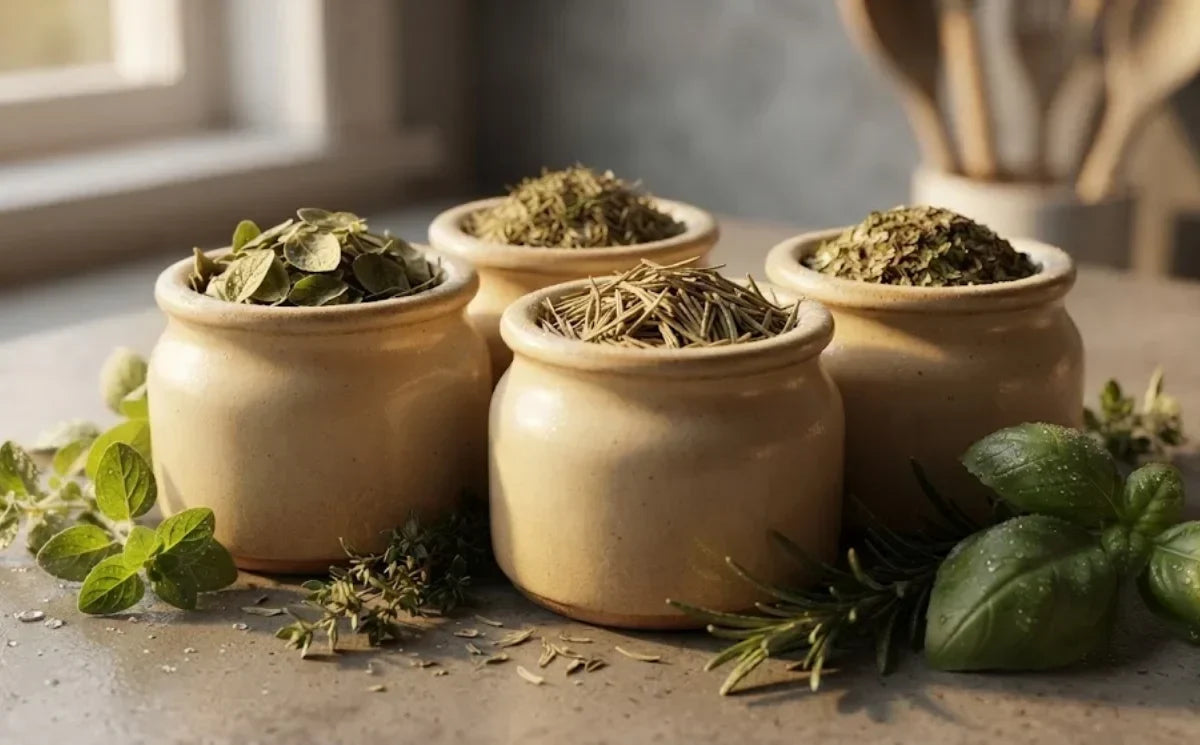
That flat, dusty, almost grassy taste in a jar of dried oregano or thyme isn't your imagination, and it isn't an unavoidable side effect of drying either. It's a specific, well-understood sign that the herb has lost most of the aromatic oils responsible for its actual flavor, usually long before it reached your spice rack. At SFMart, we source and sell a lot of dried herbs, so it's worth being upfront about what actually causes that dusty taste, and what genuinely separates a well-made, fresh batch from the sad, faded jar that's been sitting in a warehouse for two years.
Quick Answer
Dried herbs taste dusty or flat when the volatile aromatic oils that carry their flavor have broken down, usually from a combination of age, poor storage (heat, light, and moisture exposure), low-quality source material, or a drying process that used too much heat or direct UV light.
Fresh herbs and properly dried herbs aren't simply better or worse versions of each other, they're different tools: fresh herbs work best in dishes with little to no cooking time, while dried herbs, used at roughly a third of the fresh quantity, hold up better in longer-cooked dishes. The real quality marker for dried herbs isn't whether they were dried outdoors or indoors specifically, it's how carefully the drying was controlled, and how quickly the herb went from harvest to a sealed, airtight container.
Why Dried Herbs Lose Flavor in the First Place
An herb's flavor and aroma come from volatile oils stored in tiny structures on the plant's leaves and stems, the same oils responsible for that fresh, sharp smell when you crush a basil leaf between your fingers. Drying removes water from the plant, which is exactly the point of the process, but those same aromatic oils are volatile enough that they can evaporate or break down right alongside the water if the process isn't carefully controlled.
Heat accelerates this significantly: research on herb drying consistently shows that temperatures above about 95°F cause measurable essential oil loss in most culinary herbs, and once you're above 140°F, you're no longer really drying the herb so much as lightly cooking it, which flattens the flavor profile into something closer to hay than the original plant.
Light exposure compounds the problem. Ultraviolet light specifically triggers a process called photo-oxidation in the same aromatic compounds that give herbs their character, which is part of why food preservation guidance from agricultural extension services consistently flags direct, harsh sun exposure as one of the more damaging ways to dry delicate, leafy herbs like basil, parsley, and mint.
This is worth being honest about: blasting herbs in full, direct sunlight for days isn't the secret to great dried herbs, it's actually one of the more common ways to degrade them. The same volatile compounds responsible for flavor are often the ones behind an herb's health benefits too, which we cover in more depth in our guide on organic spices, perilla seeds, and sesame seeds.
So What Does "Quality" Drying Actually Look Like?
This is where the real differentiator lives, and it has less to do with indoor versus outdoor drying and more to do with control. A well-run drying process, whether it happens in a shaded, well-ventilated outdoor setup or an indoor dehydrator, keeps temperatures low and consistent, minimizes prolonged direct UV exposure to the herb's actual leaf surface, and moves from harvest to a sealed container as quickly as the process allows. Herbs harvested at the right stage, just before flowering, when their oil concentration is highest, start with more flavor to lose in the first place, which matters just as much as the drying method itself.
This is the same principle behind McCabe Farm's approach to drying, combining traditional methods with modern process control specifically to manage temperature and timing rather than leaving product exposed to harsh, uncontrolled conditions. It's a meaningfully different thing from either a rushed industrial process or herbs left baking in direct sun with no protection.
Which Herbs Actually Hold Up Well When Dried?
Not every herb loses the same amount of flavor in drying, and knowing which ones dry well helps set expectations. Sturdier, woodier herbs like oregano, thyme, rosemary, sage, and bay tend to dry well and retain a strong, recognizable flavor. Softer, more delicate herbs, basil, parsley, cilantro, chives, and tarragon, are more prone to losing flavor and character during drying, and parsley in particular is widely reported to end up with almost no discernible flavor once dried. Mint sits somewhere in between, generally holding its character reasonably well when dried carefully. This is worth keeping in mind when deciding which herbs are worth buying dried versus seeking out fresh.
How to Substitute Dried Herbs for Fresh
Dried herbs are considerably more concentrated than fresh ones, generally three to four times stronger by volume, which is why swapping them one-for-one in a recipe tends to overpower a dish. As a standard conversion, use roughly one-third the amount of dried herb that a recipe calls for in fresh herb, so one tablespoon of fresh herb becomes about one teaspoon of dried. If a recipe calls for powdered herb specifically, that's an even more concentrated form again, roughly a quarter teaspoon of powder for every teaspoon of dried leaf, similar in principle to how garlic powder is a more concentrated stand-in for fresh garlic.
Timing matters too: dried herbs generally benefit from being added earlier in cooking than fresh herbs, giving them time to rehydrate and release their flavor into the dish, while fresh herbs are often best added toward the end to preserve their brighter, more delicate character. If you're cooking in larger batches regularly, buying dried herbs this way in bulk, rather than restocking small jars constantly, is generally more economical, something we cover in our guide on the growing popularity of bulk organic herbs.
Best Dried Herbs for Cooking, and When to Reach for Them Over Fresh
As a general rule, dried herbs perform best in dishes with real cooking time, soups, stews, braises, and marinades, where there's enough time and liquid for the dried leaf to rehydrate and release its flavor gradually. Fresh herbs shine in dishes with little to no cooking, salads, garnishes, or anything finished at the very end, where their brighter, more volatile top notes haven't had a chance to fade. Keeping both fresh and dried versions of your most-used herbs on hand, rather than treating one as a strict substitute for the other, tends to give the widest range of usable flavor across different types of cooking. We go into more detail on how to choose between the two for specific dishes in our guide on fresh herbs vs. sundried herbs.
How Long Do Dried Herbs Actually Last?
Properly dried herbs, stored in an airtight container away from heat, light, and moisture, generally hold good flavor for around one to three years, though they don't become unsafe to eat much beyond that, they simply keep losing potency. The most reliable way to check is the smell test: crush a small pinch between your fingers, and if it releases little to no aroma, it's past its useful flavor life even if it looks fine sitting in the jar. Whole, uncrushed leaves generally hold their flavor longer than pre-crushed or powdered herbs, since a larger surface area speeds up how quickly the remaining oils oxidize once exposed to air.
Our organic crushed oregano and other herbs in our sun-dried herbs collection are worth storing exactly this way, sealed, in a cool, dark cabinet, rather than in a spice rack beside the stove, where heat cycling from cooking accelerates flavor loss considerably faster than steady room temperature storage would.
Final Thoughts
The "dusty" taste in a disappointing jar of dried herbs isn't an inherent flaw in dried herbs generally, it's a sign that the aromatic oils responsible for real flavor were lost somewhere along the way, whether that's a harsh, uncontrolled drying process, herbs harvested past their prime, or simply too much time on a warehouse shelf before it reached your kitchen.
If you're rebuilding your spice cabinet with herbs that were actually dried and stored with care, SFMart's organic sun-dried herbs and broader organic herbs and spices collection are worth a look, and our guide on fresh herbs vs. sundried herbs is a useful next read if you're still deciding which format suits your cooking best.


