
There's a particular kind of disappointment that comes with a pot of quinoa that's somehow both bland and bitter, with half the grains gone mushy and the rest still faintly crunchy. If that sounds familiar, the good news is that quinoa isn't actually a finicky ingredient, it's just a seed with a genuinely unusual quirk that most recipe cards gloss over in one throwaway line. At SFMart, quinoa is one of the staples we get the most cooking questions about, right alongside glutinous rice and barley, and almost every complaint traces back to one of three fixable mistakes, plus a water ratio that most packaging still gets slightly wrong.
Quick Answer
Bitter or soapy-tasting quinoa is almost always caused by saponin, a natural bitter coating on the seed that hasn't been fully rinsed away, even on quinoa labeled "pre-rinsed." Mushy quinoa is usually a water ratio problem: most boxes recommend a 2:1 water-to-quinoa ratio, but that tends to produce softer, slightly gluey grains. A 1.75:1 ratio, cooked covered without lifting the lid, then rested off heat for 5 to 10 minutes before fluffing with a fork, produces noticeably fluffier, more separated grains. The third common mistake is stirring or lifting the lid mid-cook, both of which release the steam quinoa needs to cook evenly and knock loose its structure before it's set.
The Real Culprit: What Saponin Actually Is
Quinoa isn't technically a grain, it's the seed of a plant in the same family as spinach and beets, and in the wild, that seed is coated in a bitter compound called saponin, which the plant produces specifically to discourage birds and insects from eating it before it can reproduce. That same bitterness is exactly what shows up as a soapy, astringent taste in a poorly rinsed batch. Saponin isn't dangerous in normal culinary quantities, this isn't a food safety issue, but it's genuinely unpleasant enough in concentration that rinsing has become a completely standard step rather than an optional one. It's one of the quirks that sets quinoa apart from true cereal grains like rice, barley, or sorghum, none of which require this kind of pre-rinse to remove bitterness.
Mistake 1: Skipping the Rinse Because the Bag Says "Pre-Rinsed"
Most commercial quinoa, including the majority sold in the US, is processed to remove much of its saponin before it ever reaches the shelf, which is why so many bags are labeled pre-washed or pre-rinsed. The problem is that "much of it" isn't the same as "all of it," and how thoroughly that happens varies by processor and even by batch. A quick rinse at home costs you thirty seconds and genuinely eliminates the guesswork, regardless of what the label claims.
How to rinse quinoa properly: Place the quinoa in a fine-mesh strainer, since the grains are small enough to slip through a standard colander, and rinse under cold running water for 30 seconds to 2 minutes, swishing and gently rubbing the grains with your fingers as the water runs. You'll notice the water may look slightly foamy or cloudy at first, that's the saponin washing away. Keep rinsing until the water runs clear, then let the quinoa drain thoroughly before cooking. This is a genuinely unique step, too, you won't need to do anything like this for rice or lentils, which just need a quick rinse to remove surface starch or dust rather than an actual bitter coating.
How to Rinse Quinoa Without a Fine-Mesh Strainer
Not everyone has a fine-mesh sieve on hand, and quinoa's small grain size means it'll slip straight through a regular colander's holes. A few workarounds that hold up well:
- Cheesecloth or a thin, clean tea towel laid inside a colander gives you a makeshift fine mesh. Pour the quinoa in, rinse under running water through the cloth, then gather the edges to drain.
- The bowl swirl-and-drain method works without any straining tool at all: cover the quinoa with water in a bowl, swirl it with your hand for 20 to 30 seconds, then carefully tip out the cloudy water while holding the quinoa back with your hand (or let it settle for a minute and pour off the top water). Repeat two or three times until the water stays clear.
- A coffee filter works in a pinch for a small, single-serving batch, though it's slower going than either method above.
Mistake 2: The Water Ratio Almost Everyone Gets Slightly Wrong
Most packaging and older recipes call for a 2:1 water-to-quinoa ratio, and while that will technically cook the quinoa through, it tends to produce grains on the softer, slightly gluey side of the spectrum rather than genuinely fluffy, separated ones. A 1.75:1 ratio, 1¾ cups of liquid to 1 cup of dry quinoa, is what most experienced cooks and chefs have shifted toward, since the slightly reduced liquid keeps the texture lighter without leaving any grains undercooked.
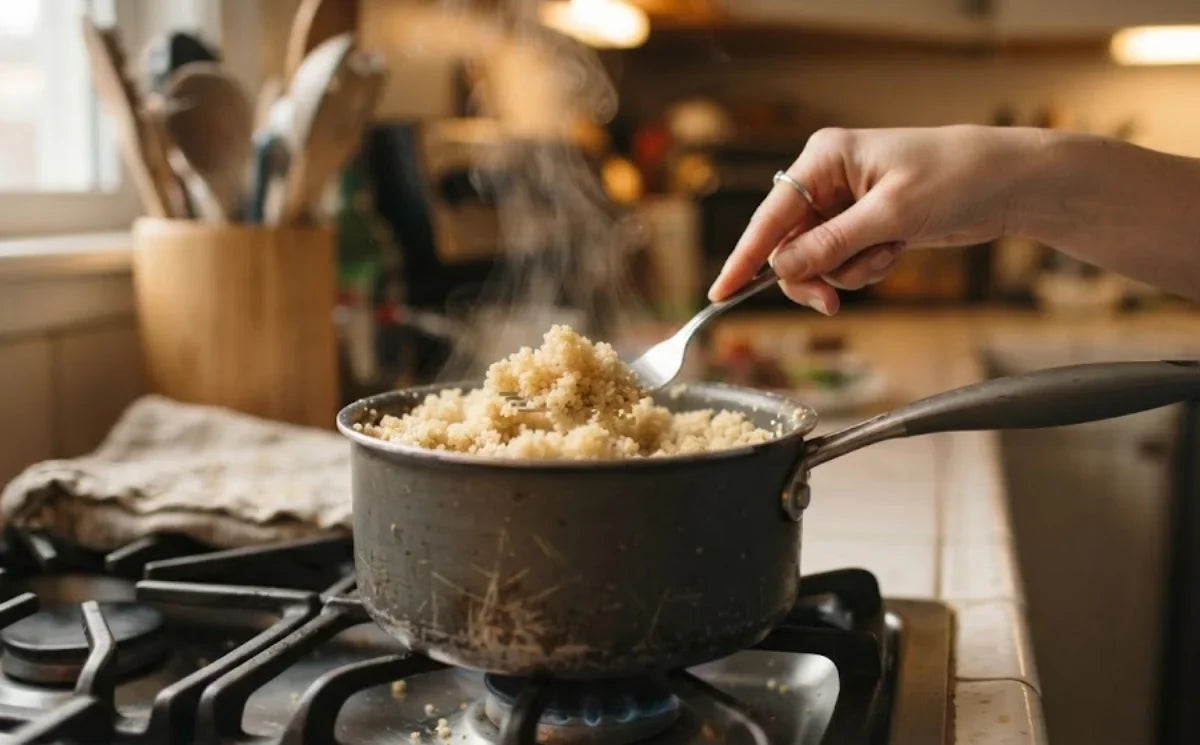
A simple stovetop method: bring your 1.75:1 water (or broth, for more flavor) to a boil, stir in the rinsed, well-drained quinoa, reduce to a low simmer, cover, and cook for about 15 minutes without lifting the lid. Then take it off the heat and let it rest, still covered, for 5 to 10 minutes before fluffing with a fork. That resting step matters more than people expect, it lets residual steam finish softening the grains evenly rather than leaving the outside done and the center underdone. This same rest-before-fluffing principle applies to organic brown rice too, so it's a habit worth carrying over to your other grains.
If you're using a rice cooker or Instant Pot, the ratio drops slightly further, generally closer to 1.5:1, since both methods lose less water to evaporation than an open stovetop pot.
Mistake 3: Lifting the Lid or Stirring Mid-Cook
This one's a small habit with an outsized effect on texture. Quinoa cooks largely through steam, not just the boiling liquid itself, and lifting the lid to check on it lets that steam escape, which can leave you with uneven grains, some fully cooked, some still slightly firm, by the time you finally call it done. Stirring during cooking has a similar effect, breaking up the grain structure before it's had a chance to set, which is part of what pushes a pot toward mushy rather than fluffy. Once the lid goes on, the best move is genuinely to leave it alone until the timer goes off.
Red vs. White vs. Multicolor Quinoa: Does the Type Change the Method?
The core rinsing and ratio principles apply across all quinoa colors, but there are real differences worth knowing. White quinoa is the mildest and fastest-cooking of the three, with the fluffiest, lightest texture, and it's the most forgiving option if you're still dialing in your ratio. Red quinoa holds its shape more firmly once cooked, with a slightly nuttier, earthier flavor, which makes it a strong choice for salads and grain bowls where you don't want the grains to soften as much. Black quinoa is the earthiest and crunchiest of the three, and it takes marginally longer to cook through than white.
A multicolor blend, combining all three, brings the widest range of texture and flavor to a single dish, but it does mean the black grains may still have a touch of bite even once the white grains are fully tender, since they don't all finish at exactly the same moment. This isn't a flaw so much as part of the appeal, a bit of texture variation across the bowl, but if you want the most consistent, evenly fluffy result every time, white quinoa on its own is the more predictable choice. If you're looking to switch things up from a standard bag of white quinoa, organic multicolor quinoa is a genuinely worthwhile texture upgrade for salads and grain bowls where visual variety and a bit of extra bite are part of the point.
Already Cooked and Mushy? Here's How to Salvage It
If you've already ended up with a mushy pot, it's not a total loss, though it can't be fully reversed back to fluffy. Spreading the cooked quinoa in a thin layer on a baking sheet or a clean towel for 10 to 15 minutes lets excess surface moisture escape, which noticeably firms up the texture. From there, a quick toast in a dry, hot skillet for a few minutes can re-crisp the exterior of the grains further. If neither fully solves it, mushy quinoa still works well in soups, blended into a veggie burger mix, or stirred into a baked casserole, dishes where a softer texture isn't a drawback in the first place.
Bonus: Quinoa Flour for Gluten-Free Baking
Once you've got the whole grain dialed in, it's worth knowing quinoa's other form is worth having in the pantry too. Ground quinoa carries the same complete protein and nutty flavor into baking, making it a solid gluten-free flour option for pancakes, flatbreads, and denser baked goods. Our organic white quinoa flour is a good starting point if you want to bring quinoa into recipes beyond a simple side dish or grain bowl.
Final Thoughts
Bitter, soapy, or mushy quinoa is rarely a sign you're bad at cooking it, it's almost always one of three fixable habits: an insufficient rinse, too much water, or lifting the lid too early. Dial in a proper rinse, a 1.75:1 ratio, and a genuine resting period, and quinoa turns from an unpredictable side dish into one of the more reliable staples in the pantry.
If you're ready to put this into practice, our organic quinoa is a solid, everyday starting point, and our guide on quinoa vs. rice is worth a read if you're deciding which one to build your next meal around. For more ways to round out a varied, whole-grain pantry, our organic grain and organic lentils and beans collections have plenty more to explore.


