
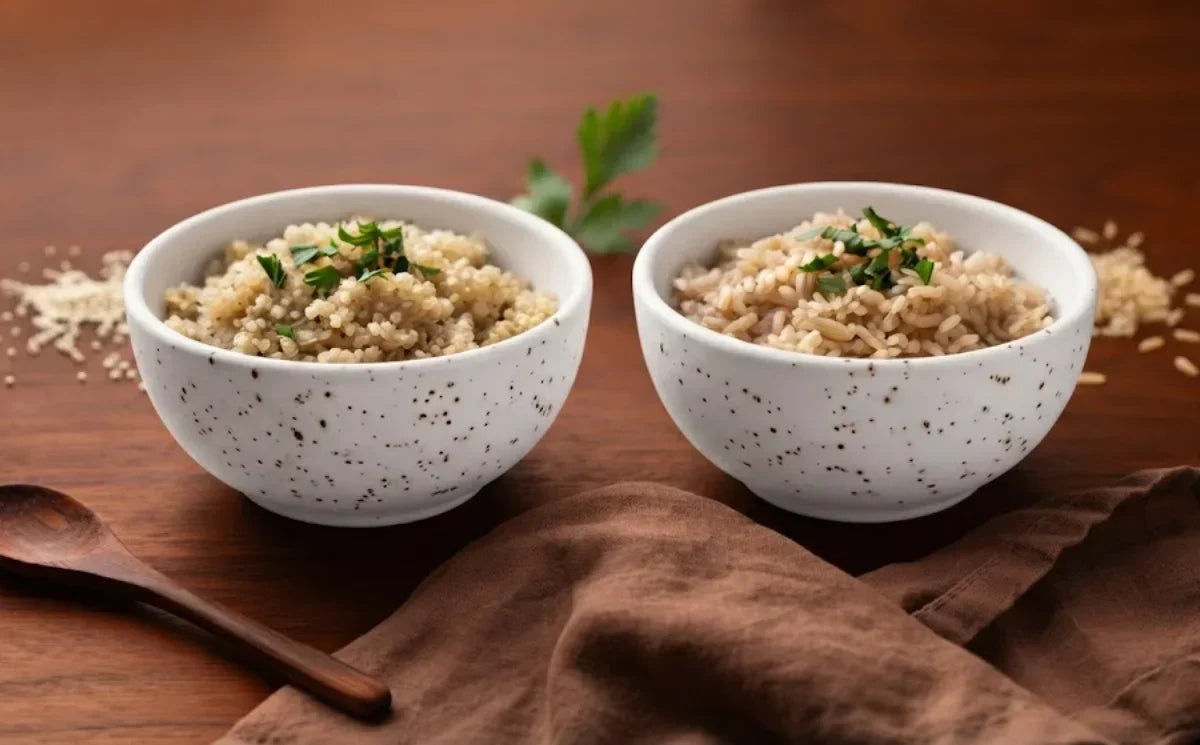
People have been debating quinoa vs rice for years, and honestly, it's easy to see why. Both are pantry staples. Both show up in everything from stir-fries to grain bowls. And both get marketed as "healthy" carbs. But nutritionally, they're not interchangeable. Quinoa and brown rice share some similarities as whole grains, yet there are real differences in protein, fiber, minerals, and glycemic impact that are worth understanding before you decide which one to build your next meal around.
At SFMart, we carry both organic quinoa and brown rice for exactly this reason. Depending on your goals, one may work better for you than the other. Here's how they actually stack up.
Quinoa vs Brown Rice: A Quick Overview
Quinoa and brown rice are both whole grains, though technically quinoa is a seed that we cook and eat like a grain. That distinction sets them apart from white rice, a refined grain that's been stripped of its bran and germ, along with much of its fiber and nutrients. This article focuses on quinoa vs brown rice specifically, since that's the more useful, apples-to-apples comparison for anyone trying to eat a bit healthier.
Nutrition Comparison: Quinoa vs Rice
Carbs and Calories
When it comes to calories and total carbohydrates, quinoa and brown rice are surprisingly close. Both offer around 110 calories per half cup cooked, with about 20 grams of carbs in quinoa and 22 grams in brown rice.
Protein and Dietary Fiber
This is where quinoa pulls ahead. It beats brown rice on both protein and fiber content, offering roughly 4 grams of protein and 2.5 grams of fiber per serving. That fiber count runs about 20 to 30 percent higher than what you'd get from brown rice.
Quinoa is also a complete protein, meaning it contains all nine essential amino acids. That's a rare trait for plant food. Brown rice isn't a complete protein on its own, but it still contributes to growth and daily protein needs, especially when paired with legumes or other protein sources.
Iron, Magnesium, and Minerals
Quinoa tends to win out on iron and magnesium, two minerals that are commonly under-consumed in plant-based diets. Brown rice, on the other hand, offers a wider variety of minerals overall, with higher levels of selenium and manganese.
|
Nutrient Focus |
Quinoa |
Brown Rice |
|
Protein |
Higher (complete protein) |
Lower (incomplete protein) |
|
Fiber |
Higher (about 20 to 30% more) |
Lower |
|
Iron and Magnesium |
Higher |
Lower |
|
Selenium and Manganese |
Lower |
Higher |
|
Calories and Carbs |
About 110 cal, 20g carbs |
About 110 cal, 22g carbs |
Vitamins
Both grains hold up similarly when it comes to B-vitamins, so there's no clear winner in this category.
Taste: Quinoa vs Rice
Texture-wise, quinoa and brown rice both have a slightly chewy bite, but their flavors go in different directions. Quinoa is more neutral, so it's easy to fold into meals without changing the overall flavor much. Brown rice has a more forward, nutty taste that's hard to miss in some dishes. That's a plus if you love that toasty rice flavor, and a drawback if you're looking for something more like a blank canvas.
Health Benefits of Quinoa and Brown Rice
Both whole grains are solid sources of minerals, fiber, and protein, and both stay relatively low in calories. Some of the shared benefits include:
- Both quinoa and brown rice may help support healthy blood sugar levels and better digestion, largely because they're both gluten-free whole grains.
- Quinoa is a complete protein, while brown rice isn't, but both still support growth and development as part of a balanced diet.
- Both grains can help with weight management, since their fiber content helps you feel fuller for longer.
- Both have a lower glycemic index than white rice, which makes them smart picks for anyone watching their blood sugar or managing diabetes risk.
You might want to have a look at this well-curated blog on ‘Health benefits of brown and white rice’.
Uses: How to Cook With Quinoa and Rice
Quinoa and brown rice get used in pretty similar ways. Both are common substitutes for white rice when someone wants to boost the nutritional value of a meal. You'll find them showing up in:
- Grain bowls and salads
- Side dishes alongside proteins and vegetables
- Stuffed peppers, casseroles, and pilafs
- Soups and stews as a hearty add-in
Substituting Quinoa for Rice
You can swap quinoa in for brown rice, basmati rice, or other whole grains in most recipes without much trouble. The flavor will shift a bit since quinoa is more neutral and rice leans nutty, but the overall impact on a dish is minimal. That makes it easy to switch depending on what you have on hand or which nutritional profile you're after.
Which Should You Choose?
Choose quinoa if you want more protein, including a complete amino acid profile, along with more fiber, iron, and magnesium. It's a solid pick for vegetarians, vegans, or anyone trying to boost plant-based protein intake.
Choose brown rice if you prefer a nuttier flavor, want more selenium and manganese, or need a budget-friendly staple that's easy to find anywhere.
Either way, both grains beat out white rice for anyone focused on blood sugar, weight, or general nutrition. If you are interested in knowing more about brown rice and whether it is good for triglycerides, read this blog here.


