
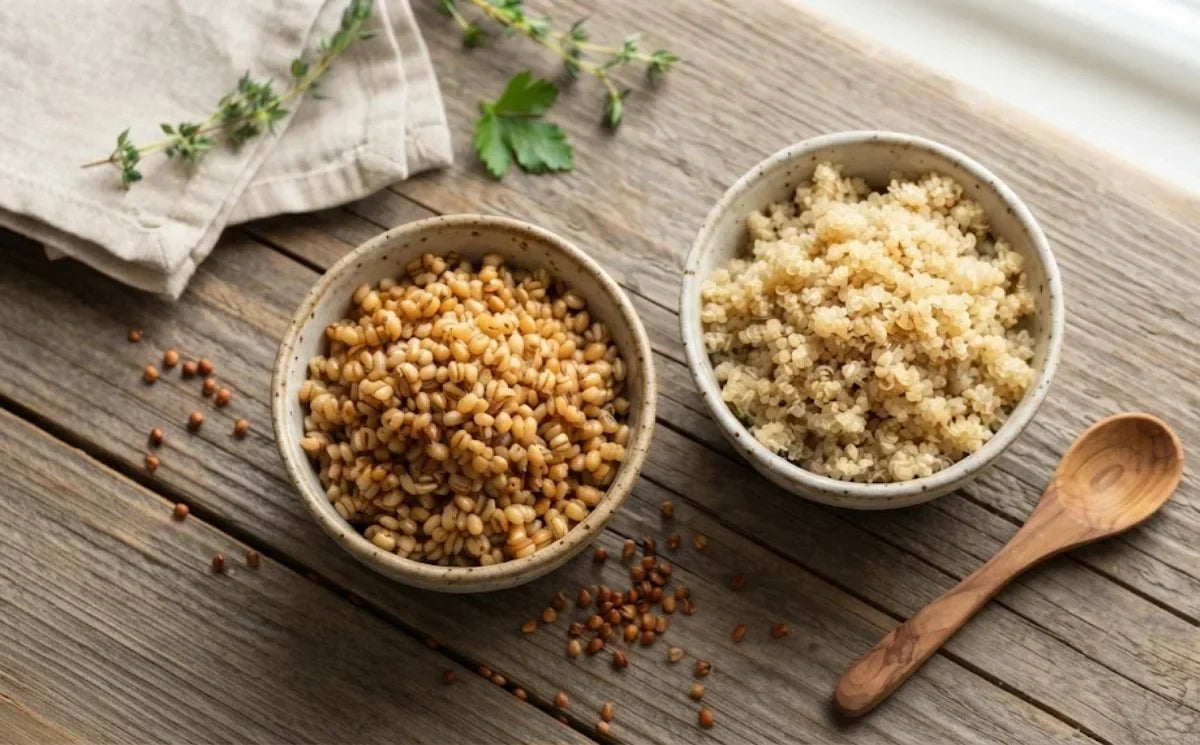
If you started an anti-inflammatory diet at some point in the last few years, chances are quinoa became your go-to grain almost immediately. It's a complete protein, it's gluten-free, and it shows up on every "anti-inflammatory foods" list you'll find. The problem is that eating the same grain on repeat gets old fast, and when a diet gets boring, it gets abandoned. At SFMart, we hear this from customers constantly: they're not tired of eating healthy, they're tired of eating the same bowl of quinoa. If that sounds familiar, organic sorghum deserves a spot in your rotation.
This guide covers what actually makes a grain anti-inflammatory, how sorghum's nutrition profile compares to quinoa, and practical ways to start using it without overhauling your whole pantry.
What Actually Makes a Grain "Anti-Inflammatory"?
Before comparing grains, it helps to know what researchers are actually looking at when they call a food anti-inflammatory. A few consistent factors show up across the research:
- Polyphenol and antioxidant content. Compounds like phenolic acids, flavonoids, and anthocyanins help neutralize free radicals, which are linked to the oxidative stress that drives chronic inflammation.
- Fiber content. High-fiber whole grains feed beneficial gut bacteria, and a healthier gut microbiome is increasingly tied to lower systemic inflammation markers.
- Glycemic impact. Grains that spike blood sugar quickly can also spike inflammatory markers over time, so lower glycemic index foods tend to be favored in anti-inflammatory diets.
- Whole grain vs. refined. Refining a grain strips away the bran and germ, which is where most of the fiber, antioxidants, and micronutrients actually live.
Quinoa checks these boxes well, which is exactly why it became the default anti-inflammatory grain. But it's not the only grain that does.
Sorghum: The Grain Quietly Outperforming Quinoa
Sorghum is one of the oldest cultivated cereal grains in the world, long a staple across Africa and Asia, and it's increasingly showing up in U.S. grocery stores and nutrition research for good reason. A few things stand out:
- Higher antioxidant levels than quinoa in some comparisons. Certain sorghum varieties, particularly black and red-hued types, contain 3-deoxyanthocyanins, a class of antioxidant compound largely unique to sorghum, and research from sorghum industry and academic sources has found sorghum's antioxidant and anti-inflammatory activity can exceed that of blueberries in some measures.
- No inedible hull. Unlike some grains, sorghum's outer layers are edible, so even minimally processed sorghum retains more of its natural fiber than grains that lose their bran during hulling.
- More protein per serving than quinoa. A half-cup serving of whole grain sorghum provides more than double the protein of the same amount of quinoa, according to sorghum industry nutrition data.
- Rich in resistant starch. This type of starch resists digestion in the small intestine, feeding gut bacteria the way fiber does, and it's linked to more stable blood sugar after meals.
- Naturally gluten-free, and research on people with celiac disease has found no adverse reaction to sorghum-based foods over short-term testing, making it a reasonable option for gluten-free anti-inflammatory diets.
Sorghum vs. Quinoa: How They Actually Compare
Both grains earn their place on an anti-inflammatory plate, but they're not identical:
- Protein: Sorghum edges out quinoa on a per-serving basis, though quinoa remains a complete protein with all nine essential amino acids, which sorghum is not.
- Fiber: Both are strong sources, with sorghum's edible outer layers contributing extra fiber that's stripped from many other grains during processing.
- Antioxidants: This is where sorghum, especially darker varieties, tends to pull ahead, thanks to its concentration of phenolic compounds and 3-deoxyanthocyanins.
- Texture and flavor: Quinoa has a light, slightly fluffy texture with a mild, nutty taste. Sorghum stays firm and chewy even after cooking, closer to a pearl barley or wheat berry, which makes it a good textural change of pace if quinoa's texture is part of what's gotten old.
- Versatility: Quinoa cooks faster, but sorghum holds up better in slow-cooked dishes, salads, and grain bowls where you want the grain to keep some bite.
Neither grain needs to fully replace the other. Rotating between them (along with other whole grains) is a simple way to broaden your nutrient intake instead of relying on one grain to do all the work.
How to Cook and Use Organic Sorghum
Whole grain sorghum cooks similarly to farro or wheat berries. Rinse it, then simmer in about three parts water to one part sorghum for roughly 45 to 60 minutes, until tender but still chewy. It holds its shape well, which makes it useful in a range of dishes:
- As a rice or quinoa substitute in grain bowls, pilafs, and salads
- In soups and stews, where its firm texture holds up to longer cooking times
- As a warm breakfast porridge, simmered with milk and topped with fruit
- Popped like popcorn for a crunchy, whole-grain snack
- Ground into flour for gluten-free baking, since sorghum flour behaves well in breads, muffins, and pancakes. Our guide to sorghum flour covers its nutrition profile and best uses in more detail.
If you want a softer, stickier texture closer to short-grain rice, McCabe Organic Glutinous Sorghum is worth trying. Its higher starch content gives it a chewier, more clingy bite than standard whole grain sorghum, closer to the texture of glutinous rice, which makes it a good fit for porridge or grain-based side dishes where you want the grains to hold together.
Building an Anti-Inflammatory Grain Rotation Beyond Quinoa
Sorghum doesn't have to be a one-for-one quinoa replacement. The bigger win for an anti-inflammatory diet is variety, since different grains bring different antioxidant compounds and fiber types to the table. A few worth rotating in alongside sorghum:
- Barley, one of the richest sources of beta-glucan, a soluble fiber tied to lower cholesterol and steadier blood sugar. See our piece on the health benefits of regular pearled barley for more. McCabe Organic Tri-Color Barley combines three barley varieties in one bag, which is an easy way to add color and textural variety to a grain bowl without buying three separate ingredients.
- Millet, a light, naturally alkaline grain that's easy to digest and gluten-free. Our guide to organic millet breaks down the different types if you want to add it to your rotation.
- Brown rice, a reliable, fiber-rich base that pairs well with bolder-flavored grains like sorghum. See our roundup of brown rice's 5 health benefits for more.
- Black rice, which brings its own anthocyanins to the table, the same antioxidant family found in blueberries. Our piece on cooking with organic black rice has recipe ideas to get started.
Our organic small grains and broader organic grain collections are a good place to build out this kind of rotation, and pairing grains with a scoop of organic lentils or organic beans adds plant-based protein and even more fiber to the mix (our guide on the benefits of eating lentils covers this in more depth). If you want to bake with sorghum instead, our organic grain flours collection includes sorghum flour for gluten-free breads, muffins, and pancakes.
Final Thoughts
Quinoa earned its reputation for good reason, but no single grain should carry an entire anti-inflammatory diet on its own. Sorghum brings a genuinely different nutritional profile to the table, more protein per serving, a distinct set of antioxidants, and a heartier texture that can make meals feel less repetitive.
For more on how quinoa stacks up against other staples, our guide on quinoa vs. rice and our roundup of the 3 healthiest organic grains are worth reading next.


