
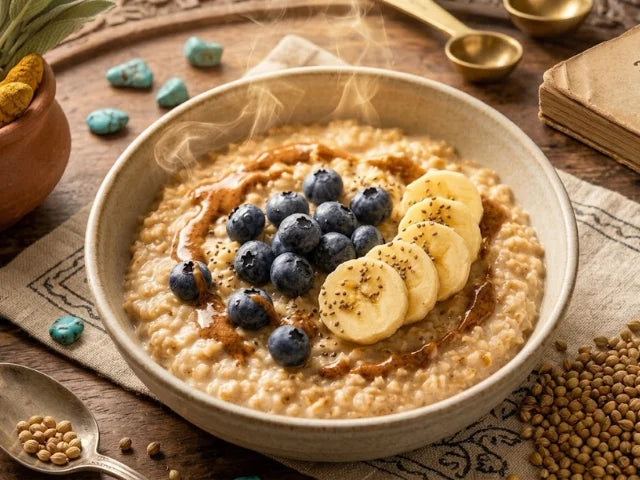
Oatmeal has been a staple of "healthy breakfast" lists for decades, and it shows up on nearly every fat loss meal plan you'll find. But there's a real question underneath the reputation: does oatmeal actually help you lose weight, or is it just a low-effort breakfast that happens to be marketed well?
The honest answer sits somewhere in between. Oats aren't a magic fat-burning food, nothing is, but they have real, measurable properties that make them genuinely useful for weight management when they're prepared and portioned the right way. At SFMart, we have a wide variety of staples including a proper organic oats for you to choose your pick from. Apart from this, our diverse range of organic rice, organic flour and organic grains is also worth your purchase. Here's what the research actually supports, how much to eat, and how to avoid turning a helpful breakfast into an accidental calorie bomb.
Is Oatmeal Good for Weight Loss?
Yes, with some important context. Oatmeal supports weight loss primarily through two mechanisms: high fiber content and slow digestion, both of which affect how full you feel and how long that fullness lasts.
Oats are one of the richest natural sources of beta-glucan, a type of soluble fiber that forms a gel-like substance in the digestive tract. This slows gastric emptying, meaning food stays in your stomach longer, which is a big part of why a bowl of oatmeal tends to keep people full for several hours compared to lower-fiber breakfast options like a plain bagel or sugary cereal that digest quickly and leave you hungry again within an hour or two.
That said, oatmeal isn't inherently a "weight loss food" in isolation. Weight loss ultimately comes down to a sustained calorie deficit over time. What oats do well is make that deficit easier to sustain, since a filling, high-fiber breakfast reduces the odds of overeating later in the day. The oatmeal itself isn't burning fat directly, it's supporting the eating pattern that leads to fat loss.
Oats for Weight Loss: The Fiber Connection
Fiber's role in weight management is one of the more well-established areas of nutrition science, and oats are a strong example of it in action.
Soluble fiber, the kind oats are rich in, slows digestion and blunts the rise in blood sugar after a meal. This matters for weight loss in a few specific ways:
Extended satiety:
Because oats digest slowly, blood sugar rises and falls more gradually after eating them, compared to a spike-and-crash pattern from refined carbohydrates. That steadier blood sugar curve is linked to feeling fuller for longer and experiencing fewer intense hunger signals a couple hours later.
Reduced overall calorie intake:
Several studies on high-fiber breakfasts have found that people who eat a fiber-rich morning meal tend to consume fewer total calories throughout the rest of the day, likely because they're not chasing a blood sugar crash with more food.
Gut health support:
Beta-glucan fiber also acts as a prebiotic, feeding beneficial gut bacteria. A growing body of research connects gut health to metabolic health and weight regulation, though this is a newer, still-developing area of the science compared to the more established fullness and blood sugar effects.
Steel Cut Oats and Weight Loss: Does the Type of Oat Matter?
It does, though the difference is more about degree than an entirely different outcome. Steel cut oats are less processed than rolled or instant oats, meaning the groat structure stays more intact. This slows digestion further compared to more processed oat types, which translates to an even steadier blood sugar response and, for many people, a longer stretch of fullness after eating.
Here's roughly how the common oat types stack up for weight loss purposes:
- Steel cut oats: Slowest digesting, lowest glycemic index (roughly 42-55), generally the most filling per serving
- Rolled oats (old fashioned): Moderate digestion speed, moderate glycemic index (roughly 55-63), still a solid choice
- Quick oats: Faster digesting, higher glycemic index (roughly 65-75), less filling than steel cut or rolled
- Instant oats (especially flavored): Fastest digesting, often high glycemic index (74 and up), frequently loaded with added sugar that works against the fullness benefit entirely
If weight loss and appetite control are the specific goal, steel cut oats generally have the edge. But rolled oats, eaten plain without added sugar, are still a genuinely good choice, and often more realistic for a busy weekday morning than a 25-minute pot of steel cut oats.
Low Glycemic Oatmeal: Why It Matters for Fat Loss
Glycemic index measures how quickly a food raises blood sugar. Lower glycemic foods tend to support weight loss better than higher glycemic ones for a fairly straightforward reason: a slow, steady blood sugar rise doesn't trigger the same sharp insulin response, and a big insulin spike followed by a crash is closely tied to rebound hunger.
A few practical ways to keep your oatmeal on the lower end of the glycemic scale:
- Choose steel cut oats over instant or quick oats when possible
- Cook oats just until tender rather than simmering them into a very soft, mushy texture, since more intact starch structure digests more slowly
- Add protein or healthy fat (Greek yogurt, nuts, seeds, or nut butter), which further slows glucose absorption
- Skip added sugar, syrup, or flavored instant packets, which spike glycemic response regardless of the oat type underneath
Filling Breakfast Oats: How to Make Oatmeal More Satisfying
Plain oatmeal is filling on its own, but it's not maximally filling, and a lot of people give up on "oats for weight loss" simply because a bowl of plain oatmeal doesn't hold them until lunch. The fix isn't switching away from oats; it's building the bowl better.
Add protein:
A scoop of protein powder, a serving of Greek yogurt stirred in, or a couple of eggs on the side meaningfully extends fullness, since protein is the single most satiating macronutrient.
Add healthy fat:
A tablespoon of nut butter, a handful of nuts, or a spoonful of chia or ground flaxseed adds staying power without adding a large amount of volume.
Add fiber-rich fruit:
Berries, sliced apple, or banana bring additional fiber and volume for relatively few calories, bulking up the bowl without a big calorie cost.
Watch the liquid ratio:
Cooking oats with milk instead of water adds protein and makes the final bowl more filling for a modest calorie increase, which is often a worthwhile trade for satiety.
Protein Oatmeal Recipe: A Simple, Filling Base
Here's a straightforward template that consistently shows up in weight-loss-focused meal plans, since it balances fiber, protein, and healthy fat in one bowl.
Base:
- 1/2 cup rolled or steel cut oats (dry)
- 1 cup milk or unsweetened milk alternative (or a mix of milk and water)
- 1 scoop protein powder, stirred in after cooking, or 1/2 cup Greek yogurt
Add-ins:
- 1 tablespoon nut butter or a handful of nuts
- 1/2 cup berries or a small sliced banana
- A dash of cinnamon (cinnamon has been studied in a modest capacity for supporting more stable blood sugar, though it's a minor supporting factor, not a primary one)
This kind of bowl typically lands in the 350-450 calorie range depending on exact portions, delivering roughly 20-30 grams of protein, 8-10 grams of fiber, and a slow-digesting carbohydrate base, a combination that holds up well against hunger for several hours. If you wish to learn the difference between regular oats and organic oats, click here.
High Protein Breakfast Ideas Built Around Oats
If you're specifically trying to increase protein at breakfast while still keeping oats in the mix, a few reliable combinations show up consistently in nutrition guidance:
- Overnight oats made with Greek yogurt and milk instead of just water, topped with nuts
- Rolled oats cooked in milk with a scoop of protein powder stirred in once cooled slightly (adding it while too hot can sometimes cause clumping)
- A smaller bowl of oatmeal paired with two eggs or a serving of cottage cheese on the side, splitting the meal between a slow-digesting carbohydrate and a separate concentrated protein source
- Savory oats cooked in broth, topped with a fried or soft-boiled egg, an approach that trades the usual sweet toppings for a more protein-forward, savory bowl
Oatmeal Calories: What a Realistic Serving Actually Looks Like
Oatmeal itself is fairly low in calories in its plain form, but calories add up quickly depending on toppings, and this is where a lot of "healthy" oatmeal accidentally becomes a 600-calorie bowl.
Plain oats, dry, 1/2 cup serving: approximately 150 calories, before any milk, toppings, or add-ins
Cooked in water: stays close to 150 calories total
Cooked in whole milk instead of water: adds roughly 75-90 calories per cup of milk used
Common toppings and their approximate calorie additions:
- 1 tablespoon nut butter: approximately 90-100 calories
- 1/2 cup berries: approximately 40 calories
- 1 tablespoon honey or maple syrup: approximately 60 calories
- 1 scoop protein powder: approximately 100-130 calories, depending on brand
A thoughtfully built bowl, oats plus protein plus a modest amount of fruit and a small amount of fat, generally lands in a very reasonable 350-450 calorie range for a filling breakfast. Where things go wrong is stacking multiple high-calorie toppings (nut butter, syrup, dried fruit, granola, and a sugary flavored packet all in one bowl), which can easily push a single serving past 600 or 700 calories without feeling like a particularly large portion.
You might want to know more about the healthy types of oats; SFMart has a well-curated blog written for you. Read on to know the difference between steel cut oats and rolled oats.
Does Oatmeal Help You Lose Belly Fat?
This is one of the most frequently searched questions on this topic, and it deserves a straightforward, honest answer: no single food, including oatmeal, targets fat loss in a specific area of the body. Spot reduction, the idea that eating or exercising a certain way burns fat from one specific location, isn't supported by current research. Fat loss happens across the body based on overall calorie balance, genetics, and hormonal factors, not by targeting a particular food at a particular body part.
What oatmeal can do is support the broader conditions that lead to overall fat loss, including belly fat, over time: helping manage appetite, supporting a calorie deficit through improved fullness, and providing a steadier blood sugar response than many refined-carbohydrate breakfast alternatives. Framed accurately, oatmeal is a supportive tool within an overall fat loss approach, not a food that burns fat from a specific area on its own.
Best Way to Eat Oatmeal for Weight Loss
Pulling everything together, here's what actually matters most, based on both the research and what tends to hold up in practice:
- Choose steel cut or rolled oats over instant, and skip flavored packets entirely. This alone addresses most of the added sugar and glycemic index concerns.
- Cook with milk or a milk alternative rather than just water for added protein and a more filling result.
- Add a concentrated protein source, whether that's protein powder, Greek yogurt, or eggs on the side, since oats alone are moderate in protein but not high.
- Include a source of healthy fat, like nuts, seeds, or nut butter, in a measured amount rather than a heavy pour.
- Add fiber-rich fruit for volume and additional nutrients without a large calorie cost.
- Watch portion size on toppings specifically, since the oats themselves are rarely the source of an oversized calorie count, the toppings usually are.
Healthy Breakfast for Fat Loss: Where Oats Fit in the Bigger Picture
Oats are a strong breakfast choice for fat loss, but they're one option among several genuinely good whole-grain and high-fiber choices, and variety tends to support better long-term adherence than eating the exact same bowl every single day. Whole grains like Glutinous Rice, for instance, share several of the same properties that make oats useful for weight management: high fiber relative to refined grains, a lower glycemic index than white rice, and a similar ability to support fullness when paired with protein.
If you're curious how a different whole grain compares to oats for this same goal, it's worth reading Can Organic Rice Help With Weight Management? on the SFMart blog, which goes deeper into how rice choice and preparation affect weight management specifically, a useful companion piece if oatmeal isn't your only breakfast or if you're building meals later in the day around whole grains rather than just breakfast.
Building a broader pantry around minimally processed whole grains, lentils, and beans, alongside your usual oats, tends to make sustainable fat loss easier over time than relying on one single "superfood" breakfast to do all the work. Fiber-rich legumes in particular pair well with the same slow-digestion, appetite-management logic that makes oats useful, just applied to lunch and dinner instead of breakfast.


