
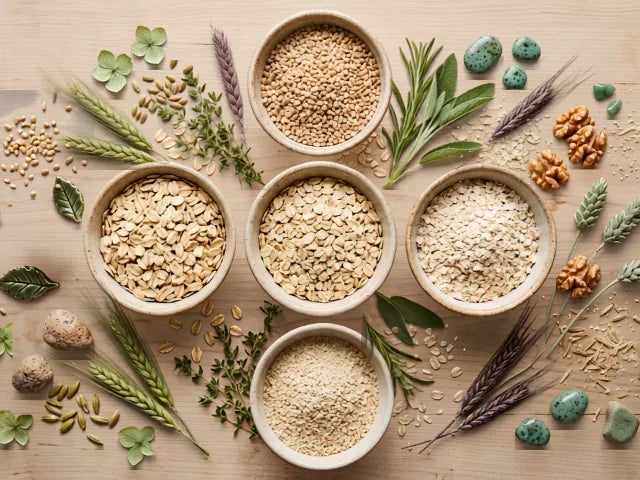
Oats have one of the best reputations in the grocery store. They're cheap, filling, and marketed as a heart-healthy staple on nearly every box. But walk down the cereal aisle and you'll see steel cut, old fashioned rolled, quick, instant, and even oat bran, all labeled as some version of "healthy." So which one actually is?
The short answer is that all oats start from the same nutritious whole grain, but how they're processed changes how your body digests them, and that has a real effect on things like blood sugar response and how full you feel afterward. Here's a full breakdown of what separates the healthiest oats from the rest, and how to pick the right one for your goals.
Are All Oats the Same Nutritionally?
This is worth answering directly, because it's one of the most common misconceptions about oats. Every type of oat sold in the US, steel cut, rolled, quick, instant, or oat bran, comes from the same source: the whole oat groat. Before any processing happens, that groat contains the bran, germ, and endosperm, which is what makes oats a genuine whole grain food, unlike refined grains that have the bran and germ stripped away. At SFMart, we bring to you a collection of organic oats, organic grains and other staple items that are a must have in your everyday dietary requirements.
On paper, if you compare equal dry weights, most types of plain, unflavored oats look remarkably similar in calories, protein, and fat. But "similar on paper" isn't the same as "identical in effect." The amount of processing a groat goes through changes its physical structure, and that structure difference is what drives real differences in fiber breakdown, digestion speed, and glycemic response. This is the part of the story nutrition labels alone don't fully capture.
Oat Nutrition Comparison: Steel Cut vs. Rolled vs. Quick vs. Instant
|
Oat Type |
Processing |
Cook Time |
Glycemic Index (approx.) |
Texture |
|
Steel cut |
Groat chopped into 2-3 pieces |
20-30 min |
42-55 |
Chewy, dense |
|
Rolled (old fashioned) |
Steamed, then flattened |
5-10 min |
55-63 |
Soft, creamy |
|
Quick oats |
Steamed longer, rolled thinner |
1-3 min |
65-75 |
Mushy, fine |
|
Instant oats |
Pre-cooked, dehydrated, often flavored |
1-2 min |
74-83+ |
Very soft, often sweetened |
|
Oat bran |
The bran layer only, separated from the groat |
3-5 min |
50-55 |
Grainy, porridge-like |
Steel cut and rolled oats sit closer to the "whole grain, minimally processed" end of the spectrum, while quick and especially flavored instant oats sit at the more processed end, with a corresponding jump in glycemic index. If you wish to learn more about the differences between steel cut oats and rolled oats, read on.
Healthiest Oats to Eat: What Actually Separates Them
If the goal is picking the single healthiest option, three factors matter more than any marketing claim on the box.
How intact the groat structure is:
Less processing generally means slower digestion, since your body has to work harder to break down the starches. This is the single biggest reason steel cut oats consistently rank as the "healthiest" oat in comparison articles and nutrition guides.
Added ingredients:
This is where instant oatmeal packets fall apart nutritionally. Plain instant oats aren't drastically different from quick oats. Still, flavored instant oatmeal (maple brown sugar, cinnamon roll, and similar varieties) often contains several grams of added sugar per packet, plus sometimes hydrogenated oils or artificial flavoring. Reading the ingredient list, not just the "oats" claim on the front, matters enormously here.
Fiber retention:
Oat bran and steel cut oats tend to have a slight fiber edge over highly processed instant varieties, since less mechanical processing generally preserves more of the fibrous structure per serving.
Put simply: the healthiest oats to eat are the ones closest to their original whole-grain form and free of added sugar, which points to steel cut oats, rolled oats, and oat bran as the strongest everyday choices.
Best Oats for You: Matching Oat Type to Your Goal
There isn't one single "best" oat for every person, because different oats support different priorities.
If you want the lowest glycemic impact:
Steel cut oats or oat bran, both of which digest more slowly and produce a gentler rise in blood sugar.
If you want convenience without sacrificing much nutrition:
Plain rolled oats, unflavored, with your own toppings added. This avoids the added sugar in flavored instant packets while still cooking in under 10 minutes.
If you're short on time every single morning:
Plain quick oats or plain instant oats (unflavored) are a reasonable middle ground, still whole grain, just faster digesting than steel cut or rolled.
If you want the most fiber per serving with a soft texture:
Oat bran, which is essentially the fiber-richest layer of the oat, separated out and cooked on its own.
If you're baking:
Rolled oats remain the standard choice, since they absorb moisture and bind ingredients more predictably than steel cut oats.
Whole Grain Oats Benefits: Why Oats Earned Their Reputation
Oats didn't become a nutrition staple by accident. As a whole grain, they offer a genuinely well-rounded nutritional profile:
- Beta-glucan fiber:
Oats are one of the richest natural sources of beta-glucan, a soluble fiber specifically linked in numerous studies to lower LDL cholesterol and improved heart health, which is also why oats carry an FDA-approved heart health claim on packaging.
- Steady energy release:
The combination of fiber, protein, and complex carbohydrates means oats digest more slowly than refined-grain breakfast options like white toast or sugary cereal, supporting more stable energy and fullness.
- Plant protein:
Oats contain more protein than most other whole grains, roughly 5-6 grams per half-cup dry serving, which is a meaningful contribution for a plant-based breakfast.
- Micronutrients:
Oats provide iron, magnesium, zinc, and B vitamins, all of which support energy metabolism and are often under-consumed in typical American diets.
- Antioxidants:
Oats contain avenanthramides, a group of antioxidant compounds largely unique to oats among common grains, which have been studied for anti-inflammatory properties.
These benefits apply across oat types, since they come from the oat groat itself rather than from a specific processing method. The processing method mainly changes how fast your body accesses these nutrients, not whether they're present. If you wish to read on the benefits of organic oat flour, SFMart has a well-curated blog for you.
High Fiber Oats: Which Type Has the Most?
Fiber content is one of the most searched comparisons, and the answer depends slightly on how you're measuring it.
By raw fiber content per serving: Oat bran generally leads, at roughly 6 grams of fiber per half-cup dry, compared to about 4 grams for an equivalent serving of rolled or steel cut oats. This makes sense given that oat bran is concentrated bran, the fiber-richest layer of the groat.
By whole-oat comparison: Steel cut and rolled oats are very close to each other, generally in the 4-gram range per half-cup dry, with steel cut sometimes testing marginally higher due to less surface area disruption during processing.
Instant and quick oats: Typically fall slightly behind steel cut and rolled oats in fiber per serving, though the gap is smaller than most people assume, usually still landing in the 3 to 4 gram range for plain, unflavored versions.
If maximizing fiber intake specifically is the goal, oat bran is worth considering as a regular addition, even mixed into a bowl of rolled or steel cut oats rather than used entirely on its own. When shopping for it, the same logic that applies to picking organic rice or other whole grains applies here too: checking the label for whole-grain, minimally processed oat bran, rather than a blend padded with fillers, makes more of a difference than the brand name on the front of the bag.
Low Glycemic Oats: Best Options for Blood Sugar
Glycemic index (GI) measures how quickly a food raises blood glucose. For anyone managing blood sugar, whether due to diabetes, prediabetes, or general metabolic health goals, this comparison matters more than almost any other oat metric.
Lowest GI, generally 42-55: Steel cut oats, oat bran
Moderate GI, generally 55-63: Rolled oats (old fashioned)
Higher GI, generally 65-75: Quick oats
Highest GI, often 74-83 or more: Instant oats, especially flavored, sweetened varieties
A few preparation choices affect GI regardless of oat type. Cooking oats for less time and leaving them slightly firm, rather than simmering into a very soft, mushy texture, tends to keep the GI lower. Adding protein or fat, such as nuts, seeds, or nut butter, further slows glucose absorption. And skipping added sugar entirely, rather than relying on flavored packets, avoids one of the biggest GI spikes in the entire oat category.
Healthiest Oats for Diabetics
For anyone managing diabetes, steel cut oats and oat bran are generally the top recommendations, and the reasoning lines up closely with the glycemic index data above. Slower-digesting oats produce a more gradual rise in blood glucose, which is typically easier to manage than a sharper spike followed by a crash.
That said, rolled oats aren't off the table for diabetics. Portion size and pairing matter as much as the oat type itself. A moderate portion of rolled oats with a source of protein or healthy fat, and without added sugar, can fit reasonably within a diabetes-friendly eating pattern. What's worth avoiding more consistently is flavored instant oatmeal, which combines a higher glycemic index with added sugar, a combination that tends to cause the most noticeable blood sugar spikes among common oat products.
As always with diabetes management, this is general nutrition information rather than personalized medical guidance, and it's worth discussing specific meal planning with a doctor or registered dietitian.
Least Processed Oats You Can Buy
If minimal processing is your top priority, here's the actual hierarchy, from least to most processed:
- Whole oat groats: The least processed form available, essentially the oat kernel with just the inedible hull removed. These take the longest to cook, often 45 minutes to an hour, and have the chewiest, most rice-like texture.
- Steel cut oats: Whole groats chopped into a few pieces, with no steaming or flattening involved.
- Rolled (old fashioned) oats: Steamed and flattened, which speeds up cooking but starts to break down the groat's original structure.
- Quick oats: Steamed longer and rolled thinner than old fashioned oats, cooking much faster but with a softer, less distinct texture.
- Instant oats: Pre-cooked and dehydrated, often with added flavoring, sitting at the far end of the processing spectrum.
Whole oat groats are genuinely the least processed option on store shelves, though they're harder to find than steel cut oats and require the longest cook time by a wide margin. Specialty grocers that focus on organic grains and bulk staples, the kind of store where you'd also find organic brown rice, lentils, or dried beans sold by the bag rather than in a flashy cereal box, are usually a better bet for tracking down whole oat groats than a typical supermarket cereal aisle. For most people looking for a practical, minimally processed option without an hour-long cook time, steel cut oats are the more realistic everyday choice.
Oats Nutrition Facts: A Quick Reference
Per half cup dry (roughly 40g) of plain rolled or steel cut oats:
- Calories: approximately 150
- Protein: approximately 5g
- Fiber: approximately 4g
- Fat: approximately 3g
- Carbohydrates: approximately 27g
- Iron: approximately 10% of daily value
- Magnesium: approximately 15% of daily value
- Zinc: approximately 10% of daily value
These numbers stay fairly consistent across steel cut, rolled, and plain quick or instant oats. The nutrition facts panel doesn't meaningfully change based on processing, which is why the real differentiators between oat types come down to glycemic response, fiber breakdown speed, and what's added during manufacturing, not the base nutrition label itself.
Putting It All Together: So Which Oat Is Actually the Healthiest?
If forced to pick one answer, steel cut oats generally come out ahead for most health goals: lower glycemic index, minimal processing, solid fiber content, and no added ingredients when bought plain. Oat bran deserves a close second mention, particularly for anyone specifically prioritizing fiber intake or blood sugar control.
That said, "healthiest" shouldn't completely override practicality. Rolled oats, eaten plain without added sugar, remain a genuinely nutritious whole grain choice that fits into busy mornings far more easily than a 25-minute pot of steel cut oats. The oat that you'll actually eat consistently, prepared without a pile of added sugar, will usually do more for your health over time than a theoretically superior oat that ends up sitting unused in the pantry.
This same principle extends to the rest of a healthy pantry. Just as oat type and processing level affect how a grain digests and performs nutritionally, the same is true across other whole grains, lentils, and beans. Choosing less processed, whole forms, whether that's steel cut oats over instant packets, or whole grain brown rice over more refined alternatives, tends to be one of the more reliable, consistent nutrition upgrades available at the grocery store.
For more on building a pantry around whole, minimally processed staples, browse SFMart’s collections. We have a diverse range of organic rice, grains, flours, lentils, and beans for other whole-grain and legume staples that pair naturally with a bowl of oats.


