
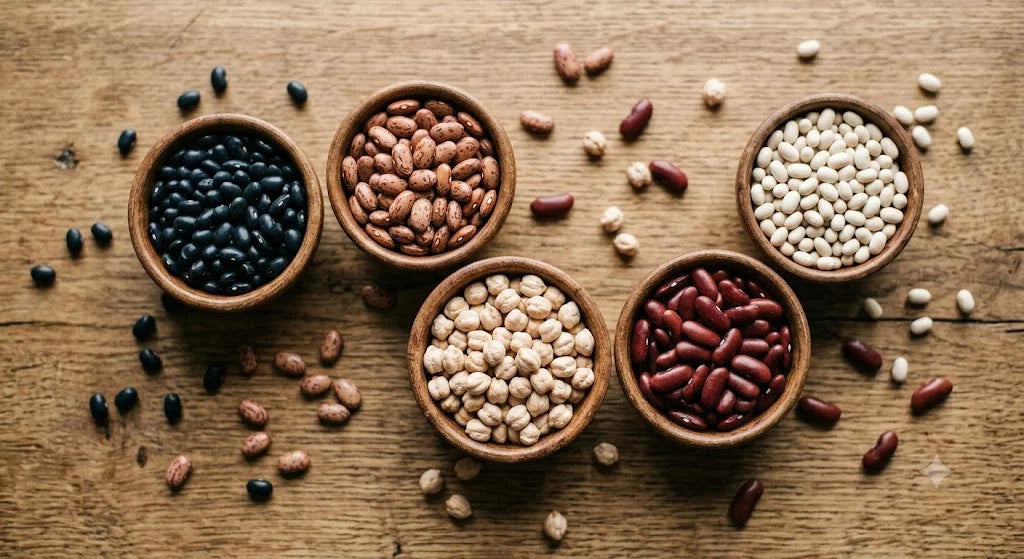
Beans occupy a strange and wonderful place in nutrition: they're one of the only foods that count as both a protein and a complex carbohydrate, and under USDA dietary guidelines, they're even classified as a vegetable. Few other foods can make that claim, and it's part of why registered dietitians consistently rank beans among the most nutrient-dense foods you can eat.
A single half-cup serving of beans; the standard serving size; delivers around 8 grams of protein and up to 8 grams of fiber, along with folate, potassium, iron, and magnesium, for a modest calorie cost. This guide covers what the research actually says about beans and heart health, blood sugar, digestion, weight management, and long-term disease risk, plus practical tips for cooking with them and reducing gas.
What Are Beans? Beans vs. Legumes
Beans are edible seeds that grow inside pods, and they belong to the broader legume (Fabaceae) plant family. As Cleveland Clinic registered dietitian Julia Zumpano puts it, all beans are legumes, but not all legumes are beans; the legume category also includes peas, lentils, and peanuts, each with its own nutritional profile. Common bean varieties include black beans, kidney beans, pinto beans, navy beans, cannellini beans, and chickpeas (garbanzo beans).
According to clinical nutritionists at UCLA Health, the differences in protein, fiber, and micronutrients between bean varieties are relatively minor; so from a health standpoint, the best bean is simply the one you'll actually enjoy eating regularly.
Bean Nutrition Facts
Nutrient content varies slightly by variety, but a review of USDA data on pinto beans, compiled by Johns Hopkins Bloomberg School of Public Health, gives a representative picture. One cup of cooked pinto beans provides approximately:
-
Calories: 245
-
Protein: 15 grams
-
Fiber: 15 grams
-
Iron: 20% of the Daily Value
-
Phosphorus: 25% of the Daily Value
-
Potassium: 21% of the Daily Value
Black beans are an especially concentrated fiber source: a half-cup serving provides about 8 grams of fiber, roughly a quarter of the total fiber most adults need in a day; notable given that only around 5% of Americans currently meet their daily fiber target. Beans are also naturally low in sodium, cholesterol-free, and low in saturated fat, and they contribute copper, folate, magnesium, manganese, thiamine, vitamin B6, and zinc to the diet.
Beans also contain a range of antioxidants and phytonutrients; including anthocyanins, catechin, flavonoids, polyphenols, quercetin, and vitamin E; which help neutralize free radicals in the body.
Health Benefits of Beans
1. Supports Heart Health and Lowers Cholesterol
Beans are naturally free of cholesterol and low in saturated fat, and their soluble fiber content plays a direct, measurable role in cholesterol management: soluble fiber binds to bile (which is made partly of cholesterol) in the gut and helps carry it out of the body, and some clinical guidance suggests that for every gram of soluble fiber consumed, LDL ("bad") cholesterol can drop by about 1%. A review of 26 studies found that diets rich in beans and other pulses were associated with meaningfully lower LDL cholesterol, a major risk factor for heart disease. The American Heart Association recommends beans and legumes as part of a heart-healthy eating pattern, in part because their potassium content also supports healthy blood pressure regulation.
2. Stabilizes Blood Sugar
Because of their fiber and complex carbohydrate content, beans have a low glycemic index and are digested slowly, which helps prevent the blood sugar spikes and crashes that even people without diabetes benefit from avoiding. Research has found that people who regularly eat beans tend to have lower blood glucose levels, and some studies suggest the resistant starch in beans may help lower the long-term risk of developing type 2 diabetes.
3. Supports Digestion and Gut Microbiome Health
Beans deliver both insoluble fiber, which helps prevent constipation, and soluble fiber and resistant starch, which feed beneficial bacteria in the gut microbiome. A healthier gut microbiome has been linked in research to a lower risk of infectious and inflammatory conditions; including inflammatory bowel disease and arthritis; as well as chronic conditions like type 2 diabetes and osteoporosis.
4. May Help Prevent Certain Cancers
No single food prevents or treats cancer, but the fiber and phytonutrients in beans appear to play a protective role. Their effect on digestive health has specifically been linked to a reduced risk of colorectal cancer, and black beans in particular are high in anthocyanins, antioxidant compounds studied for their ability to protect cells from the kind of DNA damage that can lead to cancer.
5. Supports Healthy Weight Management
A review of 21 clinical trials found that eating beans and other legumes daily led to weight loss and reduced body fat, even without deliberate calorie restriction. Separate research found that people who regularly eat beans have lower body weight and smaller waist circumference than those who don't. The likely mechanism is satiety: the combination of fiber and protein in beans slows digestion and keeps you feeling full longer than simple carbohydrates would.
6. Supports Bone Health
Beans supply several of the minerals bone structure depends on, including iron, magnesium, phosphorus, manganese, copper, and zinc, making them a useful plant-based contributor to a bone-supportive diet, particularly for people who eat little dairy or meat.
7. Supports Healthy Pregnancy
Folate is one of the most important nutrients during pregnancy, playing a direct role in fetal development and helping reduce the risk of certain neural tube birth defects. Beans are one of the richest plant-based sources of folate available, making them a valuable addition to a prenatal diet alongside other folate-rich foods. As with any dietary change during pregnancy, it's best to follow your doctor's specific nutrition guidance.
8. Provides Steady, Sustained Energy
Because beans combine plant-based protein with complex carbohydrates, they provide a more sustained energy source than simple carbs, which are broken down quickly and can lead to an energy spike followed by a crash. The fiber in beans slows this digestion further, helping maintain steadier blood sugar and, in turn, steadier energy throughout the day; one reason beans are a staple in endurance-focused and plant-based athletic diets.
9. May Support Longevity
Bean consumption is a defining feature of diets in the world's "Blue Zones"; regions with an unusually high concentration of people who live to 100 or beyond; where residents typically eat around a cup of beans per day. While this observation doesn't prove cause and effect on its own, it lines up with the broader body of research linking regular legume intake to lower rates of heart disease, diabetes, and obesity.
How to Add More Beans to Your Diet
-
Replace half the meat in chili, tacos, or burrito bowls with beans; you may not even notice the difference
-
Add beans to soups, stews, and pasta sauces for extra fiber and plant-based protein; try one of our hearty bean soup recipes
-
Puree beans into hummus, dips, or even pesto-style blends with herbs
-
Roast chickpeas until crispy for a snack or salad topping
-
Choose low-sodium canned beans, and always drain and rinse before use
If you're cooking from dried beans, soak them for 8–10 hours before cooking to improve texture and reduce the natural sugars that can cause gas. Adding digestive-friendly spices like cumin, coriander, fennel, or ginger while cooking can also help. Explore our full organic beans and lentils collection to stock your pantry with USDA-certified organic options.
Why Do Beans Cause Gas?
Beans contain oligosaccharides; complex sugars the body can't fully break down on its own; which are fermented by gut bacteria and can produce gas as a result. This is essentially the flip side of the same fiber that makes beans so beneficial. To ease the adjustment:
-
Start with a small serving and increase gradually rather than eating a full portion right away
-
Soak dried beans overnight and discard the soaking water before cooking
-
Rinse canned beans thoroughly before eating
-
Cook with digestive-aid spices like cumin, fennel, or ginger
Exploring Different Types of Beans
For a closer look at specific varieties, see our detailed guides on black bean health benefits and lentil health benefits, or browse practical ideas in our black bean recipe guide.
The Bottom Line
Beans are a rare food that functions as both a plant-based protein and a complex carbohydrate, backed by decades of research on heart health, blood sugar control, digestion, cancer risk, and weight management. Populations with some of the longest average lifespans eat beans daily, and building a variety of beans into your own weekly meals; sourced from a trusted organic supplier; is a simple, evidence-based way to support long-term health.


