
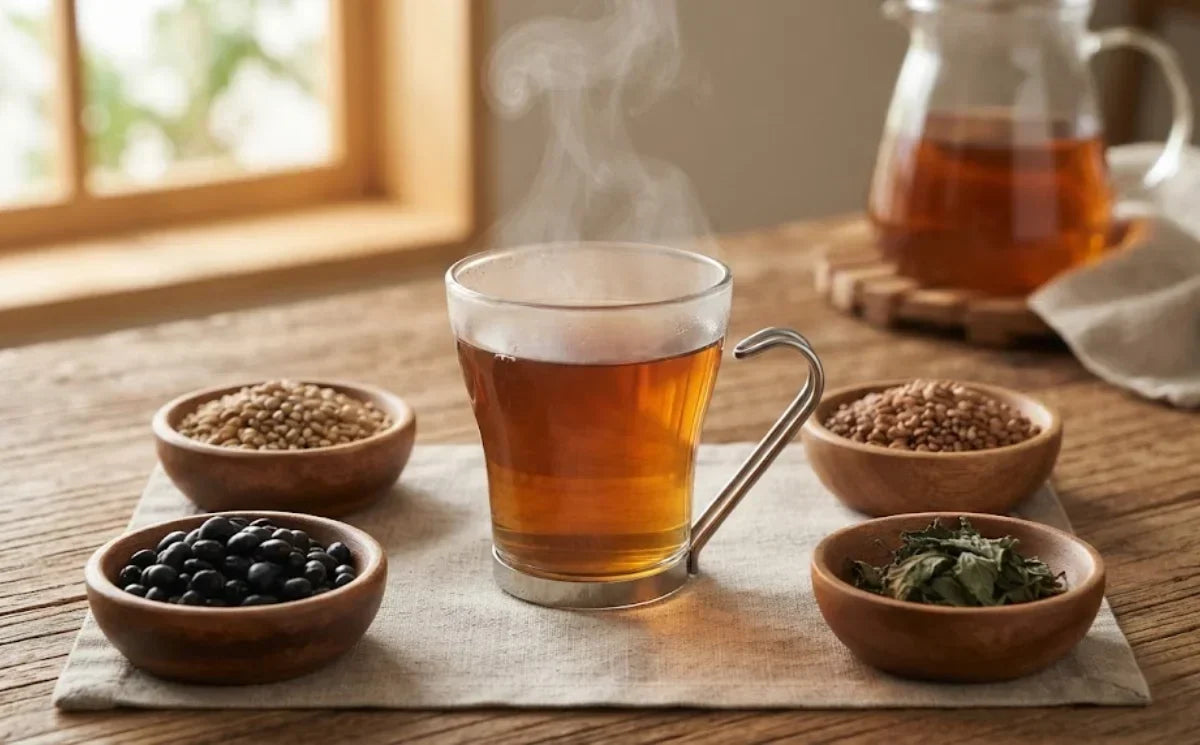
If you've spent any time browsing a Korean grocery aisle or scrolling through Korean cooking content, you've probably noticed a warm, toasty-colored tea sitting next to the barley tea and brown rice tea, often labeled simply "곡물차," or grain tea.
At SFMart, our Organic Harmony Tea is one of our most repurchased tea products, and for good reason: it's a naturally caffeine-free blend that's easy on digestion, simple to brew in bulk, and works as a genuine daily replacement for coffee or green tea. This guide breaks down exactly what's in it, how it compares to other Korean teas, and how to brew it properly.
Quick Answer
Korean harmony tea (곡물차, gongmulcha) is a caffeine-free blend of roasted whole grains, typically roasted hulless barley, roasted brown rice, roasted black bean, and a touch of sun-dried mint. It's brewed the same way as Korean barley tea (boiled, not steeped), and because it contains no tea leaves at all, it has zero caffeine. Many people drink it as a caffeine-free coffee alternative or as an easy way to stay hydrated with warm liquid throughout the day, since the roasted grains give it a naturally nutty, slightly toasty flavor without any bitterness. SFMart's Organic Harmony Tea is made from organic, U.S.-grown roasted hulless barley, roasted brown rice, roasted black bean, and organic sun-dried mint.
What Is Korean Harmony Tea?
"Harmony tea" is essentially a blended version of the roasted-grain tea family that Korean households have brewed for generations. Where a single-grain tea like barley tea (보리차) uses just one roasted grain, harmony tea combines several, usually barley, brown rice, and black bean, into one blend, sometimes with a small addition like mint or corn for extra aroma. The idea behind the name is straightforward: the grains work in "harmony" together, each contributing something slightly different to the final cup.
SFMart's version keeps that same traditional approach, using organic roasted hulless barley, organic roasted brown rice, organic roasted black bean, and organic sun-dried mint, all sourced and roasted in the U.S. The result is a tea with more depth than a single-grain brew, the barley gives it body, the brown rice softens the flavor, the black bean adds a subtle earthiness, and the mint lifts the aroma without making it taste like an actual mint tea.
What Is Korean Barley Tea?
Korean barley tea, or boricha (보리차), is the tea that harmony tea is built on top of, so it's worth understanding on its own. It's made from roasted whole or hulled barley grains steeped or boiled in hot water, and it's one of the most common everyday drinks in Korean households, often kept in a pitcher in the fridge and served instead of plain water with meals.
Roasting the barley is what gives the tea its signature toasty, almost coffee-like color and aroma, even though it contains no actual tea leaves or coffee. Like harmony tea, barley tea is naturally caffeine-free, which is part of why it's such a common all-day drink for both adults and children in Korean households. If harmony tea is the "blended" version, barley tea is the single-grain original it's built from, and SFMart also carries a dedicated Organic Brown Rice Tea (현미차) for anyone who wants to try the single-grain side of that same family.
Mixed Grain Tea vs. Green Tea: What's the Difference?
This is one of the most common points of confusion, since both are brewed hot, both have a light amber color, and both are common in East Asian tea culture. But they're fundamentally different drinks:
- Ingredients: Green tea is made from the leaves of the Camellia sinensis plant, the same plant used for black, white, and oolong tea. Mixed grain tea like harmony tea contains no tea leaves at all; it's made purely from roasted grains and legumes.
- Caffeine: Green tea naturally contains caffeine (generally less than black tea or coffee, but still a meaningful amount). Grain tea has none, because there's no Camellia sinensis plant material in it whatsoever.
- Flavor profile: Green tea tends to be grassy, slightly bitter, and vegetal. Grain tea is nutty, toasty, and mellow, closer in flavor to a light roasted coffee or toasted grain cereal than to any tea leaf.
- Brewing method: Green tea is typically steeped briefly in water just off the boil to avoid bitterness. Grain tea is boiled for several minutes, since the roasted grains need more time to release their flavor into the water.
For anyone who enjoys the ritual of a warm cup but wants to avoid caffeine altogether, rather than just cutting back, grain tea is the more reliable choice, since there's no ambiguity about trace caffeine content the way there sometimes is with "decaffeinated" green tea.
Is Korean Grain Tea Good for You?
Grain teas like harmony tea and barley tea are a genuinely simple, low-effort way to add more warm fluid intake to your day without caffeine, added sugar, or artificial flavoring. A few practical points worth knowing:
- Naturally caffeine-free: Because it's made entirely from roasted grains rather than tea leaves, harmony tea won't affect sleep or add to daily caffeine intake, which makes it suitable for an evening drink or for households with children.
- Hydration without the additives: Many people use grain tea as a flavorful substitute for plain water, since it makes staying hydrated throughout the day feel less like a chore, without reaching for sugary drinks.
- Contains barley: It's worth noting that because barley is a core ingredient, harmony tea is not gluten-free, so it isn't suitable for anyone managing celiac disease or a gluten intolerance. If that's a concern, a single-grain option like the brown rice tea mentioned above is a naturally gluten-free alternative within the same roasted-grain tea family.
- No added sugar or flavoring: SFMart's blend is just roasted grains, beans, and sun-dried mint, nothing else added, so what you're tasting is genuinely just the roasted ingredients themselves.
A Caffeine-Free Coffee Alternative
One of the most common reasons people search out grain teas like harmony tea is to find something that replaces the ritual of coffee, a warm cup to start the morning or get through an afternoon slump, without the jittery energy or the crash that comes with caffeine.
Harmony tea works well for this because the roasting process gives it a genuinely toasty, slightly nutty depth that reads much closer to a light roast coffee or toasted grain than a typical herbal tea does. It won't replicate caffeine's stimulant effect, but for people who are cutting back on caffeine, pregnant, sensitive to stimulants, or just looking for a comforting warm drink later in the day without affecting sleep, it fills that same habitual space without any of the downsides.
How to Brew Korean Harmony Tea
Unlike green or black tea, grain tea isn't steeped briefly, it's boiled, similar to how you'd make a stock, so the roasted grains have time to release their flavor fully into the water. SFMart's official brewing instructions for the Organic Harmony Tea are:
- Add 3 tablespoons (10g) of Harmony Tea to 10 cups (1 gallon) of water.
- Bring to a boil, then reduce to medium heat and simmer for 5–7 minutes.
- Strain out the grains and enjoy hot, or refrigerate and serve cold.
Because it's brewed in bulk this way, it's easy to make a full pitcher at once and keep it in the fridge for the week, which is exactly how most Korean households drink it, alongside meals or throughout the day instead of plain water.
Final Thoughts
Korean harmony tea is a simple, no-additive way to bring more warm (or cold) fluid into your daily routine without caffeine getting in the way. Whether you're weaning off coffee, looking for an evening drink that won't disrupt sleep, or just want to try a genuinely different flavor from typical tea leaves, it's an easy one to brew in bulk and keep on hand.
Ready to try it? Shop SFMart's Organic Harmony Tea (곡물차) or browse our full organic tea collection to find the roasted-grain tea that fits your routine best.


