
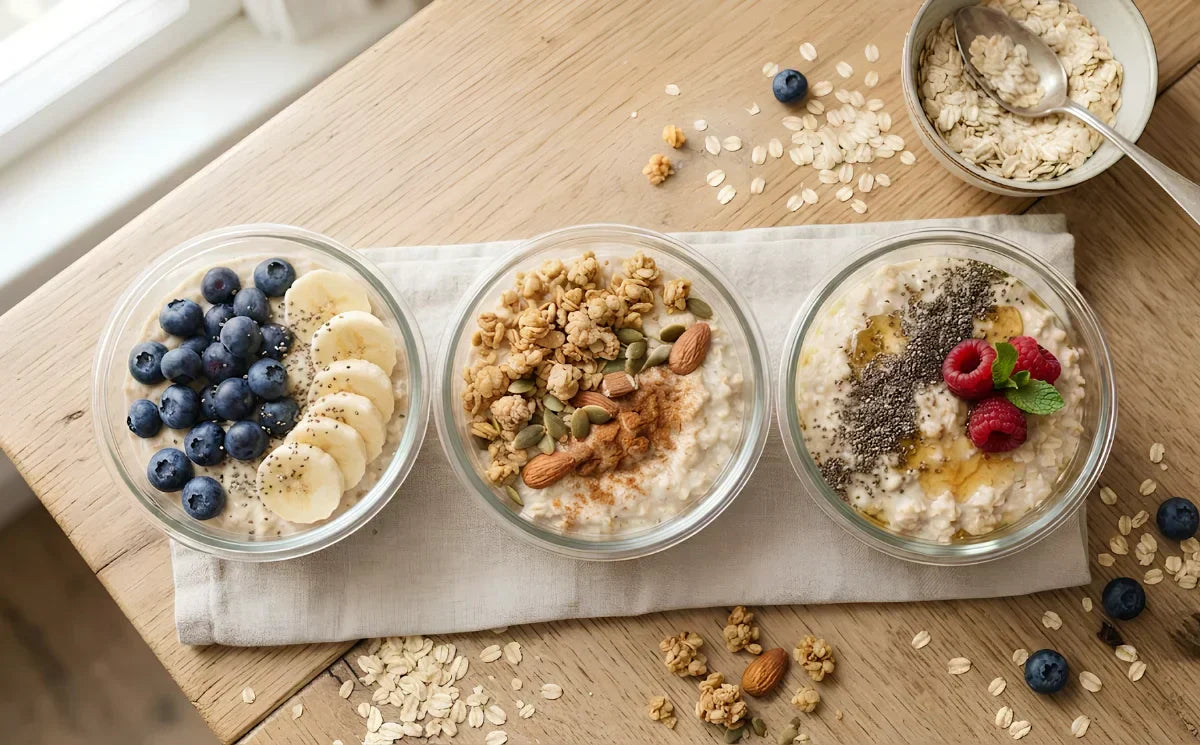
Oatmeal is one of the easiest breakfasts to make ahead, but it's also one of the easiest to get wrong at scale. Cook it the same way you'd cook a single bowl, just five times bigger, and you often end up with a stiff, gummy block sitting in the fridge by day three. Meal-prepping oatmeal takes a slightly different approach than making it fresh each morning. Once you know the adjustments, it becomes one of the most reliable make-ahead breakfasts available.
This guide covers every major meal-prep method (baked, overnight, slow cooker, and batch stovetop), how long each one actually lasts, the best containers to use, and how to reheat oatmeal without it turning into a gluey mess.
Why Meal-Prep Oatmeal in the First Place?
Oatmeal is naturally suited to batch cooking for a few practical reasons. It's inexpensive, it holds up reasonably well in the fridge compared to more perishable breakfasts, and the base recipe scales easily, doubling or tripling a batch doesn't require much more effort than making a single serving. It's also a genuinely filling, high-fiber breakfast, which matters for anyone trying to avoid the mid-morning hunger that comes with lower-fiber options like a pastry or sugary cereal.
The trade-off is that oats change texture as they sit, since they're a starch that continues to absorb moisture over time. This is the part most quick recipe cards skip over, and it's the actual reason so many people end up with either a mushy mess or a dry, stiff brick by the end of the week. The methods below are built specifically to account for that.
Oatmeal Meal-Prep Ideas: The Four Main Methods
There isn't one single "correct" way to meal-prep oatmeal. The right method depends on how much hands-on time you want during the week, what texture you prefer, and whether you have access to an oven, a slow cooker, or just a stovetop and fridge.
Overnight oats: No cooking at all, just soaking. Best for a soft, creamy texture and the least active prep time.
Baked oatmeal: Cooked in the oven in a single large dish, then cut into portions for the week. Best for a firmer, more cake-like texture, and it also freezes exceptionally well.
Slow cooker oatmeal: A large batch cooked low and slow, usually overnight, producing a big pot of ready-to-portion oatmeal with very little active effort.
Batch stovetop oatmeal: A large pot cooked the traditional way, then divided into individual containers for the week, closest in texture to fresh oatmeal but requiring the most attention to avoid it seizing up in the fridge.
Each of these is covered in more detail below, including exactly how to prevent the texture problems that tend to show up with make-ahead oatmeal specifically.
Overnight Oats Meal-Prep
Overnight oats are the simplest entry point for oatmeal meal-prep, since there's no cooking step at all. The oats soften purely through soaking in liquid over several hours, which also happens to make them one of the most forgiving options for prepping multiple days at once.
Basic ratio: Roughly 1:1, equal parts rolled oats and liquid (milk or a milk alternative), per jar.
For a week of meal-prep, it's generally better to prepare 4 to 5 days at a time rather than a full 7, since oats continue softening the longer they sit, and by day 6 or 7 the texture often shifts from pleasantly soft to noticeably overly soft or slightly separated.
If the goal behind meal-prepping oatmeal is specifically appetite management or fat loss, Oats for Weight Loss goes deeper into portioning, fiber, and how to build a filling bowl without overloading it with high-calorie toppings.
A few adjustments specific to prepping several jars at once:
- Keep fresh, wet toppings like berries or granola separate, adding them the morning of eating rather than mixing them into all five jars ahead of time, since these ingredients don't hold up well sitting in liquid for days
- Use identical-sized containers for each day so portions stay consistent without needing to measure daily
- Label jars with the date prepared, since it's easy to lose track of which jar is oldest once you're several days into the batch
Baked Oatmeal meal-prep
Baked oatmeal is a strong option for anyone who wants a firmer, more structured texture than overnight oats, closer to a warm oat bar or a soft granola bar than a traditional bowl of porridge.
Basic method: Combine rolled oats, milk, eggs (which help bind the mixture and add protein), a mashed banana or applesauce, a bit of baking powder, and mix-ins like berries or nuts. Pour into a baking dish and bake at 350°F for roughly 35 to 45 minutes, until set and lightly golden on top.
Why this method works well for meal-prep specifically: Unlike a pot of loose cooked oatmeal, baked oatmeal holds its shape once cut into squares, which makes portioning and reheating far more predictable. It also freezes unusually well compared to other oatmeal-prep methods, since the firmer, more structured texture holds up better through freezing and thawing than a loose, liquid-heavy oatmeal.
For the week: Cut the baked dish into individual squares once fully cooled, then store in the fridge for up to 5 days, or freeze extra portions for longer storage, generally up to 2 to 3 months, pulling one out to thaw the night before as needed.
Slow Cooker Oatmeal
Slow cooker oatmeal is a strong choice if you want a large batch with minimal hands-on effort, particularly overnight, so it's ready first thing in the morning without needing to babysit a pot.
Basic method: Combine steel-cut oats (rolled oats tend to break down too much over a long slow cooker cycle) with liquid at roughly a 1:4 ratio, oats to liquid, and cook on low for 6 to 8 hours. A slow cooker liner or a light coating of butter or oil around the edges of the pot helps prevent the oats from sticking and hardening along the sides, which is one of the more common complaints with this method.
Why steel cut oats specifically work best here: Their denser structure holds up over a long, slow cooking time better than rolled oats, which can turn overly soft or even start to dissolve into the liquid after 6-plus hours of low heat.
Portioning after cooking: Once done, divide the batch into individual containers while still warm, which makes portioning easier than waiting for the entire pot to cool and thicken further.
Batch Stovetop Oatmeal
This is the most traditional approach, just scaled up, cooking a large pot the normal way and dividing it into containers for the week. It produces a texture closest to freshly made oatmeal, but it requires the most attention when it comes to storage and reheating, since a big batch of plain cooked oats tends to firm up considerably in the fridge.
Basic method: Cook oats using your normal ratio (roughly 1:2, oats to water or milk, for rolled oats) but multiplied out to the total number of servings you want for the week. Cook as usual, then divide into containers once slightly cooled.
The key adjustment for meal-prep specifically: Slightly undercook the batch compared to how you'd normally prepare a single serving, pulling it off the heat a minute or two early. Oats continue to firm up considerably as they cool and sit in the fridge, so a batch cooked to perfect doneness fresh off the stove often turns notably stiffer and drier by day 2 or 3.
How Long Does Meal-prepped Oatmeal Last in the Fridge?
This varies somewhat by method, but a few general guidelines hold up across most approaches:
- Overnight oats: 4 to 5 days
- Baked oatmeal: 5 days refrigerated, or 2 to 3 months frozen
- Slow cooker oatmeal: 4 to 5 days
- Batch stovetop oatmeal: 3 to 4 days, generally the shortest window of the methods above, since it lacks the protective effect of baking or the liquid buffer of overnight oats
Across all methods, using clean utensils each time you portion out oatmeal (rather than a spoon that's touched other food) and keeping containers well sealed helps extend freshness toward the higher end of these ranges. If oatmeal develops an off smell, unusual discoloration, or visible mold, it should be discarded regardless of how many days it's been in the fridge.
How to Reheat Oatmeal Without It Getting Gummy
This is one of the most common frustrations with meal-prepped oatmeal, and it comes down to a fairly simple fix that a lot of people skip: adding liquid before reheating, not just reheating as-is.
The core issue: Oats continue absorbing whatever moisture is left in the container as they sit in the fridge, which means by the time you reheat a few days later, there's often not enough free liquid left to keep the texture creamy. Reheating dry, already-thickened oatmeal in the microwave tends to make the starches seize up further, producing that gummy, overly dense texture.
The fix:
- Before reheating, stir in a splash of milk, water, or a milk alternative, generally 2 to 4 tablespoons per serving, depending on how dry the oatmeal has become.
- Microwave in 30-second intervals, stirring between each, rather than one long continuous heating cycle, which helps distribute heat evenly and prevents the edges from overcooking while the center stays cold.
- For stovetop reheating, use low heat with the same added splash of liquid, stirring frequently until warmed through.
This simple step, adding liquid before heating rather than after, is the single biggest factor in whether reheated oatmeal comes out creamy or gummy, more so than the specific oat type or original cooking method used.
Best Containers for Oatmeal meal-prep
Container choice matters more for oatmeal than a lot of other meal-prepped foods, mainly because of how oats interact with moisture over several days.
1. Glass jars with airtight lids are a popular choice for overnight oats specifically, since they let you see portions clearly and don't retain odors or stains the way some plastic containers can over repeated use.
2. Wide-mouth containers make stirring in liquid before reheating, and adding fresh toppings, considerably easier than narrow, tall containers, which can make it awkward to mix ingredients thoroughly.
3. Microwave-safe glass or BPA-free plastic containers matter specifically for batch stovetop or slow cooker oatmeal, since these are more likely to be reheated directly in their storage container rather than transferred to a separate bowl first.
4. Freezer-safe containers or bags are worth having on hand specifically for baked oatmeal, since this is the method that freezes most successfully, and a container designed for freezer storage (rather than just fridge storage) helps prevent freezer burn over a couple months of storage.
5. Portion-sized containers over one large container generally work better for the week overall, since dividing everything into daily portions right after cooking avoids repeatedly opening and reheating from one large batch, which can introduce more moisture loss and uneven reheating over time.
Make Ahead Oatmeal: Batching Toppings Separately
A detail that meaningfully improves meal-prepped oatmeal, but gets skipped in a lot of quick recipe guides, is batching toppings separately from the oatmeal base itself.
Toppings that hold up well pre-mixed into the batch: Cinnamon, cocoa powder, protein powder (mixed in before storing), and dried fruit, all of which don't significantly change texture or degrade over several days.
Toppings are better added fresh each morning: Fresh berries, sliced banana, granola, and nuts, since these either turn mushy (fresh fruit) or lose their crunch (granola, nuts) if left sitting in a moist oatmeal base for multiple days.
A practical approach many people use is prepping small, separate containers of fresh toppings for the week alongside the oatmeal batch itself, so assembling breakfast each morning is just a matter of combining the two rather than making anything from scratch.
Healthy Breakfast meal-prep: Where Oatmeal Fits Alongside Other Staples
Oatmeal is a strong anchor for a week of meal-prepped breakfasts, but it doesn't have to be the only thing in rotation. Since oats are a whole grain, they pair naturally with other whole grain and legume-based staples if you're batch cooking beyond just breakfast for the week, brown rice bowls, lentil soups, or bean-based dishes all follow a similar batch-cook-and-portion logic. Glutinous rice fits this same pattern well, since it cooks in batches easily into make-ahead sweet rice porridge or congee-style breakfasts that reheat with just a splash of milk or water, much like oatmeal does. Rotating between a few of these staples through the week makes planning feel more manageable, since the underlying method (cook once, portion into containers, reheat with a bit of added liquid) stays consistent across meals rather than reinventing the process for each dish.
If you're deciding which oat type to build your meal-prep around in the first place, it's worth reading through Steel Cut Oats vs Rolled Oats, which breaks down texture and cook time differences that directly affect which meal-prep method works best, along with The Healthiest Type of Oats if nutrition, rather than just convenience, is your main priority for the week.
The Bottom Line
Meal-prepping oatmeal successfully comes down to picking the method that fits your week (overnight for zero cooking, baked for a firmer texture and better freezer performance, slow cooker for hands-off batch cooking, or stovetop for something closest to fresh) and making a few small adjustments for the fact that oats change texture over several days. Slightly undercooking batches meant for the fridge, keeping wet toppings separate until the morning of eating, and always adding a splash of liquid before reheating are the three habits that make the biggest difference between oatmeal that's genuinely enjoyable by day four and oatmeal that ends up tossed out because it turned gummy or dried out.
For more make-ahead breakfast ideas built around whole grains, browse through SFMart’s organic rice, grains, flours, lentils, and beans collection for other pantry staples that batch cook well alongside a week of meal-prepped oatmeal.


