
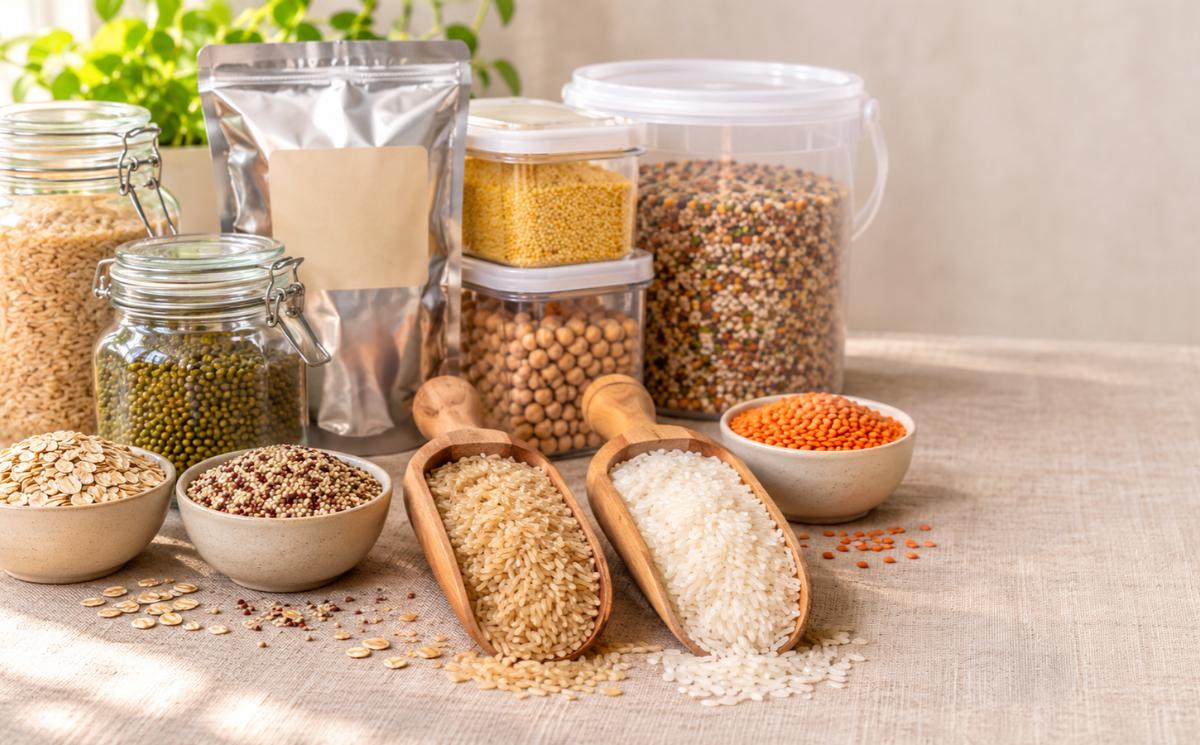
You bought the big bag because it's better value, and now there's a 12 lb sack of rice and a pile of beans in your kitchen. What is the proper way to store bulk organic grains and beans so they stay fresh? Do they need special containers? How long will they last? The short answer is that dry grains and beans keep well for a long time if you protect them from moisture, heat, light, air and pests: pack them in airtight containers, keep them somewhere cool, dark and dry, and label and rotate your stock. This guide explains how to do that at home, from a few weeks in the pantry to a year or more in buckets, plus what to watch out for, including pests and mold.
Quick Answer
Store bulk organic grains and beans in airtight, food-safe containers in a cool, dark, dry place. For a few months, sealed original packaging, resealable bags or airtight jars work. For a year or more, use food-grade buckets with gasket lids, and for the longest storage, mylar bags with oxygen absorbers inside the bucket. Keep the temperature under about 70°F where you can, stay away from garages and attics, keep containers off concrete floors, and label everything with the date. Moisture is the biggest threat because it causes mold, so never store grains or beans that are damp.
Bulk Grain and Bean Storage at a Glance
| How long | Best container | Where | Notes |
|---|---|---|---|
| A few weeks to months | Original sealed bag, resealable bag or airtight jar | Pantry or cupboard away from the stove | Easiest option for everyday use |
| Up to a year or more | Food-grade bucket with a gasket lid | Cool, dark, dry place | A 5-gallon bucket holds roughly 25 to 35 lb, depending on the grain or bean |
| Longest storage | Mylar bag with oxygen absorber, inside a bucket | Cool, dark, dry, stable temperature | Blocks light, moisture and leftover oxygen |
What Makes Grains and Beans Go Stale?
Four things shorten the life of dry foods:
- Moisture. The most urgent threat, because it invites mold.
- Heat. Warm storage speeds up quality loss.
- Light and air. Oxygen slowly dulls flavor and nutrients, and light speeds this up.
- Pests. Pantry insects like weevils and moths can get into loose packaging.
Grains with more natural oil, such as brown rice and rolled oats, have shorter windows than lower-oil foods like white rice and dry beans, so rotate them more often.
Step-by-Step: How to Store Bulk Organic Grains and Beans
- Check what you're storing. Everything should be completely dry and free of insects or off smells when it goes into storage.
- Choose the right container. Use food-safe, airtight containers with tight lids (see below).
- Fill and seal. Fill containers, leaving little empty space, and seal them.
- Label with the date and contents, so you can use the oldest first.
- Pick the right spot. Cool, dark and dry, such as an interior closet, pantry or basement.
- Rotate your stock. Use older bags first and buy only what you'll eat in a reasonable time.
The Best Containers for Bulk Storage
- Airtight glass jars or food-grade plastic containers. Good for everyday amounts.
- Resealable heavy-duty bags. Handy for smaller portions.
- Food-grade buckets with gasket lids. Better for a year or more. They protect against pests and physical damage.
- Mylar bags with oxygen absorbers. Mylar blocks light and moisture, and the absorber removes leftover oxygen. Best for long-term storage, usually inside a bucket.
Whatever you use, make sure it is clean, dry and food-safe, and keep the lid on tight.
Where to Store Bulk Grains and Beans
- Cool. Aim for under about 70°F, and cooler is better.
- Dark. Light speeds up quality loss.
- Dry. Avoid damp basements and areas near sinks or dishwashers.
- Stable. Avoid garages and attics, where temperatures swing with the seasons.
- Off the floor. Keep containers off concrete floors, which can transfer moisture. Use a shelf, pallet or boards.
- Away from heat. Don't store them near the stove, oven or dishwasher.
How Long Do Bulk Grains and Beans Last?
It depends on the food, the container and the conditions, so treat these as guidelines, not guarantees:
| Food | General storage notes |
|---|---|
| Dry beans and lentils | Stay safe and nutritious for a long time when kept dry and sealed, though older beans may cook more slowly and less evenly |
| White rice | Low in oil and keeps well when sealed and dry |
| Brown rice | Higher oil content, so it has a shorter window. Rotate more often and keep it cool |
| Whole wheat berries | Can last a decade or longer when sealed in good conditions, according to one long-term storage guide |
| Rolled oats | Shorter window than whole kernels. Rotate more often |
| Mixed grains | Treat as the shortest-lived grain in the mix |
Our guides on how to store rice, oats and grains and how long rice lasts go into more detail.
How to Keep Pests Out
- Use airtight containers. Sealed lids and bags stop insects getting in.
- Inspect new purchases. Look for webbing, clumps or tiny holes in the bag.
- Freeze small amounts if needed. Freezing for about four days is a common way to kill insects and eggs in flour and whole grains. Let the food come back to room temperature in its sealed container before opening it, so moisture doesn't condense on it.
- Keep the pantry clean and wipe up spills and crumbs.
- Don't mix old and new stock in the same container.
If you find bugs, throw out the infested food, clean the shelf and containers, and check nearby items. See our guide to keeping pantry bugs out of rice, oats and grains.
How to Tell if Grains or Beans Have Gone Bad
Throw food away if you notice:
- Mold, damp clumps or a musty smell.
- Insects, webbing or tiny holes.
- A rancid, sharp or sour smell, especially in brown rice and oats.
- Moisture or condensation inside the container.
Dry beans that are very old are usually safe but may take longer to cook or stay firm. If in doubt, throw it out.
Special Notes: Rice, Oats, Beans and Mixed Grains
- Rice. Keep white rice airtight and dry. Store brown rice in a cool place and use it sooner (more in how to store rice long term). Browse organic rice, including 12 lb organic rice and 3 lb organic rice.
- Beans and lentils. Keep them dry and sealed. See our organic bean and lentil collection.
- Mixed grains. Store in airtight containers and use within a sensible time. Browse organic mixed grain.
- Grain-like seeds. See our post on coix seed.
How Much Should You Buy?
Bulk is only a saving if you use it before it goes stale. Work out how much your household really eats, buy a size you'll finish, and use our household rice planning guide as a starting point. For help choosing a size, see the essential guide to buying bulk organic rice. If you're wondering about the cost, see why organic grains cost more.
Quick Storage Checklist
- ☐ Food is dry and clean when it goes in
- ☐ Airtight, food-safe containers
- ☐ Labeled with the date
- ☐ Cool, dark, dry spot (ideally under 70°F)
- ☐ Off concrete floors, away from the stove
- ☐ Oldest stock used first
- ☐ Checked regularly for moisture, smell and bugs


