
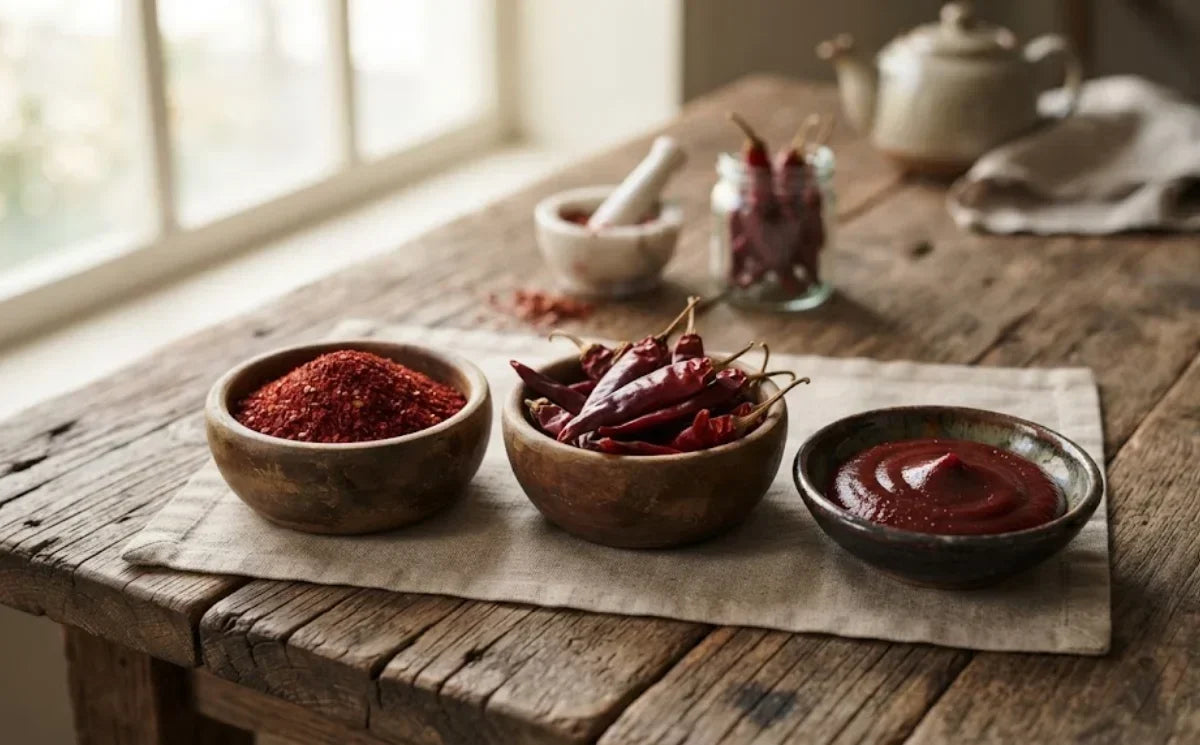
If you've ever ordered "Korean red chili pepper" expecting a mild, gently smoky heat and ended up with something far hotter than you bargained for, you're not alone. Korean chili peppers actually span a wide heat range depending on the variety, and two peppers that look nearly identical in a bag can differ in spiciness by 20 times or more. At SFMart, we sell more than one type of sun-dried red chili pepper, so before you add one to your cart, it's worth understanding exactly what you're getting.
Quick Answer
Standard Korean chili pepper (the variety used for traditional gochugaru) is a genuinely mild-to-moderate pepper, generally falling between 1,500 and 10,000 Scoville Heat Units (SHU), depending on whether it's a mild or hot grind. That's noticeably milder than cayenne pepper (30,000–50,000 SHU), which is what most Western crushed red pepper flakes are made from. However, SFMart also carries a Yatsufusa variety sun-dried chili pepper, which is a different pepper entirely, one that runs 40,000–75,000 SHU, dramatically hotter than standard Korean chili. The two can look similar in packaging, so it's worth double-checking the variety listed on the product page before you buy.
What Is Gochugaru, Exactly?
Gochugaru (고추가루) is Korean chili powder or flake, made by drying and grinding Korean red chili peppers. It's the backbone of Korean cooking, used in kimchi, stews like kimchi jjigae, marinades, and countless banchan (side dishes). It's typically sold in two grinds: a coarser flake used for kimchi and a finer powder used in sauces and marinades.
It's worth separating gochugaru from gochujang, which is a fermented red chili paste rather than a dried powder. Gochujang is actually milder than most gochugaru, generally rated under 1,000 SHU, since the fermentation process and added ingredients (like rice and fermented soybean) dilute the chili's heat significantly. If a recipe calls for gochugaru and you only have gochujang (or vice versa), the flavor and heat level won't translate directly.
How Spicy Is Gochugaru? The Scoville Scale Explained
Heat in chili peppers is measured in Scoville Heat Units (SHU), a scale that estimates how much capsaicin; the compound responsible for the burning sensation, a pepper contains. The higher the SHU number, the hotter the pepper.
Standard Korean chili peppers, unripe and green, are typically measured around 1,500 SHU, which places gochugaru made from them solidly in mild-to-medium territory on the broader chili spectrum. For comparison:
|
Pepper |
Approximate SHU |
|
Bell pepper |
0 SHU |
|
Gochujang (paste) |
Under 1,000 SHU |
|
Standard Korean chili / mild gochugaru |
1,500–4,000 SHU |
|
Hot gochugaru |
6,000–10,000 SHU |
|
Cheongyang chili pepper |
~10,000 SHU |
|
Cayenne pepper |
30,000–50,000 SHU |
|
Yatsufusa pepper |
40,000–75,000 SHU |
|
Jalapeño (for reference) |
2,500–8,000 SHU |
Gochugaru's heat range varies somewhat by source and by the specific batch or brand, since chili heat depends on growing conditions as much as variety, but 1,500 to 10,000 SHU is the range most consistently cited across food and culinary references.
Mild vs. Hot Gochugaru: What's the Difference?
Korean gochugaru is generally sold in two heat grades:
- Mild gochugaru (deolmaewoon, 덜매운): Sits toward the lower end of the range, roughly 1,500–4,000 SHU. This is the grade most commonly used in kimchi, where the goal is color and flavor depth more than intense heat.
- Hot gochugaru (maewoon, 매운): Runs hotter, generally 6,000–10,000 SHU, and is used when a dish is meant to have a noticeable kick, such as spicier stews or dipping sauces.
Neither grade is intended to deliver the aggressive, lingering burn of a superhot pepper, Korean cuisine generally favors a rounder, more balanced heat that builds gradually rather than hitting all at once, which is part of why gochugaru has such a distinct flavor profile compared to other chili powders.
Gochugaru vs. Cayenne Pepper: Which Is Hotter?
This comparison matters because cayenne pepper is the base of most Western "crushed red pepper flakes", the shaker-style flakes found on pizzeria tables. Cayenne typically measures 30,000–50,000 SHU, which puts it well above even the hottest standard gochugaru.
In practical terms, this means substituting cayenne-based crushed red pepper for gochugaru in a recipe (or the reverse) will noticeably change both the heat level and the flavor, since gochugaru also has a milder, slightly sweeter, smokier taste compared to cayenne's sharper, more straightforward heat. If a recipe specifically calls for gochugaru, it's worth sourcing the real thing rather than swapping in a hotter, differently-flavored substitute.
Is Korean Red Pepper Flake Spicy? Setting Realistic Expectations
For most people used to mild-to-medium spice, standard Korean gochugaru sits in a comfortable, approachable range, noticeably milder than cayenne-based flakes, and far milder than a jalapeño at its hottest. It contributes real warmth to a dish, but it's not typically the kind of heat that overwhelms a meal, which is part of why it can be used generously in kimchi and stews without making them inedible for less spice-tolerant eaters.
That said, "spicy" is relative, and grade matters, hot gochugaru at the top of its range (around 10,000 SHU) will read as noticeably spicier than mild gochugaru at the bottom (1,500 SHU), even though both are labeled gochugaru.
Yatsufusa vs. Korean Chili Pepper Variety: Why This Matters Before You Buy
Here's the part that trips up a lot of shoppers, and the reason this guide exists: not every "Korean sun-dried red chili pepper" on the market is made from the same pepper variety.
Yatsufusa is a chili pepper variety of Japanese origin, and it is genuinely much hotter than the standard Korean chili pepper used for traditional gochugaru, sources place it in the 40,000–75,000 SHU range, which is comparable to or hotter than cayenne, and dramatically hotter than the 1,500–10,000 SHU range typical of standard Korean chili.
At SFMart, we carry both:
- McCabe Organic Sun-Dried Red Chili Pepper – Korean Variety: the traditional, milder Korean chili pepper used for standard gochugaru-style heat.
- McCabe Organic Sun-Dried Red Chili Pepper – Yatsufusa Variety: a distinctly hotter Japanese-origin pepper, sold sun-dried in the same style.
Because both are sold as sun-dried whole red chili peppers with similar packaging, it's genuinely easy to grab the wrong one if you're not checking the variety listed in the product name. If your goal is traditional, kimchi-style gochugaru heat, look specifically for "Korean Variety" on the label. If you're intentionally looking for a hotter pepper for a different use, the Yatsufusa is the one to reach for; just go in expecting a meaningfully spicier result.
How to Use Sun-Dried Red Chili Peppers
However you're using them, McCabe's sun-dried chili peppers are prepared using a sun-drying process that combines traditional methods with modern facility standards, which is credited with helping retain more vitamin D and minerals compared to machine-dehydrated peppers. A few ways to use them:
- Crushed or ground: Sprinkle over soups, salads, or even pizza for a quick flavor and heat boost.
- Rehydrated: Soak in warm water until soft to use in sauces or marinades.
- Stir-fries: Add a pinch of crushed chili for an authentic Korean kick.
- Homemade kimchi: Grind to your preferred coarseness for a fresh, made-from-scratch gochugaru.
Final Thoughts
Korean chili pepper heat isn't one-size-fits-all, the variety matters just as much as the grind. Standard gochugaru offers a mild, approachable heat well below cayenne, while a Yatsufusa-variety pepper delivers something far more intense despite looking similar on the shelf. Knowing the difference before you buy means you get the heat level you actually want, whether that's a gentle traditional kimchi flavor or a serious kick.
Ready to shop? Browse SFMart's Korean Variety sun-dried chili pepper for traditional heat, the Yatsufusa variety if you want something hotter, or explore our full organic sun-dried peppers collection to compare all our options side by side.


