
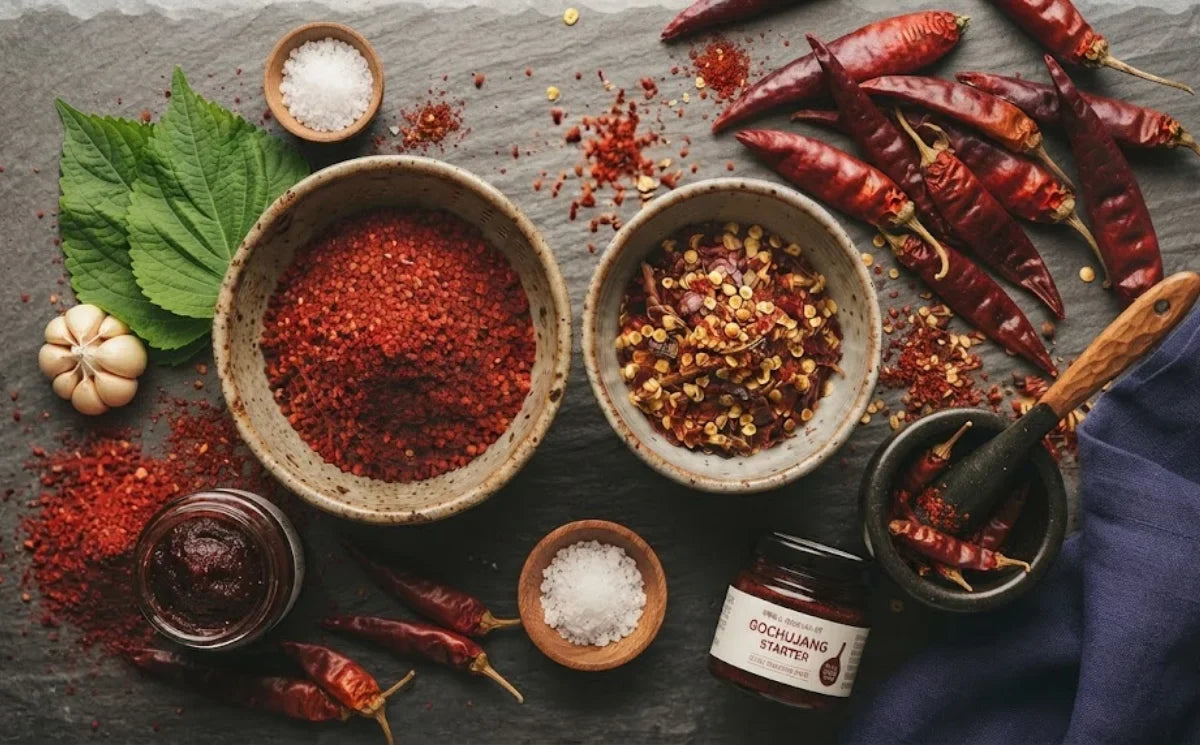
Grab a jar labeled "red pepper flakes" off a standard US grocery shelf and a bag of genuine Korean gochugaru side by side, and the difference is obvious within seconds of opening either one. One smells sharp, almost purely hot. The other carries a fruity, faintly smoky sweetness underneath the heat, the result of a completely different pepper variety and a traditional sun-drying process that Western chili flakes simply don't go through. At SFMart, gochugaru and authentic Korean sun-dried chili are staples we handle constantly, and it's a genuinely common point of confusion for anyone building out Korean cooking outside of Korea, since the two products get used almost interchangeably in casual conversation despite tasting nothing alike.
Quick Answer
Gochugaru and regular red pepper flakes are not the same thing, despite both being made from dried, crushed chili peppers. Gochugaru is made specifically from Korean chili peppers (Capsicum annuum), traditionally sun-dried in a process called taeyangcho, giving it a fruity, mildly smoky sweetness and a gentler, slower-building heat than the sharp, straightforward burn of standard Western chili flakes. Gochugaru also comes deseeded, giving it a more uniform, vivid red color, and is sold in two distinct grinds, coarse for kimchi and fine for pastes like gochujang, rather than one generic texture. To find authentic gochugaru in the US, look for Korean grocery stores, specialty Asian markets, or online retailers that specifically label their product as sun-dried Korean chili and list the pepper as the sole ingredient, rather than a chili blend.
Gochugaru vs. Red Pepper Flakes: What Actually Makes Them Different
The confusion is understandable, since both products are, at the most basic level, dried and crushed chili peppers. But the similarities largely end there.
Pepper variety: Gochugaru comes from a specific Korean chili pepper variety with thick walls, similar in structure to a paprika pepper, which is part of why it carries a natural sweetness that thin-walled peppers like cayenne simply don't have. Standard Western red pepper flakes are typically made from a blend of hotter, thinner-walled chili varieties, prioritizing straightforward heat over complexity.
Heat level and profile: Gochugaru builds gradually and stays relatively moderate, generally falling well below the sharper, more aggressive heat of standard red pepper flakes. The flavor experience is different too: gochugaru's heat arrives alongside genuine fruitiness and a light smokiness, while standard chili flakes tend to deliver heat with comparatively little else going on underneath it.
Seeds and color: Authentic gochugaru is traditionally deseeded before grinding, which gives it a more vivid, uniform red color without the pale flecks you'll see running through a jar of standard red pepper flakes that still contain seeds and pith.
The drying process: This is genuinely central to what gochugaru is. Traditional gochugaru is made through taeyangcho, sun-drying whole Korean chilies, a slower process that develops the pepper's natural sugars and smoky notes in a way that fast, machine-dried Western chili flakes don't replicate. This isn't a minor stylistic detail, it's a big part of where gochugaru's distinctive flavor actually comes from, and the same principle applies broadly to why sun-dried produce tends to develop a deeper, more concentrated flavor than quicker drying methods.
Coarse vs. Fine Gochugaru: They're Not Interchangeable Either
Gochugaru itself isn't one uniform product. It comes in at least two standard grinds, and using the wrong one changes the outcome of a dish more than most people expect.
Coarse gochugaru has a flaky, textured grind, and it's the standard choice for kimchi, where the visible flecks of pepper are part of the dish's character, as well as general seasoning use in stews, marinades, and table condiments.
Fine gochugaru is ground down to a near-powder consistency, and it's the version to reach for when making gochujang, sauces, or dishes where you want the pepper to dissolve smoothly rather than leave a coarse, flaky texture behind.
If a recipe simply calls for "gochugaru" without specifying, kimchi and general seasoning contexts almost always mean coarse, while paste and sauce-based recipes almost always mean fine.
Gochugaru for Kimchi Specifically
Kimchi is really where gochugaru's texture matters most. The coarse grind clings to napa cabbage and other vegetables during fermentation in a way a fine powder simply doesn't, giving kimchi both its visual character and an even distribution of heat and flavor throughout the ferment. Using a fine gochugaru in kimchi, or worse, substituting standard red pepper flakes, will noticeably change both the texture and the underlying flavor profile of the finished product, which is part of why experienced kimchi makers are particular about sourcing genuine coarse gochugaru specifically for this use, often buying it in larger quantities given how central it is to a big kimchi batch.
Where to Buy Real Gochugaru Online in the US
Authenticity is genuinely worth paying attention to here, since a lot of what's labeled "Korean chili flakes" on general marketplaces varies significantly in quality and true origin. A few things worth checking before buying:
- Ingredient list. Authentic gochugaru should list Korean chili pepper as the only ingredient, with no filler blends or added chili varieties from elsewhere.
- Sun-dried labeling. Look specifically for "sun-dried" or "taeyangcho" on the label, since this traditional process is a genuine marker of quality gochugaru rather than a fast, machine-dried substitute.
- Grind clarity. A reputable seller will clearly state whether the product is coarse or fine, rather than leaving you to guess from a photo.
- Specialty and Korean grocers. Korean grocery stores, either in person or their online storefronts, are generally the most reliable source, since sourcing genuine Korean gochugaru is core to their business rather than a single specialty item among thousands of others. Our organic sun-dried peppers collection is a good place to start browsing.
If you'd rather start from the whole, sun-dried pepper itself and grind it fresh at home, our organic sun-dried red chili pepper, Korean variety, gives you exactly that option. Grinding just before use is genuinely one of the more reliable ways to guarantee freshness, since pre-ground gochugaru, like any ground spice, gradually loses potency once it's exposed to air, light, and time on a shelf.
What's a Reasonable Gochugaru Substitute When You Can't Find the Real Thing?
If genuine gochugaru genuinely isn't available, a few substitutes come reasonably close, though none replicate it exactly:
- Aleppo pepper is often considered one of the closer substitutes, offering a similar moderate heat and fruity, faintly smoky character.
- Crushed red pepper flakes blended with a little sweet paprika approximates gochugaru's balance of heat and sweetness better than red pepper flakes alone, though the flavor complexity still won't fully match.
- A gochujang-based substitute works if you're using gochugaru as a flavoring agent rather than for texture, since gochujang itself contains gochugaru and carries a similar underlying flavor, just in paste form.
None of these are a perfect stand-in for kimchi specifically, where gochugaru's coarse texture and fermentation-friendly flavor are difficult to fully replicate, but they're reasonable options for stews, marinades, and general seasoning in a pinch.
Final Thoughts
Gochugaru and standard red pepper flakes might look similar in a spice jar, but they come from different peppers, different processes, and deliver genuinely different results in a dish, particularly in something as texture- and flavor-dependent as kimchi. Sourcing the real thing, ideally sun-dried and correctly ground for your recipe, makes a noticeable difference once you've tasted the two side by side.
If you're building a more authentic Korean pantry, SFMart's organic sun-dried red chili pepper is a solid starting point, and our broader organic herbs and spices collection covers the rest of what most Korean cooking calls for. For more on how sun-drying shapes flavor across other ingredients too, our guide on fresh herbs vs. sundried herbs is worth reading next.


