
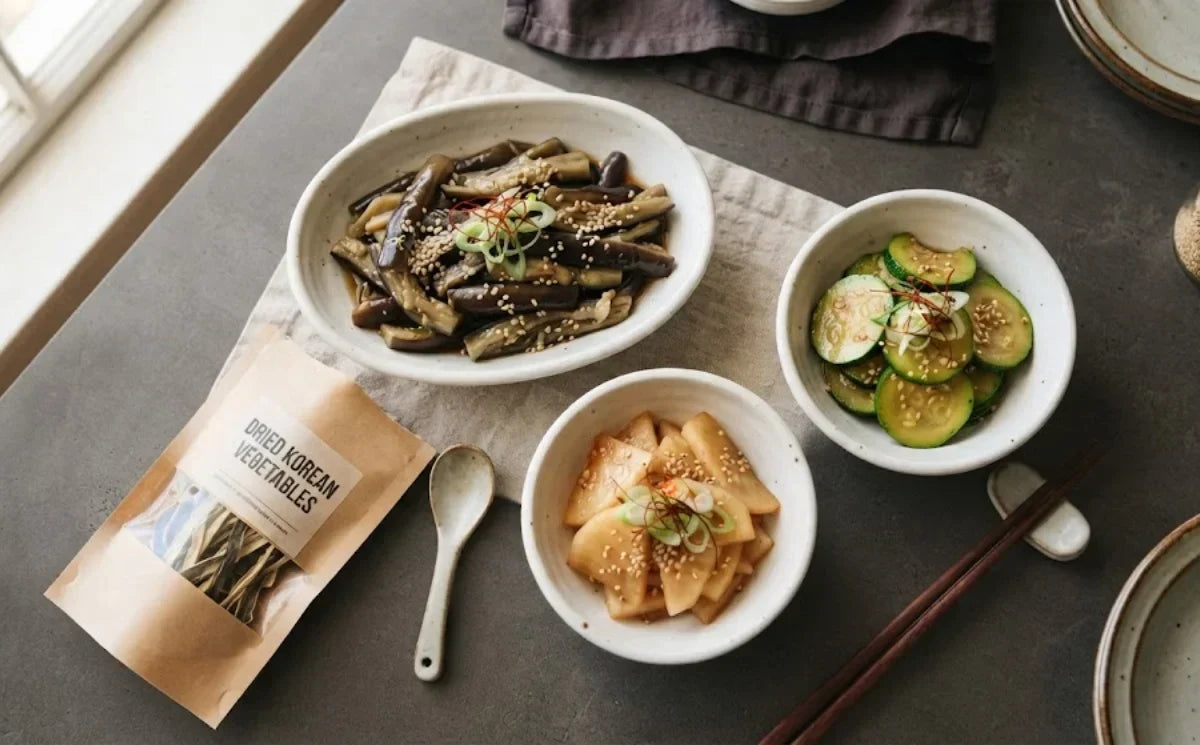
A bag of sun-dried eggplant, zucchini, or radish is a genuinely useful pantry staple, but it isn't always obvious what to actually do with it once it's home. These aren't snacking vegetables like dried fruit, they need to be properly rehydrated before cooking, and the traditional Korean seasoning methods that turn them into an actual side dish aren't always written down clearly.
At SFMart, sun-dried eggplant, sun-dried zucchini, and sun-dried radish are pantry staples we sell constantly, so this guide covers exactly how to rehydrate each one and turn it into a genuine, well-seasoned dish.
Quick Answer
To rehydrate sun-dried vegetables like eggplant, zucchini, and radish, add them to cold water and bring to a boil, checking the stalks or pieces until they soften, then turn off the heat and let everything cool with the lid on. Rinse in cold water, then soak the rinsed vegetables for a further 2 to 3 hours, draining and gently squeezing out excess water before cooking.
Once rehydrated, all three are traditionally seasoned with a simple Korean namul-style mixture, soy sauce, sesame oil, minced garlic, a touch of sugar, and toasted sesame seeds, then stir-fried or tossed together as a side dish (banchan). Zucchini in particular can sometimes skip the boiling step and simply soak for about an hour if you're short on time.
Why Rehydration Matters Before Cooking
Sun-dried vegetables have had nearly all their moisture removed, which is exactly what gives them a long shelf life, but it also means they're far too tough and leathery to cook straight from the bag the way you might with a fresh vegetable. Rehydrating brings the water content back gradually, softening the fibres and restoring a texture much closer to the original vegetable, ready to absorb seasoning properly rather than staying chewy and under-flavoured.
The Standard Rehydration Method
This is the core method that works across eggplant, zucchini, and radish alike, and it's worth following closely rather than rushing:
- Add the dried vegetables to cold water and bring to a boil. Starting from cold, rather than dropping them into already-boiling water, helps them rehydrate more evenly.
- Check the vegetable as it heats. Once the stalks or thicker pieces have softened, turn off the heat.
- Cool with the lid on. Let the pot sit, covered, until the water has cooled completely, which continues softening the vegetables gently as they cool.
- Rinse in cold water to remove any remaining grit or residue from the drying process.
- Soak the rinsed vegetables in fresh cold water for 2 to 3 hours. This final soak is what brings them the rest of the way to a workable, cookable texture.
- Drain and gently squeeze out excess water before seasoning or cooking, since waterlogged vegetables will dilute whatever sauce or seasoning you add next.
A Quicker Soak for Zucchini
If you're short on time, sun-dried zucchini specifically is a little more forgiving than eggplant or radish, and many home cooks simply soak it in water for about an hour without the full boil-and-cool process. It won't be quite as tender as the longer method, but it's a genuinely reasonable shortcut on a weeknight, particularly if you're planning to cook the zucchini further afterward, since additional cooking time helps finish softening it regardless.
Sun-Dried Eggplant: What to Do With It
Rehydrated sun-dried eggplant is traditionally turned into gaji namul, a classic Korean side dish. After rehydrating and squeezing out excess water, tear or slice the eggplant into strips, then toss with soy sauce, a little minced garlic, sesame oil, and a sprinkle of toasted sesame seeds, finishing with sliced scallion.
Some versions stir-fry the seasoned eggplant briefly in a hot pan rather than serving it simply tossed, which deepens the flavour and gives the dish a slightly firmer bite. It's a genuinely simple dish once the vegetable itself is properly rehydrated, the seasoning does most of the remaining work.
Sun-Dried Zucchini: What to Do With It
Rehydrated sun-dried zucchini becomes maleun hobak namul, sometimes called hobak goji in different regions of Korea, and it follows a similar seasoning approach to the eggplant version. Soy sauce, sesame oil, minced garlic, and sesame seeds form the base, often with a touch of sugar added to balance the concentrated, slightly earthier flavour that develops during drying.
The rehydrated zucchini is typically stir-fried briefly in a pan with the seasoning until everything is well coated and the zucchini has softened further, rather than served raw-tossed the way a quick salad might be.
Sun-Dried Radish: What to Do With It
Sun-dried radish, known as mumallaengi, is one of the most popular dried vegetable side dishes in Korean cooking, prized for the genuinely different, chewier texture drying gives it compared to fresh radish. After rehydrating, it's commonly seasoned with a slightly bolder mixture than eggplant or zucchini: soy sauce or a gochugaru-based (Korean red chili flake) sauce, sesame oil, minced garlic, sugar, and sometimes a splash of vinegar for a bit of tang. The seasoned radish is typically mixed thoroughly by hand to make sure every piece is coated, then left to sit briefly so the flavours absorb before serving.
A Simple Seasoning Template for Any Dried Vegetable Side Dish
Once you understand the underlying formula, it's easy to season any rehydrated dried vegetable without following a strict recipe:
- A base of soy sauce and sesame oil, roughly equal parts, for saltiness and nutty depth.
- Minced garlic, for a sharp, savoury backbone. (If you keep garlic powder as a pantry essential too, it works as a backup in a pinch.)
- A touch of sugar, to round out the concentrated, sometimes slightly bitter edge that dried vegetables can develop.
- Toasted sesame seeds and sliced scallion, added at the end for texture and freshness.
- Gochugaru, optional, for a spicier, more robust version, particularly suited to radish.
Adjust the ratios to taste, and don't be afraid to stir-fry the seasoned vegetable briefly in a hot pan rather than serving it simply tossed, which tends to deepen and meld the flavours further.
Cooking With Dehydrated Vegetables Beyond Namul
Namul-style side dishes aren't the only use for rehydrated dried vegetables. Once softened, sun-dried radish and zucchini both work well added to soups and stews, where they can even be added directly to the simmering liquid without a full separate rehydration step first, absorbing broth as they cook and adding a genuinely different texture than fresh vegetables would.
This is a practical shortcut worth knowing if you're short on time but still want the concentrated flavour dried vegetables bring to a dish. We cover more general storage and preparation guidance for dried vegetables, including how to tell if a batch has spoiled, in our guide on how to store dried vegetables so they never go moldy.
Final Thoughts
Sun-dried eggplant, zucchini, and radish each have their own place in traditional Korean cooking, and once you understand the core rehydration method and the simple soy sauce, sesame oil, and garlic seasoning template that ties them together, turning a bag of dried vegetables into a genuine homemade side dish becomes far less intimidating.
If you're ready to try these for yourself, SFMart's organic sun-dried vegetables collection has eggplant, zucchini, and radish all in one place, and our broader organic sun-dried food range is worth browsing if you want to build out a fuller traditional pantry. For more on why sun-dried produce is worth keeping stocked in the first place, our guide on 5 reasons to use sun-dried fruits and vegetables is a good next read.


