
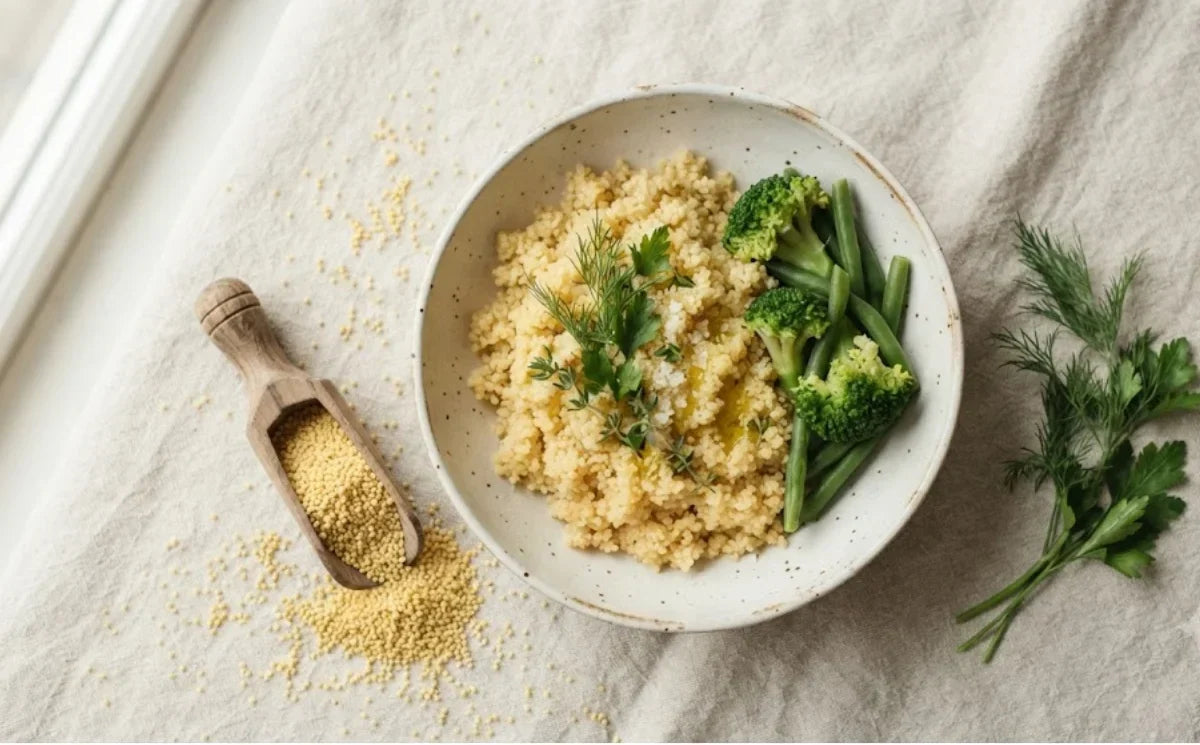
If you've ever been jolted awake by a burning sensation in your chest, you already know that what you eat before bed matters just as much as what you eat during the day. Gastroesophageal reflux disease (GERD) affects roughly one in five American adults, and for many, dinner choices are the single biggest lever they have over how well they sleep. Grains are often the first thing to get blamed, and the first thing cut, when heartburn flares up. But not all grains behave the same way in the stomach. At SFMart, we work with a lot of home cooks managing GERD, and one grain keeps coming up as a go-to: organic hulled millet. This guide breaks down why.
We'll walk through what actually makes a grain reflux-friendly, which grains the research and clinical guidance point to, and why hulled millet in particular has earned a reputation as one of the gentlest options for a GERD-friendly dinner.
What Makes a Grain "Good" for Acid Reflux?
Before getting into specific grains, it helps to understand what's actually driving the recommendation. Gastroenterologists generally point to a few mechanisms:
-
Fiber content:
High-fiber whole grains help regulate digestion and stomach emptying, and fiber can help absorb excess stomach acid, which is one reason whole grains are consistently recommended across GERD diet guidance from sources like Cleveland Clinic and Johns Hopkins Medicine.
-
Where the food falls on the pH scale:
Foods with a higher (more alkaline) pH are less likely to add to the acid load already present in the stomach, while low-pH, more acidic foods can make reflux symptoms worse for sensitive individuals.
-
Fat content and preparation:
Even a gentle grain can become a trigger if it's fried, buttered heavily, or paired with high-fat sauces, since fat slows digestion and can relax the lower esophageal sphincter (LES), the valve responsible for keeping stomach acid where it belongs.
It's worth noting that the science on "alkaline diets" curing GERD outright is not settled, and no single food eliminates reflux on its own. But choosing grains that are naturally lower in acidity, higher in fiber, and easy to digest is a well-supported, low-risk strategy that shows up consistently in dietitian-backed GERD guidance.
Why Organic Hulled Millet Stands Out
Millet is an ancient, naturally gluten-free grain that's been a staple across Asia and Africa for centuries, and it's increasingly recommended in GERD and gastritis-friendly diets for a few specific reasons:
- Naturally alkaline profile. Unlike more acidic grains, millet leans mildly alkaline, which is thought to help offset excess stomach acid rather than add to it.
- Light and easy to digest. Millet has a soft, fluffy texture once cooked and doesn't sit heavy in the stomach the way some denser grains can, which matters for anyone whose reflux worsens with large, slow-digesting meals.
- Rich in magnesium and B vitamins. These nutrients support overall digestive and nerve function, and magnesium in particular plays a role in muscle relaxation, including the muscles involved in digestion.
- Naturally gluten-free. For anyone whose reflux is compounded by gluten sensitivity, millet offers a whole-grain option without that added variable.
McCabe Organic Hulled Millet is a good starting point if you want to try it: it cooks up in 15 to 20 minutes and works as a simple rice or couscous substitute at dinner. If you'd rather mill it fresh at home, our collection also carries organic grains suited for grinding into flour.
The Best Grains for Acid Reflux, Ranked by How Gentle They Are
Millet isn't the only option. Here's how the most commonly recommended grains for GERD compare:
1. Hulled Millet
As covered above, millet's alkaline nature, fiber content, and light texture make it one of the gentlest whole grains for reflux-prone stomachs, especially at dinner.
2. Oatmeal
Oats are a longtime favorite in GERD diets. Their soluble fiber forms a gel-like texture that can help coat and soothe the esophagus, and oatmeal is easy to digest when prepared simply, without added fat or sugar. McCabe Organic Regular Rolled Oats cook down into a soft, soothing bowl in minutes, making them an easy swap for dinner as well as breakfast. If you're comparing organic versus conventional oats for your pantry, our guide on organic oats vs. regular oats breaks down what actually differs.
3. Brown Rice
Brown rice is a reliable, neutral base that shows up in nearly every GERD diet list, thanks to its fiber content and mild flavor. It pairs well with lean proteins and steamed vegetables for a low-fat, reflux-friendly dinner. Our organic rice collection includes both brown and specialty varieties if you want to rotate grains through the week.
4. Quinoa
Technically a pseudo-grain, quinoa is a complete protein and high in fiber, making it filling without being heavy. It's a solid choice for lunch bowls, though its slightly nutty, more assertive flavor means some people find millet or rice gentler for evening meals.
5. Barley
Whole and pearled barley bring a hearty dose of fiber and a chewy texture that works well in soups and stews. Because barley is more filling and slower to digest than millet, it's often better suited to earlier meals rather than right before bed. Our organic pearled barley is a good option for a barley and vegetable soup on nights when reflux isn't as much of a concern.
6. Sweet Rice (in Moderation)
Glutinous rice is easy to digest thanks to its soft, sticky texture, though its higher starch content means portion control matters more here than with other grains on this list.
Grains and Grain Products to Watch Out For
Not every grain-based food belongs on a GERD-friendly plate. A few common culprits worth limiting:
- Fried grain products, like fried rice or breaded, fried anything, since the added fat slows digestion and can relax the LES.
- Heavily processed white bread and pastries, which offer little fiber and are often paired with high-fat, high-sugar toppings.
- Grain dishes loaded with acidic or spicy sauces, such as tomato-based pasta sauces, which can undo the benefit of an otherwise gentle grain.
The grain itself is rarely the sole trigger. How it's prepared and what it's paired with usually matters just as much.
Building a GERD-Friendly Dinner Around Hulled Millet
A simple way to put this into practice: cook hulled millet plain in low-sodium broth, then build the rest of the plate around low-fat, low-acid ingredients. A few reliable combinations:
- Millet with steamed green beans and baked chicken breast
- Millet porridge with a splash of low-fat milk and a few slices of banana
- Millet bowls with cooked lentils, roasted carrots, and a light herb dressing
Pairing millet with a plant-based protein like lentils is an easy way to round out the meal without adding fat. Our organic lentils and organic beans collection both work well alongside millet for a filling, fiber-rich dinner that's less likely to sit heavy before bed.
Timing Matters as Much as the Grain
Even the gentlest grain won't prevent nighttime reflux if dinner is eaten too close to bedtime. Gastroenterologists generally recommend:
- Finishing dinner at least 3 hours before lying down
- Keeping portions moderate rather than large
- Elevating the head of the bed slightly if nighttime symptoms are frequent
- Avoiding known personal triggers (common ones include caffeine, alcohol, citrus, and high-fat meals) alongside grain choices
Final Thoughts
Managing nighttime acid reflux is rarely about one single food, but grain choice is one of the easier variables to control. Millet's naturally alkaline profile, light texture, and fiber content make it one of the more reliably gentle options for a late dinner, especially compared to heavier or more acidic grains.
If you're looking to build out a GERD-friendlier pantry, SFMart carries organic hulled millet alongside a full range of organic grains, organic rice, and organic lentils and beans to help you put together simple, gentle meals without the guesswork. For more on millet specifically, our guide to organic millet types, uses, and benefits is a good next read.


