
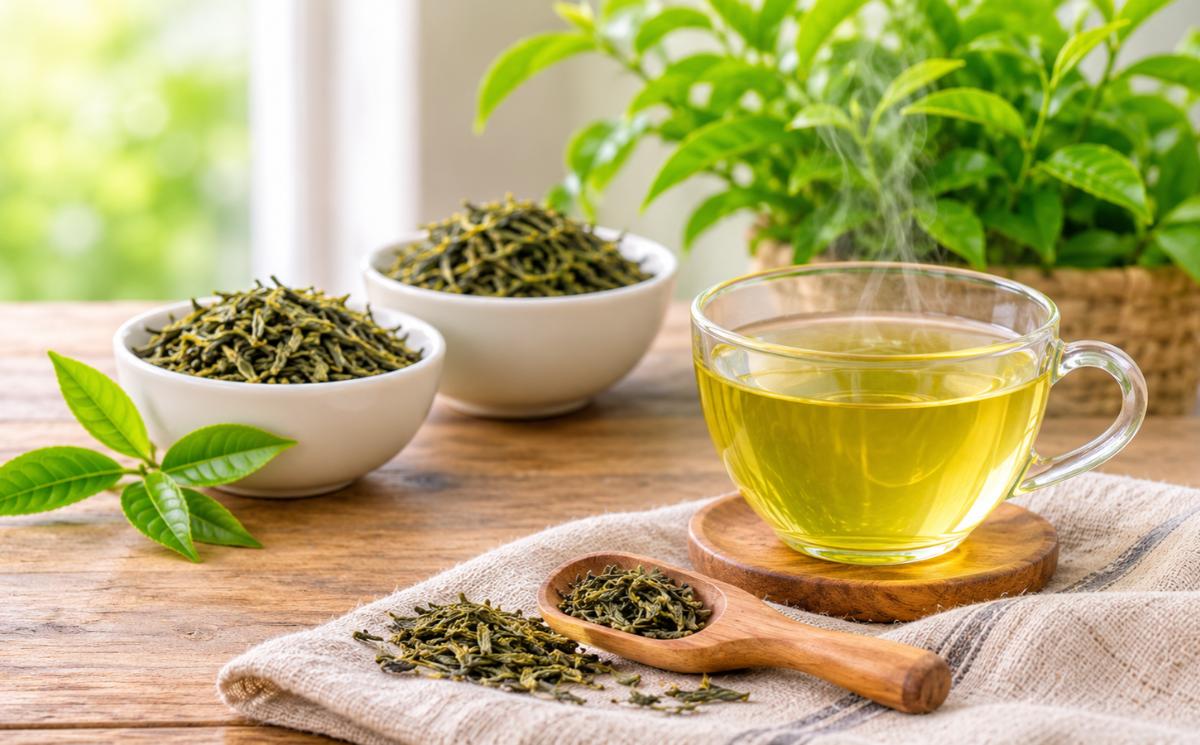
You're standing in front of two boxes of the same tea. One is labeled organic and costs more. Is organic tea actually worth it, or is it just a nicer label? The honest answer is that it depends on how much tea you drink and what you care about. Testing suggests organic tea is less likely to carry pesticide residues than conventional tea, but organic doesn't mean residue-free, and the research on how much of those residues ends up in your cup is thin. For people who drink tea every day, especially green tea, the extra cost is easier to justify. For an occasional cup, it matters less.
Quick Answer
Organic tea is often worth it if you drink tea daily, but it's not a guarantee of purity. Lab testing of green and black teas in Germany found quantifiable pesticide residues in about 63% of conventional samples and 21% of organic ones, and a Japanese study of green tea leaves found lower residue levels in organic samples than in conventional ones. Neither study measured what ends up in the brewed cup, and organic teas were not residue-free. Organic farming also supports soil health and avoids synthetic pesticides in the field.
Organic vs Conventional Tea at a Glance
| Feature | Organic tea | Conventional tea |
|---|---|---|
| Synthetic pesticides | Prohibited in farming | Permitted within legal limits |
| Residues in testing | Lower, but not zero | Higher in the studies below |
| Price | Usually higher | Usually lower |
| Certification | Third-party certified (such as USDA Organic) | Not required |
| Best for | Daily drinkers, green tea fans, households with children | Occasional drinkers or tight budgets |
Why Tea Is Different From Other Foods
Most fruit and vegetables get washed before you eat them. Tea leaves don't. You steep the dried leaf directly in hot water, so whatever is on the leaf is part of the process. That is the main reason people care more about organic for tea than for many other pantry items. It's also why we'd urge some caution: leaf residues and what dissolves into the brewed cup are not the same thing, and we couldn't find a study that measured the transfer.
What Testing Shows
Germany. The Berlin-Brandenburg state laboratory analyzed 48 tea samples (green, white, black and Pu-erh) for pesticide residues. About 42% had quantifiable residues overall. By group, 63% of conventional teas had residues compared with 21% of organic teas. Around 7% of all samples exceeded legal maximum residue limits, and 27% contained more than one residue. Green teas were more affected than black (50% vs 30%). Notably, 5 of 15 green teas labeled organic still had quantifiable residues, which the authors suggest may come from drift or supply-chain contamination rather than direct spraying. The sample is small and from one region, so treat it as a snapshot, not a universal rate.
Japan. Researchers tested 103 green tea samples bought in grocery stores, 42 certified organic and 61 conventional, for neonicotinoid insecticides (PMC). Organic samples had lower detection rates and lower concentrations, but weren't free of residues, and the authors point to soil or irrigation water as possible sources. Estimated intakes from tea leaves were low relative to acceptable daily intake levels in both groups, though children's estimated exposure relative to the limit was higher than adults'. The study measured dry leaves, not brewed tea.
A retailer of organic tea also cites a large meta-analysis finding residues in 11% of organic and 46% of conventional samples. We couldn't verify that figure at its source, and the retailer sells only organic tea, so we haven't relied on it.
What "Organic" Does and Doesn't Promise
USDA Organic means the tea was grown without prohibited synthetic pesticides and fertilizers, on land that has met organic requirements, and that it was certified by an inspector. Organic does not mean:
- Zero residues. Drift, shared water and soil history can leave traces.
- Better taste. Taste depends on the leaf, the harvest and how the tea is processed. Organic doesn't guarantee it.
- Healthier tea. The tea itself, whether green, black or herbal, drives most of the benefits. Our guide on organic tea and its health benefits goes through what's known.
Conventional tea isn't unsafe either. Residues in the German study that exceeded limits were a minority, and regulated limits exist for a reason. The question is whether you want to reduce your exposure, and whether the extra cost is worth it to you. For the wider question, see organic food: is it safer or more nutritious.
When Organic Tea Is Worth It
- You drink tea every day. A small difference per cup adds up over months and years.
- You drink green or white tea. The German study found green teas more affected than black.
- You brew for children or pregnant family members. The Japanese study found children's estimated intake relative to the acceptable level was higher, so many families choose to reduce residues where they can.
- You care about farming practices. Organic farming limits synthetic inputs and supports soil health.
- You drink loose-leaf or whole-leaf tea. You're getting a clearer view of what's in your cup.
When It Might Not Be
- You drink tea occasionally. The cost difference matters less than the cumulative exposure.
- You're on a tight budget. A good conventional tea from a reputable seller is still a fine choice. Spend where it counts for you.
- The organic label is the only thing you've checked. Quality, freshness and sourcing matter too.
How to Get the Most Value From Organic Tea
- Look for real certification. For US shoppers, that means the USDA Organic seal. Our guide on what organic food means explains the rules, and what CCOF organic certification means shows how one certifier works.
- Buy loose leaf or whole-leaf bags instead of the lowest-grade dust and fannings.
- Buy bundles or variety packs to try several teas without committing to a full box. See SFMart's organic tea bundles and variety packs.
- Store it well. Keep tea in an airtight container away from light, heat and moisture so you get the flavor you paid for.
- Match the tea to the use. Daily green tea might justify organic; an occasional flavored black tea may not.
Browse SFMart's organic tea collection, including organic sun-dried herbal teas. For wider context, read organic vs conventional food and why organic food matters for health. Related reading: the difference between normal and organic tea, the healthiest tea to drink and whether organic tea reduces stress.
Final Thoughts
Organic tea isn't a magic label, but the evidence we found points the same way: less likely to carry pesticide residues, not guaranteed to be free of them. If tea is a daily habit, it's a reasonable place to spend a little more. If it's an occasional treat, there's less to gain. Either way, buy from a source you trust, store tea well and enjoy it.
Explore SFMart's organic tea collection.


