
Quick Answer
Sprouting seeds at home is not risk-free. Bacteria such as Salmonella and E. coli can be present on seeds before they're ever sprouted, and the warm, humid conditions sprouts need are ideal for those bacteria to multiply. Washing and home sanitizing can reduce the risk but can't guarantee removal. You can lower the risk by buying seeds from a reputable source, rinsing and draining thoroughly, keeping sprouts cold, using them within a few days, and, most effectively, cooking them. Children, older adults, pregnant women and anyone with a weakened immune system should avoid raw sprouts altogether.
Sprouts are popular for good reasons. They're cheap, quick to grow, and add crunch to salads, soups and stir-fries. But they're also one of the few foods that regulators single out for special caution, and if you've seen recent headlines about sprout recalls, you're right to be careful. This guide explains what the risk actually is, what you can do about it, and how to enjoy sprouts more safely. Explore SFMart for more varieties of sprouting seeds.
A Note on Current Sprout Outbreaks
Food-safety agencies were investigating more than one sprout-related outbreak as of early October 2026, so this is worth checking before you sprout anything.
- Alfalfa sprouts: The CDC reported 76 illnesses across 16 states, with 6 hospitalizations and no deaths, linked to E. coli and Salmonella. The investigation traced back to an alfalfa seed lot, identified as SAL2-24JB. Berlin Seeds of Ohio recalled that alfalfa sprouting seed on September 23, 2026, which was sold to home growers in small bags that carry no lot code, so the label alone can't tell you whether your seed came from the recalled lot. Check the CDC outbreak page for the latest.
- Broccoli sprouts: A separate Salmonella outbreak in six western states was linked by the FDA to recalled broccoli sprouts from one grower.
These investigations are still developing, so figures may have changed by the time you read this. If you have alfalfa seed, check whether it matches a recall. If you can't tell where it came from, the cautious choice is not to sprout it. Recalled sprouts should be thrown away, and the CDC advises washing any surfaces and containers they touched in hot soapy water.
Why Are Sprouts Riskier Than Other Vegetables?
The problem is a combination of where the bacteria come from and what sprouting does to them.
The seeds can carry bacteria: Contamination typically begins on or inside the seed, for example from soil, water, animals or handling in the field. Once the seed is contaminated, you can't see, smell or taste it.
Sprouting conditions are ideal for bacterial growth: As Virginia Tech's extension service explains, the conditions in which sprouts are produced are ideal for the growth of foodborne pathogens, and even a very low initial level of contamination can multiply to millions of cells per serving. The warmth, moisture and nutrients that make a seed sprout also feed bacteria. Colorado State University's food safety team lists Salmonella, Listeria and E. coli among the bacteria that thrive in these conditions.
Sprouts are usually eaten raw: Most vegetables are cooked, or at least peeled, before eating, but sprouts are usually eaten whole and raw, so nothing kills bacteria that are present.
The record backs this up. Virginia Tech's extension summary counts 14 US outbreaks linked to sprouts between 2006 and 2019, causing 504 illnesses, 118 hospitalizations and 2 deaths, with Salmonella responsible for about 70% of cases.
Is Sprouting Seeds at Home Actually Safe?
It can be done with care, but "safe" isn't guaranteed, and you should be honest with yourself about that. Growing your own doesn't remove the main source of contamination, which is the seed. The Berlin Seeds recall is a reminder that seed sold specifically to home growers has been linked to outbreaks.
What home sprouting does give you is control over the later steps: clean equipment, regular rinsing, cold storage and eating them fresh. Those steps matter, but they work on the risk that grows after sprouting starts, not the bacteria that may already be on the seed. Are homegrown sprouts safer than store-bought? Not automatically. Commercial sprout growers are expected to follow testing and handling controls, yet recent outbreaks show those can fail too, while a home grower has fewer links in the chain but less oversight. The honest answer is that the seed source and your hygiene matter more than where the sprouts were grown.
What's the Difference Between Regular Seeds and "Sprouting Seeds"?
Seeds sold for sprouting are meant to be eaten. Seeds sold for planting, such as garden or agricultural seed, may be treated with coatings or fungicides that aren't intended for consumption, and they aren't handled with sprouting in mind. Never sprout seeds sold for planting, and check that the label says the seeds are for sprouting or food use.
The label alone doesn't guarantee they're pathogen-free, though. The FDA has issued guidance for seed producers that centers on good agricultural practices and says testing shouldn't replace them. Virginia Tech's extension advice for home sprouters is to use only seeds that have been pre-tested for pathogenic bacteria and bought from a reputable commercial source. Where you can, ask the seller how their seed is grown, handled and tested.
SFMart's organic sprouting seeds collection includes alfalfa, mung bean, radish, broccoli and crimson clover seeds that are sold as sprouting seeds, and organic certification speaks to how seeds are grown, not to whether they're free of bacteria. The same applies to any organic seed from any seller.
How Do You Sanitize Seeds Before Sprouting?
There's no simple home method that makes seeds completely safe. The FDA's position, as summarized by Colorado State University, is that there's no single treatment so far shown to completely eliminate pathogens on seeds or sprouts without damaging them.
A few things to know:
- Rinsing alone doesn't remove it: A rinse removes dust and debris, but bacteria on or inside seeds aren't washed off.
- Heat and hydrogen peroxide treatments exist: Virginia Tech's extension guidance cites a University of California recommendation to heat seeds for five minutes in a 3% hydrogen peroxide solution preheated to 140°F. Treatments like this are meant to lower risk, not remove it, and they can affect how well seeds germinate.
- The strongest treatments are commercial: A 20,000 ppm calcium hypochlorite soak is the most effective option the FDA has described, but it's a commercial-scale process, not something to improvise in a kitchen.
So treat seed sanitizing as one layer of protection and not a fix. If you're in a group that's at higher risk, cooking the sprouts is the more dependable step.
Who Should Avoid Raw Sprouts?
The FDA recommends that children, older adults, pregnant women and people with weakened immune systems don't eat raw sprouts of any kind, including alfalfa, clover, radish and mung bean sprouts. For pregnant women, the FDA's advice is to avoid raw sprouts and to cook any sprouts thoroughly, and to check sandwiches and salads from restaurants and delis, where sprouts often turn up without being mentioned.
For everyone else, the risk is lower but not zero. Healthy adults can still get sick from contaminated sprouts, so the advice to keep them fresh, cold and ideally cooked applies to everyone.
Is It Safer to Cook Sprouts Instead of Eating Them Raw?
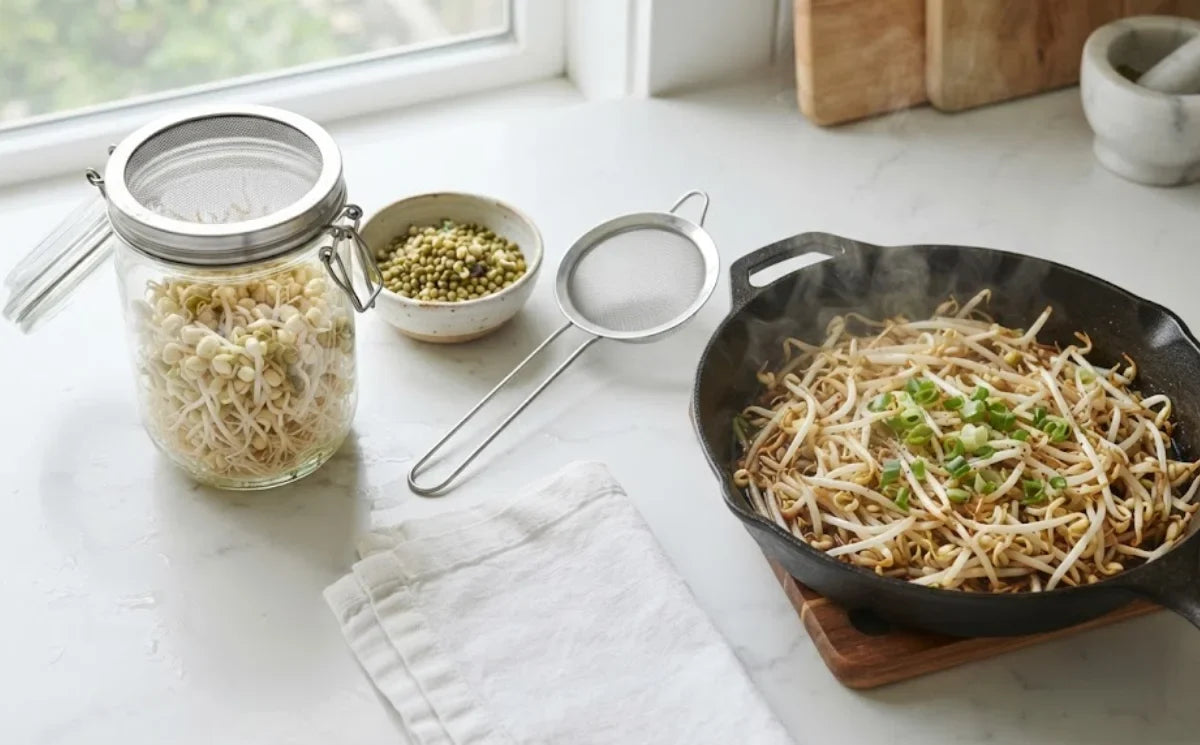
Yes. Cooking is the most reliable way to reduce the risk. Colorado State University notes that cooking sprouts reduces the risk of ingesting foodborne pathogens, and the FDA's advice to pregnant women is to cook sprouts thoroughly. Heat the sprouts until they're steaming hot throughout, for instance in a stir-fry, soup or noodle dish, rather than just warming them.
Mung bean sprouts and lentil sprouts work well in cooked dishes, so you can skip the raw salad and still use them. Alfalfa and clover sprouts have repeatedly been linked to outbreaks, so they're the ones to cook or skip if anyone at higher risk is eating.
How to Sprout Seeds More Safely: The Rinse-and-Drain Method
If you decide to sprout at home, here's a careful version of the jar method:
- Start clean. Wash your hands, and wash the jar, lid or mesh, and any trays in hot soapy water. Sanitize them, then rinse well.
- Use sprouting seeds from a reputable source, and not seed intended for planting. If it's alfalfa, check it against current recalls.
- Soak. Mung beans are usually soaked in cool water for about 8 to 12 hours, according to one seed supplier's instructions. Follow the instructions on your pack for other seeds.
- Rinse and drain. Rinse with cool, clean water and drain thoroughly, so no water pools in the jar. Standing water is where bacteria multiply. The same supplier suggests rinsing two to three times a day, while Virginia Tech's extension guidance suggests rinsing every 6 hours in warm conditions if sprouts will be eaten raw. More frequent rinsing and good drainage are the safer approach.
- Keep them cool and out of direct sun. Warm rooms speed up bacterial growth.
- Harvest on time. Mung beans typically take 2 to 5 days, according to that supplier, with many people harvesting at 2 to 3 days when the roots are short. Alfalfa and lentils run to their own schedule, so follow the pack.
- Drain, dry and refrigerate the sprouts at 40°F or below, in a clean container.
- Use them quickly. Virginia Tech suggests 4 to 6 days in the refrigerator at most, and sooner is better. Throw out sprouts that smell off, look slimy or have gone brown.
How Should Sprouting Seeds Be Stored Before Use?
Keep seeds in a cool, dry, dark place, in an airtight container. Moisture is the main enemy, since damp seeds can spoil, grow mold or start to sprout prematurely. Check the best-by date and the manufacturer's storage instructions, and never sprout seeds that smell musty or show signs of moisture or pests. Keep a note of where and when you bought them, and the lot code if there is one, so you can check recalls later.
How Long Does It Take to Sprout Mung Beans or Alfalfa?
Mung beans are among the fastest, typically 2 to 5 days after an 8 to 12 hour soak. Alfalfa generally takes longer than mung beans, and lentils fall in between, but timing varies with temperature, seed type and how you rinse them. If you're looking for seeds, SFMart's organic mung bean sprouting seeds are one option, and you can browse the whole organic sprouting seeds range.
Final Thoughts
Sprouts are a nutritious, inexpensive food, and many people sprout at home without problems, but they're a higher-risk food than most, and the risk starts with the seed. Choose seeds from a source you trust, keep everything clean and cold, eat sprouts fresh, and cook them if there's any doubt or if anyone at higher risk will be eating them. Check for recalls before you sprout, especially alfalfa.
Ready to start? Browse SFMart's organic sprouting seeds, and read the latest advice on the CDC outbreak page before you begin.


