
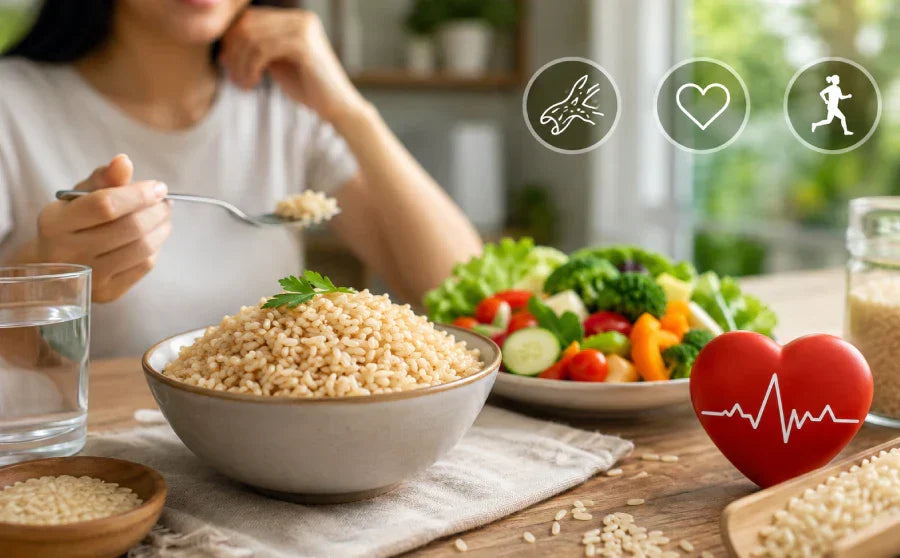
Triglycerides are a type of fat found in your blood, and when levels are too high, they can increase the risk of heart disease, fatty liver, and metabolic issues. In the U.S., rising triglyceride levels are strongly linked to diets high in refined carbohydrates, added sugars, and processed foods.
One of the most common dietary questions people ask is whether switching from white rice to brown rice can help improve triglyceride levels. If you wish to learn more about the health benefits of brown rice and white rice, read this blog by SFMart.
The short answer is: brown rice can support healthier triglyceride levels, but it is not a standalone solution. Its impact depends on your overall diet, portion size, and lifestyle habits.
This guide breaks down what current research and nutrition experts say, along with practical ways to include rice in a heart-healthy diet.
What Are Triglycerides and Why Do They Matter?
Triglycerides are stored fat in your bloodstream. Your body uses them for energy, but excess levels can become harmful.
High triglycerides are commonly associated with:
- Excess calorie intake
- High sugar and refined carbohydrate diets
- Low physical activity
- Insulin resistance
In many U.S. dietary patterns, refined grains like white rice contribute to fast-digesting carbs that can raise triglyceride levels when eaten in excess. According to MayoClinic, triglycerides are an important measure of heart health.
Is Brown Rice Good for Triglycerides?
Research suggests that whole grains like brown rice may help improve lipid profiles, including triglycerides, when they replace refined grains.
A systematic review and meta-analysis found that brown rice consumption may contribute to improvements in weight and lipid-related markers compared to white rice in some populations.
Other studies also show that diets rich in brown rice and whole grains can support lower triglyceride levels and improved cardiovascular risk markers.
Why brown rice may help:
- Higher fiber slows carbohydrate absorption
- More stable blood sugar response reduces fat storage signals
- Better satiety may reduce overall calorie intake
- Contains beneficial plant compounds that support lipid metabolism
However, results are not always dramatic, and some studies show mixed effects depending on diet quality and overall lifestyle.
Brown Rice vs White Rice for Triglycerides
The biggest difference is not calories, but fiber and digestion speed.
White rice:
- Low fiber
- Rapid digestion
- Can spike blood sugar more quickly
- Easier to overeat due to low satiety
Brown rice:
- High fiber
- Slower digestion
- More stable energy release
- Better fullness and appetite control
This difference matters because frequent blood sugar spikes are linked to increased triglyceride production in the liver.
Can Brown Rice Lower Triglycerides?
Brown rice does not directly “burn” triglycerides, but it can support lower levels indirectly by improving dietary quality.
It may help when:
- Replacing white rice or refined grains
- Part of a calorie-controlled diet
- Combined with physical activity
- Paired with fiber-rich foods
A study in metabolic health research also shows that whole grain rice intake may reduce dyslipidemia risk when compared to refined grain diets.
Important Reality Check: It’s Not Just About Rice
Many Reddit discussions around cholesterol and triglycerides highlight an important point: no single food determines triglyceride levels on its own. Diet patterns matter more than individual ingredients.
Even brown rice can contribute to higher triglycerides if:
- Portions are too large
- It is combined with high-sugar sauces or fried foods
- Overall calorie intake is excessive
So the goal is not just switching rice types, but improving the full plate.
How to Eat Brown Rice for Better Triglyceride Control
If you want to use brown rice as part of a heart-healthy diet, pairing matters. Learn more on the importance of organic foods as part of your healthy diet regime.
A balanced plate usually includes:
- Brown rice for slow-digesting carbs
- Lentils or beans for protein and fiber
- Vegetables for micronutrients and volume
- Healthy fats in moderation
This is where pantry staples like organic brown rice, lentils, beans, grains, and flours become useful in everyday cooking. Many U.S. households now build meals around these staples rather than relying heavily on refined carbohydrates.
Retailers like SFMart focus on this kind of pantry structure, offering organic rice alongside legumes and grains that support more balanced eating patterns.
Is Organic Brown Rice Better for Triglycerides?
Organic brown rice is not fundamentally different in macronutrients, but it is often preferred for:
- Reduced exposure to synthetic pesticides
- Cleaner farming practices
- Whole grain nutrition consistency
For a deeper breakdown of this topic, it helps to refer to is organic rice good for you?, which explains how organic farming fits into broader health-focused diets.
How White Rice Affects Triglycerides
White rice is not “bad,” but it behaves differently in the body.
It can contribute to higher triglyceride levels when:
- Consumed in large portions
- Combined with sugary or fatty foods
- Not balanced with fiber or protein
Because it digests quickly, it may lead to rapid glucose spikes, which the body can convert into triglycerides if energy is not used.
Practical Takeaway
Brown rice can support healthier triglyceride levels, but it works best as part of a bigger dietary shift.
Best approach:
- Replace refined grains with whole grains gradually
- Control portion sizes
- Pair rice with fiber and protein
- Maintain an active lifestyle
Final Thoughts
So, is brown rice good for triglycerides?
Yes, it can be beneficial, especially when it replaces white rice and refined carbohydrates. Its fiber content, slower digestion, and nutrient profile make it a better option for metabolic health support.
However, the real impact on triglycerides depends on your overall diet pattern, not just one food.
A balanced approach using whole foods like brown rice, beans, lentils, vegetables, and other organic pantry staples creates a stronger foundation for long-term heart health.


