
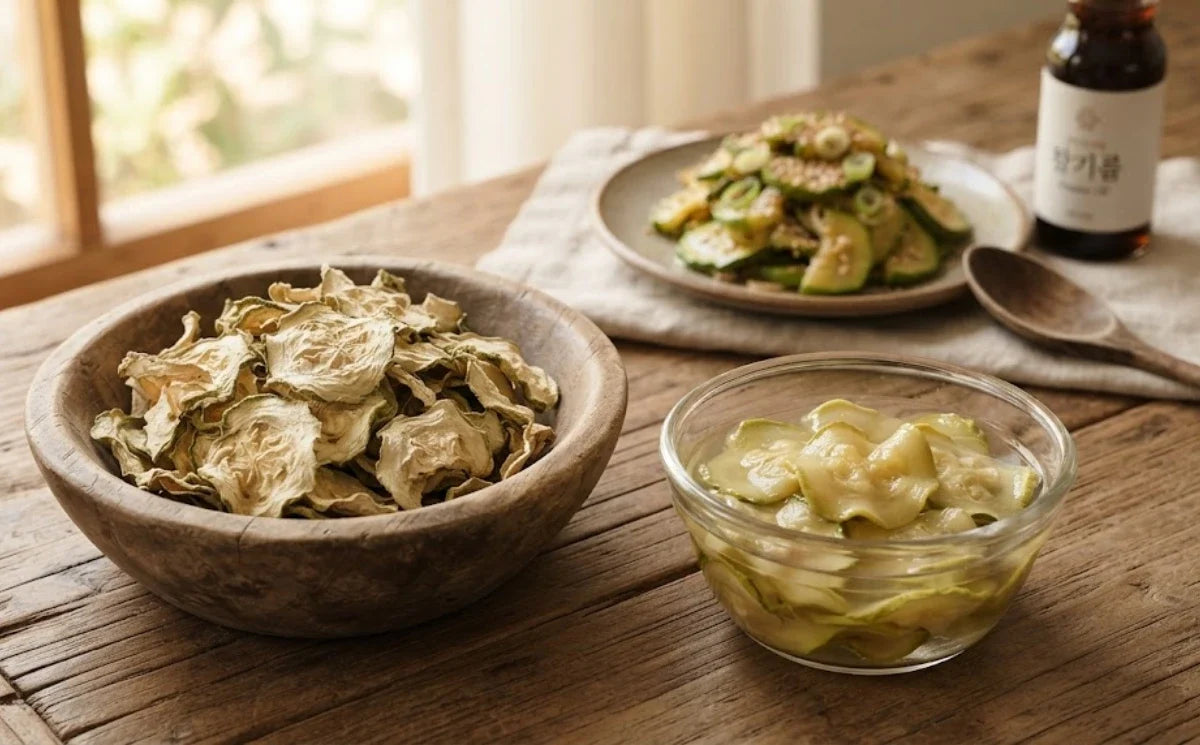
If you've spotted a bag of pale, papery zucchini slices in a Korean grocery aisle and wondered what on earth you're supposed to do with them, you're looking at hobak-goji (호박고지), sun-dried zucchini, one of the quiet workhorses of Korean home cooking. It looks nothing like the zucchini you'd slice into a stir-fry fresh, but once rehydrated, it turns into something genuinely different: chewier, sweeter, and more concentrated in flavor than fresh zucchini ever gets.
At SFMart, our Organic Sun-Dried Zucchini is a pantry staple for exactly this reason. Here's how to rehydrate it properly and what to actually make with it once it's ready.
Quick Answer
Sun-dried zucchini (hobak-goji, 호박고지) is rehydrated by soaking it in warm water for 45 minutes to 3 hours, depending on how thick the slices are, then draining and gently squeezing out the excess water before cooking. It's most commonly used in hobak-namul, a simple Korean side dish (banchan) made by sautéing the softened zucchini with garlic, scallions, and sesame or perilla oil. Compared to fresh zucchini, the dried version has a deeper, more concentrated, slightly sweet flavor and a chewier, more substantial texture, since the sun-drying process removes water while concentrating both flavor and nutrients, including notably higher vitamin D than fresh or machine-dried zucchini. Unopened, SFMart's Organic Sun-Dried Zucchini keeps well when stored in a cool, dry place.
What Is Hobak-Goji (Korean Dried Zucchini)?
Hobak-goji is made from Korean zucchini (aehobak), sliced thin and dried in the sun rather than fresh in the kitchen. Sun-drying rather than machine dehydration matters here: it's a slower process, but it's credited with producing a naturally sweeter flavor and higher vitamin D content, since the direct sunlight itself contributes to vitamin D development in a way that machine dehydration doesn't replicate.
SFMart's Organic Sun-Dried Zucchini comes from McCabe Farm, which has been growing organic vegetables since 2012 and processes them at a facility that combines traditional sun-drying with modern quality standards. The result is a shelf-stable ingredient that keeps the character of zucchini while opening up an entirely different set of uses than the fresh vegetable.
How Do You Rehydrate Sun-Dried Zucchini?
This is the step that trips people up most, mainly because soaking times vary depending on the source and thickness of the slices. Here's the general method:
- Rinse the dried zucchini briefly under cold water to remove any surface dust.
- Soak in warm water. Soaking times typically range from 45 minutes for thinner slices up to 2–3 hours for thicker ones; check the softness periodically rather than watching the clock exactly, since thickness varies by batch.
- Drain thoroughly once the slices feel soft and pliable rather than stiff or brittle.
- Squeeze out excess water gently by hand; you want the pieces soft, not waterlogged, since too much residual water will dilute the seasoning later.
Once rehydrated, the zucchini is ready to season and cook. It won't look or feel exactly like fresh zucchini; expect a slightly chewier, more toothsome texture even after soaking; but that's part of what makes it worth using rather than simply reaching for fresh.
How Long Do You Soak Dried Zucchini?
There's no single universal number, since it depends on how thickly the zucchini was sliced before drying and how long it's been stored, but as a general guide:
- Thin slices: 45 minutes to 1 hour in warm water
- Thicker or well-dried slices: 2–3 hours, sometimes with a brief boil first to soften the stalks before a longer cold-water soak
If you're not sure which you have, start checking at the 45-minute mark and continue soaking until the pieces bend easily without cracking. Over-soaking isn't usually a problem for flavor, but it can make the pieces mushier than the traditional chewy-tender texture Korean cooking is going for.
What Is Korean Dried Zucchini Used For?
Hobak-goji shows up across several classic Korean dishes, almost always after rehydration:
- Hobak-namul (호박나물): The most common use, a sautéed banchan (side dish) made with rehydrated zucchini, garlic, scallions, and sesame or perilla oil, seasoned simply with soy sauce or salt.
- Soups and stews: Added to doenjang jjigae or other soybean-paste-based soups for texture and a subtle sweetness.
- Japchae and stir-fries: Used alongside other vegetables for a chewier textural contrast against glass noodles or other stir-fried ingredients.
- Rice dishes: Mixed into bibimbap-style rice bowls as one of several namul (seasoned vegetable) toppings.
Its concentrated, slightly sweet flavor makes it a natural fit anywhere a dish calls for a vegetable with more chew and depth than fresh zucchini typically offers.
Dried Zucchini Namul Recipe
Hobak-namul is the classic way to prepare rehydrated sun-dried zucchini, and it comes together quickly once the soaking step is done.
What you'll need: rehydrated sun-dried zucchini, 1–2 cloves minced garlic, 1 chopped scallion, 1–2 tablespoons sesame or perilla oil, soy sauce, salt.
- Soak and drain the zucchini as described above, squeezing out excess water gently.
- Season the softened zucchini with a little soy sauce and salt, mixing gently by hand so the seasoning distributes evenly.
- Heat sesame or perilla oil in a pan over medium heat.
- Add the seasoned zucchini and sauté for 2–3 minutes.
- Add minced garlic, chopped scallion, and a splash of water (a tablespoon or two) to help everything soften evenly.
- Continue cooking for another 3–4 minutes, until the zucchini is tender and well coated in the seasoning.
Serve warm or at room temperature, as part of a wider Korean meal alongside rice and other banchan.
Does Dried Zucchini Taste Different From Fresh?
Yes, noticeably. Fresh zucchini is mild, watery, and fairly neutral in flavor. Once dried and rehydrated, zucchini develops a deeper, more concentrated flavor with a natural sweetness that fresh zucchini doesn't really have, since the drying process removes water while intensifying what's left behind. Texturally, it's chewier and more substantial too, rehydrated zucchini holds its shape and bite in a way that cooked fresh zucchini, which tends to go soft and slightly mushy, generally doesn't.
This is exactly why hobak-goji isn't simply treated as a substitute for fresh zucchini in Korean cooking, it's used specifically because of that different texture and flavor, in dishes designed around it rather than as a stand-in for the fresh vegetable.
Sun-Dried Zucchini vs. Fresh Zucchini: Nutrition
Drying concentrates nutrients along with flavor, since removing water shrinks the volume while much of the nutritional content remains. A few points worth knowing:
- Vitamin D: Sun-drying specifically is associated with meaningfully higher vitamin D content compared to fresh zucchini or machine-dehydrated versions, since direct UV exposure during the drying process contributes to vitamin D development in the vegetable itself.
- Calorie density: Because water is removed, dried zucchini is more calorie-dense by weight than fresh zucchini, though portions used in cooking are typically small once rehydrated and worked into a dish.
- Fiber and minerals: Drying concentrates fiber and minerals per gram compared to the high water content of fresh zucchini, though rehydration brings some of that concentration back down as the pieces reabsorb water.
For anyone building a pantry of shelf-stable, minimally processed Korean ingredients, sun-dried vegetables like this offer a genuinely different nutritional profile from their fresh counterparts, not just a preserved version of the same thing.
How Long Does Sun-Dried Zucchini Last Unopened?
Stored unopened in a cool, dry place away from direct sunlight and moisture, sun-dried zucchini is shelf-stable for an extended period, which is part of the appeal of dried vegetables generally, they're built for pantry storage rather than refrigeration. Once opened, SFMart recommends keeping the package sealed to protect it from moisture and pests, and storing it in the same cool, dry conditions. If you notice any off smell, discoloration, or signs of moisture inside the package, it's best to discard it rather than use it.
Final Thoughts
Sun-dried zucchini is one of those ingredients that looks unassuming in the bag but transforms completely once rehydrated, chewier, sweeter, and more distinct in flavor than fresh zucchini, with the kind of shelf stability that makes it easy to keep on hand for whenever a craving for hobak-namul or a heartier stew hits. A short soak is really the only real prep it needs before it's ready for the pan.
Ready to try it? Shop SFMart's Organic Sun-Dried Zucchini (호박고지) and explore our full organic sun-dried vegetables collection for more traditional Korean pantry staples. If you're building out a Korean dried-vegetable rotation, our organic sun-dried radish leaves (siraegi) is another good staple to keep alongside it.


