
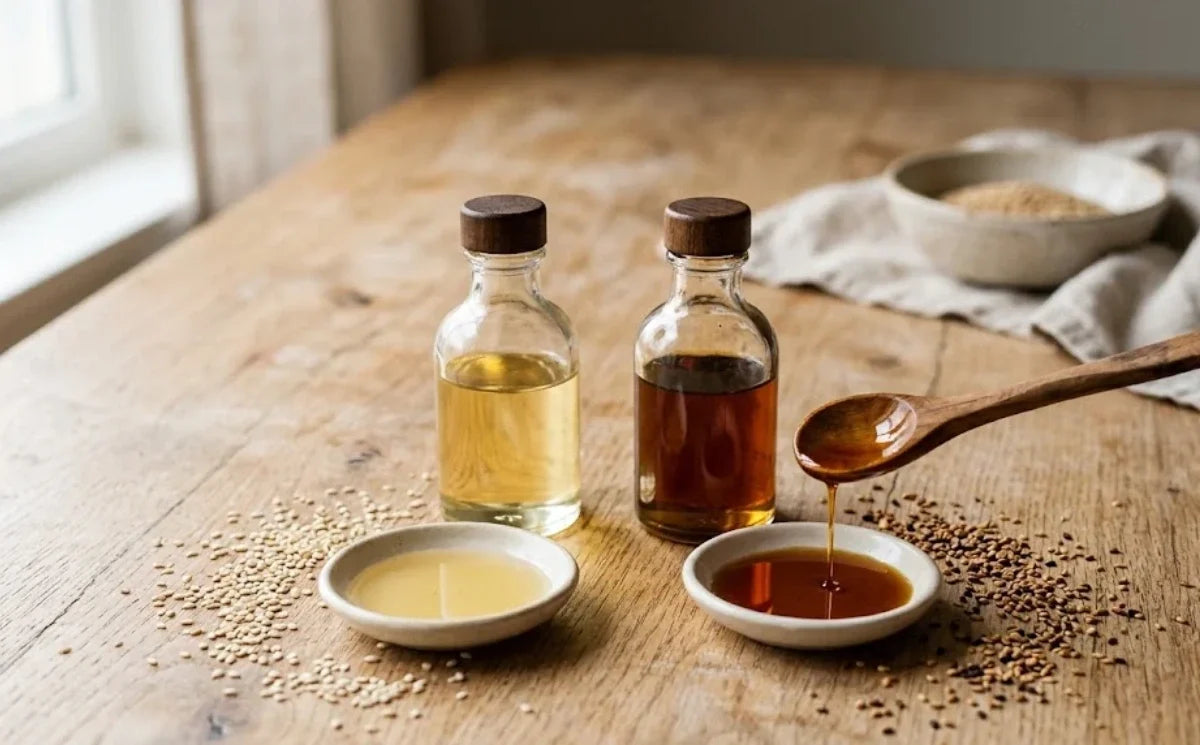
You reach for "sesame oil" and find two very different bottles: one pale and mild, one deep amber and intensely nutty. Use the wrong one and your stir-fry turns bitter, or your dressing tastes like nothing at all. So what is the difference between toasted vs. untoasted sesame oil, and which one belongs in your pan? This guide by SFMart explains how each oil is made, how to cook with each, whether you can fry it with sesame oil, how to store it, and what to do if you only have one on hand.
Quick Answer
Toasted sesame oil is pressed from roasted seeds. It is dark, strongly nutty, and best used as a finishing or seasoning oil, added at the end or over low heat. Cold-pressed (untoasted) sesame oil is pressed from raw seeds. It is pale, mild and delicate, and suits dressings, light sautéing and dipping sauces. Neither is the same as the other, so they can't be swapped one for one. For high-heat frying, most cooks reach for a refined sesame oil or another neutral oil instead. Store both in a cool, dark place, and smell the bottle before you use it if it has been open for months.
Toasted vs Untoasted Sesame Oil at a Glance
|
Feature |
Toasted (dark) sesame oil |
Cold-pressed / untoasted (light) sesame oil |
|
Seeds |
Roasted before pressing |
Raw, unroasted |
|
Color |
Deep amber to dark brown |
Pale gold |
|
Flavor |
Rich, toasty, strongly nutty |
Light, delicate, subtly nutty |
|
Aroma |
Bold and roasted |
Mild and clean |
|
Best use |
Finishing, marinades, dipping sauces, a few drops at the end |
Dressings, light sautéing, dips, drizzling |
|
Heat |
Low heat or off the heat; can turn bitter if overheated |
Light to medium heat; not ideal for deep-frying |
|
How much to use |
A teaspoon or so, since it's concentrated |
Tablespoon amounts work |
What Do "Toasted" and "Cold-Pressed" Actually Mean?
These two labels describe different things, which is why the comparison confuses people.
- Toasted describes the seeds. They are roasted before pressing, which darkens the oil and builds a deep, nutty flavor.
- Cold-pressed describes the pressing method. The oil is extracted without added heat, which helps keep a lighter flavor and color.
In practice, a cold-pressed sesame oil is usually made from raw seeds, so it is "untoasted." A dark, toasted oil is made from roasted seeds. Some oils are described by both terms, and some labels use only one, so check the product description to see whether the seeds were roasted.
SFMart's two sesame oils make the difference easy to see:
- McCabe Organic Extra Virgin Sesame Oil is cold-pressed from raw, unroasted organic sesame seeds. It has a light color and a delicate, subtly nutty taste.
- McCabe Organic Premium Sesame Oil is pressed from roasted organic sesame seeds. It has a deep amber color and a bold, toasty flavor.
Light vs Dark Sesame Oil: Flavor and Color
"Light" and "dark" sesame oil are the everyday names for untoasted and toasted oil. Light sesame oil is pale and mild, so it works like any neutral cooking oil with a hint of nuttiness. Dark sesame oil is a seasoning, closer to a spice than a cooking oil. A small amount flavors a whole dish, which is why cooks measure it by the teaspoon.
"Light" describes color and flavor only. It doesn't mean the oil has fewer calories.
Is Sesame Oil Good for Frying? Sesame Oil Smoke Point
You can cook with sesame oil, but which type matters, and the smoke point is the reason.
- Toasted sesame oil has a lower smoke point and can turn bitter if it gets too hot. Add it at the end of cooking, over low heat, or as a finishing oil.
- Cold-pressed (unrefined, untoasted) sesame oil is gentler on heat than refined oil. It suits light sautéing and medium-heat cooking.
- Refined sesame oil has the highest smoke point of the three, which is why it is the usual choice for stir-frying and deep-frying.
What the numbers say: sources don't agree exactly. Cooking references commonly give about 350°F (175°C) for unrefined and toasted sesame oil, around 410°F for "regular" light sesame oil, and up to about 450°F (232°C) for refined sesame oil. The exact figure depends on the brand, the seeds and how the oil was made, so treat these as rough guides and check the bottle.
The simple rule: for deep-frying or searing at high heat, use a refined oil. For everything else, use sesame oil for flavor, and add toasted oil late.
Can you cook with toasted sesame oil?
Yes, with care. Use it over low heat, in marinades, or stirred in at the end of cooking, so the flavor stays rich instead of bitter. A few drops in a stir-fry, after you take the pan off the heat, give you the aroma without the burn.
Can you cook with cold-pressed sesame oil at high heat?
It is better for light to medium heat. Cold-pressed oil handles gentle sautéing well, but it isn't the best choice for deep-frying or very hot searing. SFMart's Extra Virgin Sesame Oil page also recommends it for light cooking instead of high-heat frying.
Which Sesame Oil Should You Use? (By Dish)
|
Dish |
Better choice |
Why |
|
Salad dressings and vinaigrettes |
Either |
Untoasted for delicate; toasted for bold |
|
Dipping sauces (dumplings, noodles) |
Toasted |
Concentrated nutty flavor |
|
Light sautéed vegetables |
Cold-pressed |
Mild and holds up to gentle heat |
|
Stir-fry (high heat) |
Refined or neutral oil, with a few drops of toasted at the end |
Avoids bitterness |
|
Marinades for meat, tofu or vegetables |
Toasted |
Deep flavor |
|
Namul (seasoned vegetable sides) and bibimbap |
Toasted |
Classic Korean seasoning |
|
Hummus and dips |
Cold-pressed |
Won't overpower |
|
Finishing drizzle over soup, rice or noodles |
Toasted |
A few drops go a long way |
|
Baking |
Cold-pressed |
Subtle flavor |
Shopping for the oils? Browse SFMart's organic sesame oil collection.
Cold-Pressed Sesame Oil Benefits
Cold-pressed sesame oil is a popular choice because of what's in it and how it is made:
- Mostly unsaturated fat. About 82% of the fat in sesame oil is unsaturated, according to USDA data cited by Healthline.
- Natural antioxidants. Sesame oil contains compounds called sesamol and sesaminol.
- Gentle processing. Cold-pressing avoids added heat during extraction, which is why many cooks prefer it for a clean, delicate taste. For the seeds themselves, see the benefits of sesame seeds.
Most of the research on sesame oil's health effects is on animals, with only a few small human studies, so it is best seen as a flavorful part of a balanced diet, not a treatment for any condition. If you have a medical condition, talk to your doctor or dietitian.
Korean Perilla vs Sesame Oil
Korean cooking uses two nutty oils, and they aren't interchangeable. Perilla oil (deulgireum) is earthy and nutty, with a flavor distinct from sesame, and it goes into sautéed vegetables, some soups and roasted seaweed. Sesame oil (chamgireum) is the more familiar seasoning, used in marinades, namul, bibimbap and dipping sauces.
Perilla oil spoils easily, so buy a small bottle, store it cool and dark, and use it within about a month of opening. If you can't find perilla oil, sesame oil is the closest substitute, though the flavor won't be the same. Curious about the seeds? See our guide to organic spices, perilla seeds and sesame seeds.
Substitute for Toasted Sesame Oil (and the Other Way Around)
The two oils can't truly stand in for each other, because flavor, color and heat tolerance all differ.
- If you're out of toasted sesame oil: use untoasted sesame oil and add a pinch of toasted sesame seeds for extra aroma, or use a small amount of another nutty oil. Expect a milder flavor.
- If you're out of untoasted (light) sesame oil: use a neutral oil such as canola or grapeseed. Don't use toasted sesame oil in the same amount, because it will overpower the dish.
- In dressings: toasted sesame oil can stand in for olive oil when you want a nutty twist.
Does Sesame Oil Go Bad? Rancidity and Storage
Yes. Like all cooking oils, sesame oil slowly oxidizes and turns rancid. Light, heat and air speed that up.
How to store sesame oil:
- Keep it in a cool, dark place away from the stove and sunlight.
- Reseal the cap tightly after every use.
- Buy the size you'll use within a few months, especially for toasted oil.
Should you refrigerate sesame oil? It isn't required. Many cooks store untoasted oil in the pantry, but refrigeration helps toasted oil, or any bottle you'll use slowly, last longer. Chilled sesame oil may turn cloudy or thick. That is normal and clears at room temperature.
How long does sesame oil last? Sources vary. An unopened bottle usually keeps for months, up to or beyond its best-by date when stored well. After opening, expect roughly several months to around a year, with toasted oil at the shorter end. Always go by your nose and the date on the bottle.
Signs sesame oil has gone rancid:
- A sharp, paint-like or "off" smell
- A sour, soapy or bitter taste
- An unusual change in color or texture (other than harmless cloudiness from the cold)
When in doubt, throw it out. For more on keeping pantry staples fresh, see our guide to how to store rice, oats and grains.
Is Sesame Oil a Common Allergen?
Yes. Sesame is the ninth major food allergen in the US. Since January 1, 2023, the FDA requires packaged foods that contain sesame to declare it on the label. SFMart's sesame oils state "Contains sesame" and are packed in a facility that also processes soybeans, wheat and peanuts. If you or someone you cook for has a sesame allergy, avoid sesame oil and talk to your doctor or allergist.
Shop Organic Sesame Oil at SFMart
- McCabe Organic Extra Virgin Sesame Oil, 12 fl oz: cold-pressed from raw seeds, light and delicate.
- McCabe Organic Premium Sesame Oil, 12 fl oz: from roasted seeds, deep and toasty.
- Browse the full organic sesame oil collection or our organic sesame seeds.
Want a closer look at both bottles? Read our guide to extra virgin and premium select sesame oil. Want to know which sesame seeds to pick? Read our guide on the nutritional difference between hulled and unhulled sesame seeds.
Final Thoughts
Think of toasted sesame oil as a seasoning and cold-pressed sesame oil as a gentle cooking and dressing oil. Keep both in the kitchen if you can, use the dark oil by the teaspoon at the end, and keep the pale oil for everyday dishes. Store them well and trust your nose.
Ready to stock up? Shop SFMart's organic sesame oil collection and explore our organic sesame seeds.


