
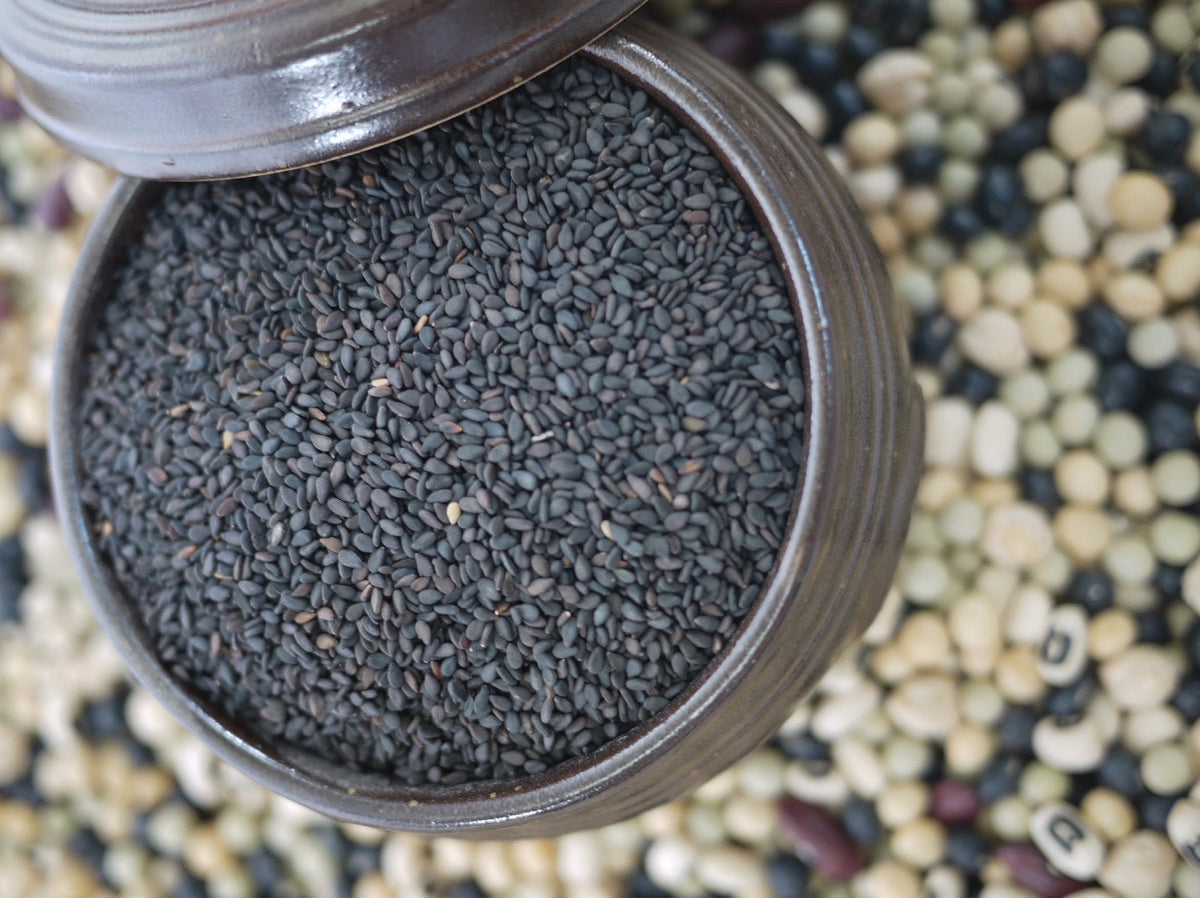
Black sesame seeds are small, but they're easy to get wrong. Because the hull is left on, they taste bolder and slightly more bitter than white sesame, they hide burning behind their dark colour, and their high oil content means they go off faster than most pantry staples. The good news is that almost every problem comes down to a handful of habits. This guide covers how to toast, measure, store, grind and pair black sesame seeds so they taste nutty and rich instead of bitter or stale.
Quick Answer
The most common mistakes with black sesame seeds are burning them while toasting (the dark colour hides it), using too many, storing them in a warm cupboard so the oils turn rancid, skipping the grind when a recipe needs a paste or powder, pairing them with flavours that clash, using the wrong form (raw vs roasted) for the dish, and ignoring sesame allergen labelling. Toast on medium-low heat for 2 to 3 minutes while stirring, judge by aroma rather than colour, start with 1 to 2 teaspoons, and keep them airtight in a cool, dark place, or in the fridge or freezer for longer storage.
Why Cook With Black Sesame Seeds?
Black sesame seeds are a staple of Korean, Japanese and Chinese cooking, where they finish rice bowls, noodles and savoury sauces, and turn up in sweet dishes such as black sesame paste, porridge, ice cream and mochi fillings. They have a deeper, earthier flavour than white sesame, and many cooks also value them for their minerals and fibre. Our guide to the health benefits of black sesame seeds goes into the nutrition in more detail. SFMart's organic sesame collection covers raw, roasted and salted options, so you can pick the right form for the job.
Mistake 1: Burning Them While Toasting
This is the number one problem. White sesame turns golden as it toasts, which warns you when it's done. Black sesame doesn't change colour in any useful way, so by the time you notice a smell, it may already be scorched, and burnt sesame tastes harsh and acrid.
How to fix it:
- Use a dry pan over medium-low heat and keep the seeds moving. Black sesame generally needs about 2 to 3 minutes, a little less than white.
- Go by aroma and sound. Take the pan off the heat when you smell a warm, nutty fragrance and hear gentle popping, not when you think the colour has changed.
- Tip them onto a cool plate straight away. The pan holds heat and will keep cooking them.
- Toast small batches (a few tablespoons at a time) and don't add oil.
- Don't toast pre-ground seeds. They burn almost instantly.
If you'd rather skip the guesswork, buy them already roasted. SFMart's McCabe Organic Roasted Black Sesame is ready to use straight from the bag.
Mistake 2: Using Too Many
Black sesame is strong. A heavy hand overwhelms delicate dishes and can make a dish taste bitter, and the dark specks show up in everything.
How to fix it: Start with 1 to 2 teaspoons per serving as a garnish and taste before you add more. Use larger amounts only where black sesame is the star, such as a paste, dressing or dessert. When you adapt a recipe written for white sesame, use a little less black.
Mistake 3: Storing Them Badly
Sesame seeds are roughly half oil, and that oil goes rancid with heat, light and air. Rancid seeds taste bitter, flat and slightly painty, and that flavour carries into whatever you cook.
How to fix it:
- Keep them in an airtight container away from the stove and sunlight.
- For regular use, a cool, dark cupboard is fine for a few months. After opening, many cooks refrigerate them, which extends their life, and the freezer is the best choice for bulk packs.
- Smell before you use them. Fresh seeds smell mild and nutty. If they smell sharp, sour or stale, throw them out.
- Toast only what you need, since toasted seeds spoil faster than raw ones.
Mistake 4: Not Grinding Them When the Recipe Needs It
Whole seeds are great for crunch and garnish, but they pass through the body largely intact, and in pastes, sauces and drinks they leave the dish gritty and the flavour locked inside the hull.
How to fix it: Grind toasted seeds in a spice grinder, blender or mortar and pestle for:
- Black sesame paste or butter (a spoonful of oil helps it blend)
- Dressings, dipping sauces and marinades
- Smoothie, porridge and dessert powders
Grind in short pulses, and stop before it turns to paste unless that's what you want. Grind small amounts fresh, because ground sesame loses flavour quickly.
Mistake 5: Choosing Raw When You Need Roasted (or the Other Way Round)
Raw black sesame is mild, a little bitter and best when you plan to toast it yourself to control the flavour or add it to dishes that will be cooked. Roasted black sesame is nuttier and more aromatic, and it's what most people want for garnishing, grinding and eating as it is.
How to fix it: Use roasted seeds for toppings, dressings and desserts, and raw seeds when you want to toast to your own taste or cook them in a dish. If you aren't sure, roasted is the safer choice for most everyday cooking. Browse the raw and roasted options in SFMart's sesame collection, such as McCabe Organic Raw Black Sesame Seed.
Mistake 6: Ignoring Pairings
Black sesame has a strong, earthy flavour that works best with ingredients that either complement it or balance it.
What works well:
- Sweet and rich: honey, rice syrup, brown sugar, milk and cream
- Savoury and salty: soy sauce, miso, sesame oil, ginger, garlic and scallions
- Grains and noodles: rice, noodles and porridge. Try it over organic brown rice, or stir it into a grain bowl
- Warm drinks: black sesame goes well in soy milk, and with roasted grain tea. Take a look at our organic tea collection and the guide to barley tea for caffeine-free options to serve alongside
What to be careful with: very delicate flavours, such as lightly dressed white fish or subtle broths, can be overpowered. Use a pinch rather than a spoonful.
Mistake 7: Overlooking Sesame Allergy Labelling
Sesame became the ninth major food allergen in the US on January 1, 2023, under the FASTER Act, and it now has to be declared on packaged foods. If you're cooking for guests, children or anyone with a sesame allergy, remember that it can show up in sauces, breads, spice blends and snacks, and that some manufacturers have added small amounts of sesame to products that didn't used to contain it.
How to fix it: Read labels on every packaged ingredient, keep sesame utensils and surfaces separate when cooking for someone with an allergy, and tell guests when a dish contains sesame. People who've been advised to avoid kidney stones should also ask their doctor about sesame, since it contains oxalates.
Bonus Tips for Better Black Sesame Dishes
- Toast small and often. A fresh batch every week or two tastes better than a big jar toasted once.
- Add at the end. Sprinkle on right before serving to keep the crunch.
- Try something sweet. Black sesame paste, porridge and ice cream are classic uses, and a spoonful of ground seeds adds depth to banana or oat smoothies. If you enjoy oats, our comparison of organic oats vs regular oats helps you choose.
- Mix with other seeds. Blend with perilla seeds for a richer flavour. Our article on organic spices, perilla seeds and sesame seeds has ideas.
Final Thoughts
Most black sesame problems are easy to avoid: toast gently and by smell, use a light hand, store the seeds cool and airtight, grind when you need a paste or powder, and match the form to the recipe. Get those basics right and you'll get the deep, nutty flavour black sesame is known for.
Ready to cook? Shop SFMart's organic sesame collection, including raw and roasted black sesame seeds, or explore our organic brown rice and organic tea collections for dishes and drinks to pair them with.


