
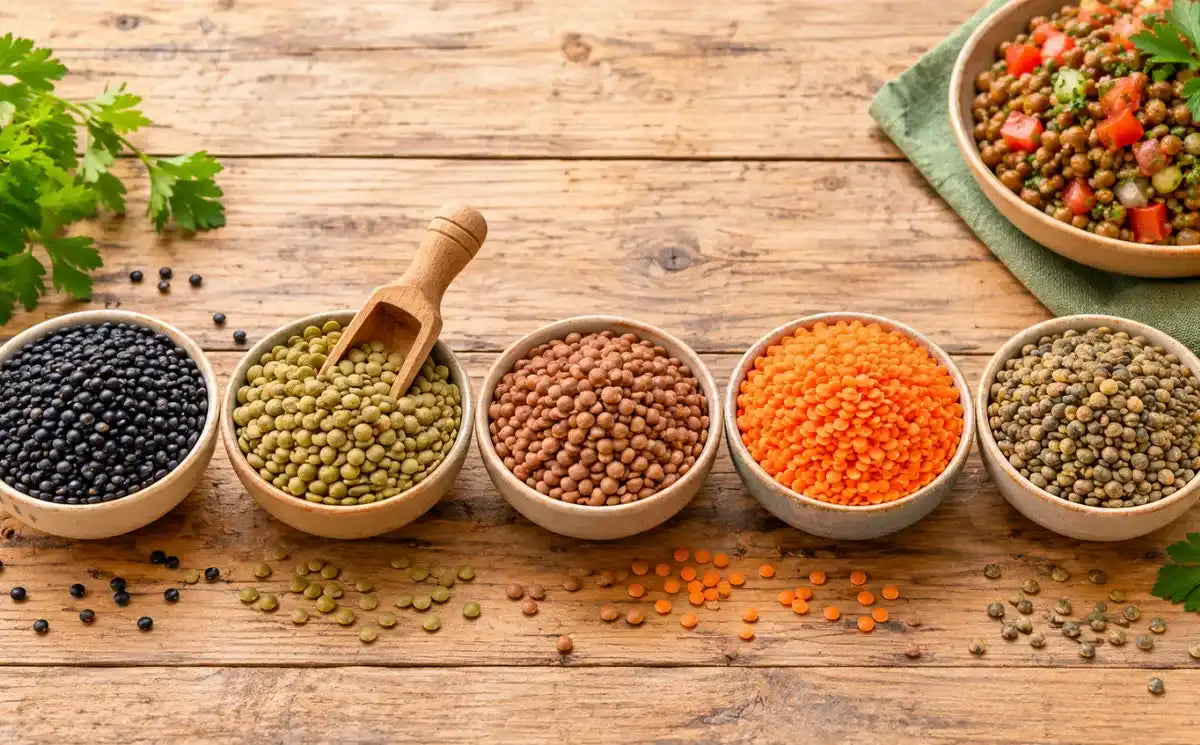
Walk down the dried beans and pulses aisle at a grocery store, and you'll find several types of lentils, each with its own colour, size and texture. Some stay firm after cooking, while others soften into a creamy consistency. Some are perfect for salads, and others work better in soups, curries and dal.
But if you've ever wondered why one lentil recipe turns out perfectly while another becomes mushy, the type of lentil you're using could be the reason.
Understanding the different types of lentils can help you choose the right variety for your meals, get the cooking time right and avoid unnecessary substitutions.
So, what's the difference between black lentils vs green lentils? Are brown lentils better for soup? And why do red lentils cook so much faster than the others?
Let's break down the most popular varieties with SFMart’s detailed guide and learn how they cook and which ones are worth keeping in your pantry.
1. What Are the Different Types of Lentils?
Lentils are edible seeds from the legume family. They are a popular source of plant-based protein, fibre and essential nutrients, making them a useful addition to everyday meals.
They come in several varieties, but the most common types you'll find in grocery stores are:
- Black lentils (Beluga lentils)
- Green lentils
- Brown lentils
- Red lentils
- French green lentils (Puy lentils)
- Yellow lentils
Although they belong to the same family, these varieties differ in their cooking times, texture and how well they hold their shape.
Some are sold whole, while others are split and sometimes dehulled. This makes a difference to how quickly they cook and whether they retain a firm texture.
Here's a quick comparison before we look at each variety in more detail.
2. Black Lentils vs Green, Brown & Red Lentils: Quick Comparison
|
Lentil type |
Appearance |
Typical cooking time |
Cooked texture |
Best uses |
|
Black lentils |
Small, shiny and black |
20–30 minutes |
Firm and slightly creamy |
Salads, grain bowls, side dishes |
|
Green lentils |
Green to olive |
25–35 minutes |
Firm and earthy |
Salads, soups, meal prep |
|
Brown lentils |
Light to dark brown |
20–30 minutes |
Soft but holds some shape |
Soups, stews, curries |
|
Red lentils |
Orange-red, often split |
10–15 minutes |
Soft and creamy |
Dal, purees, thick soups |
|
French/Puy lentils |
Small, dark green with speckles |
25–35 minutes |
Firm and peppery |
Warm salads, side dishes |
|
Yellow lentils |
Yellow, often split |
10–25 minutes |
Soft and mild |
Dal, curries, soups |
Cooking times are approximate for dried lentils simmered on the hob. They can vary depending on the variety, whether the lentils are whole or split, their age and how soft you want them.
The biggest difference is how each type behaves during cooking. If you want lentils that stay separate and firm, black, green and French lentils are generally good choices. If you prefer a thick, creamy dish, red and yellow lentils are usually more suitable.
3. Black Lentils (Beluga Lentils): Small, Firm and Full of Flavour
Black lentils, often called Beluga lentils because their shiny appearance resembles caviar, are among the most distinctive lentil varieties.
They are small, round and dark black, with a slightly earthy flavour and a firm texture when cooked.
Unlike red lentils, which soften quickly, whole black lentils generally retain their shape during cooking. This makes them particularly useful in recipes where you want visible, separate lentils rather than a thick mixture.
How do black lentils cook?
- Whole black lentils typically take around 20–30 minutes to cook on the hob.
- They soften on the inside while keeping their outer shape, provided they aren't overcooked.
- You can simmer them in water or stock until tender, then drain any excess liquid.
What are black lentils best used for?
Black lentils work particularly well in:
- Lentil salads with vegetables and fresh herbs.
- Grain bowls with rice, quinoa or roasted vegetables.
- Side dishes served with fish, chicken or roasted vegetables.
- Hearty soups where you want the lentils to remain intact.
- Meal prep recipes that need to hold their texture after refrigeration.
They are also a great choice when you want to add more variety to plant-based meals without relying on lentils that break down during cooking.
Are black lentils healthier than other lentils?
Black lentils are nutritious, providing plant-based protein, fibre and minerals. However, they aren't automatically healthier than green, brown or red lentils.
The nutritional content varies between varieties, but all lentils can contribute to a balanced diet. For a closer look at the nutrition, see our guide to the benefits of eating lentils.
If you're interested in trying them, explore McCabe Organic Black Lentils, which offer a convenient pantry option for salads, soups and everyday meals.
4. Green Lentils: Versatile, Earthy and Great for Everyday Cooking
Green lentils are one of the most versatile varieties and are widely used in everyday cooking.
They have a slightly peppery, earthy flavour and a firm texture that makes them suitable for dishes where you want the lentils to hold their shape.
Whole green lentils generally take around 25–35 minutes to cook, depending on their size and age.
What are green lentils best used for?
Green lentils are a good choice for:
- Lentil salads.
- Vegetable soups.
- Stews and casseroles.
- Lentil burgers and patties.
- Meal prep bowls.
They absorb the flavours of herbs, spices, stock and other ingredients without becoming too soft too quickly.
Do green lentils hold their shape?
Yes. Whole green lentils generally hold their shape better than brown and red lentils.
They are particularly useful when making salads or preparing meals in advance, as they can retain a pleasant texture after cooking and cooling.
If you want a lentil that works across several recipes, green lentils are a practical pantry staple.
5. Brown Lentils: A Classic Choice for Soups, Stews and Curries
Brown lentils are among the most widely available varieties. They have a mild, earthy flavour and a soft texture once cooked.
Their colour ranges from light brown to darker shades, and they are often sold whole with their outer seed coat intact.
Brown lentils usually take around 20–30 minutes to cook on the hob.
What are brown lentils best used for?
Their ability to soften while retaining some structure makes them suitable for:
- Vegetable and lentil soups.
- Hearty stews.
- Curries.
- Shepherd's pie-style vegetarian fillings.
- Everyday lentil dishes.
Brown lentils are especially useful when you want a thicker, more substantial dish without completely losing the texture of the lentils.
Do brown lentils turn mushy?
They can, particularly if they are cooked for too long or stirred too frequently.
Brown lentils tend to soften more than black and green varieties, so keep an eye on them towards the end of cooking if you want them to retain their shape.
For thicker soups and stews, however, their softer texture can actually be an advantage.
6. Red Lentils: Quick-Cooking and Perfect for Dal
Red lentils are a popular choice for quick meals because they cook much faster than most whole lentil varieties.
They are usually sold split and dehulled, which means their outer skin has been removed and the seed has been divided into two halves.
This is why they soften so quickly during cooking.
Red lentils typically take around 10–15 minutes to cook, although the exact time depends on how much liquid you use and the consistency you want.
What are red lentils best used for?
Red lentils are particularly suitable for:
- Dal and lentil curries.
- Creamy soups.
- Lentil purees.
- Thick vegetable stews.
- Sauces and plant-based fillings.
They break down naturally, creating a smooth and creamy consistency without needing to blend them.
Why do red lentils turn mushy?
This is usually because they are designed to soften more quickly than whole lentils.
Their split and dehulled structure allows water to reach the inside easily, which speeds up cooking.
If you want a creamy dal or thick soup, this is exactly what you want. However, if you're preparing a salad where the lentils need to stay separate, red lentils probably aren't the best option.
7. French Green Lentils (Puy Lentils): Best for Salads and Meal Prep
French green lentils, commonly known as Puy lentils, are a smaller variety with a distinctive dark green colour and subtle speckled appearance.
They are known for their firm texture and peppery, slightly earthy flavour.
Compared with regular green lentils, Puy lentils generally hold their shape particularly well after cooking.
They typically take around 25–35 minutes to cook.
What are Puy lentils best used for?
Their firm texture makes them ideal for:
- Warm lentil salads.
- Cold grain bowls.
- Mediterranean-style dishes.
- Side dishes with roasted vegetables.
- Meal prep recipes.
If you want lentils that won't easily turn into a soft mixture after cooking, French green lentils are one of the best options.
They also pair well with olive oil, lemon juice, garlic, parsley and roasted vegetables.
8. Yellow Lentils: Mild, Soft and Perfect for Comfort Food
Yellow lentils are commonly used in South Asian and Middle Eastern cooking.
The term can refer to different varieties, including split mung beans and split pigeon peas, so it is important to check the packaging rather than assuming all yellow lentils are the same.
They have a mild flavour and generally soften well during cooking.
Depending on the variety, split yellow lentils can take around 10–25 minutes to cook, while some whole varieties take longer.
What are yellow lentils best used for?
They work well in:
- Traditional dal.
- Lentil curries.
- Thick soups.
- Spiced stews.
- Purees and soft-textured dishes.
Their mild taste makes them particularly useful when cooking with spices, garlic, ginger and other aromatic ingredients.
9. Which Lentils Hold Their Shape Best?
If you're making a lentil salad, grain bowl or meal prep dish, you probably don't want your lentils turning into mush.
Some varieties naturally retain their shape better than others. The outer seed coat, whether the lentils are whole or split, and how long they cook all affect the final texture.
Here's how the main varieties compare:
|
Lentil type |
How well it holds its shape |
Best use |
|
Black lentils |
Excellent |
Salads and meal prep |
|
French green lentils |
Excellent |
Warm salads and side dishes |
|
Regular green lentils |
Very good |
Grain bowls and soups |
|
Brown lentils |
Moderate |
Stews and curries |
|
Red lentils |
Low |
Dal and creamy soups |
|
Yellow split lentils |
Low to moderate |
Dal and purees |
- For firm, separate lentils: Choose black or French green lentils.
- For everyday cooking: Green and brown lentils are versatile options.
- For creamy dishes: Red and yellow split lentils are usually the better choice.
If you're preparing meals in advance, black lentils are particularly useful because they retain their texture after cooking and cooling. McCabe Organic Black Lentils are one option to consider for salads, grain bowls and weekly meal prep.
10. Can You Substitute One Type of Lentil for Another?
Yes, but not every lentil variety works as a direct replacement.
The biggest thing to consider is the texture you want from your finished dish. Swapping a firm whole lentil for a split variety can change the consistency of a recipe, even if the flavour remains similar.
Here's a simple substitution guide.
Can you substitute red lentils for green lentils?
You can, but the result will be quite different.
Green lentils retain their shape, while red lentils soften and break down during cooking. If you use red lentils in a green lentil salad recipe, you'll end up with a much softer mixture.
Red lentils work better as a substitute in soups, curries and stews where a creamy consistency is acceptable.
Can you substitute brown lentils for green lentils?
Yes. Brown lentils are a reasonable substitute for green lentils in soups, stews and curries.
However, brown lentils generally soften more during cooking, so keep an eye on them if the recipe requires a firmer texture.
Can you substitute black lentils for green lentils?
Absolutely. Black lentils are particularly useful in recipes that call for whole green lentils, especially salads, grain bowls and side dishes.
They have a slightly different flavour and appearance but offer a similar firm texture.
Can you substitute Puy lentils for regular green lentils?
Yes. Puy lentils are an excellent alternative when you want a firm texture.
They are particularly useful in recipes where the lentils need to stay separate rather than break down.
A simple rule: Match the texture of the lentil to the dish rather than relying on colour alone.
11. How to Cook Lentils Without Making Them Mushy
If your lentils regularly turn mushy, the problem may not be the variety itself. Cooking time, water quantity and how often you stir them can all affect the final texture.
Here are a few simple ways to get better results.
1. Choose the Right Variety
Start with the lentil that suits your recipe.
Black, green and French lentils are generally better for dishes where you want the lentils to remain whole. Red lentils are naturally better for creamy dishes.
2. Rinse Before Cooking
Place dried lentils in a sieve and rinse them under cold running water.
This helps remove dust and any unwanted debris. You can also check for small stones or damaged lentils before adding them to the pot.
3. Use Enough Water
For stovetop cooking, a ratio of around 1 cup of dried lentils to 2½–3 cups of water is a useful starting point.
Some varieties may need slightly more or less water depending on how long they cook.
4. Simmer Rather Than Rapidly Boil
Once the water reaches a boil, reduce the heat and let the lentils simmer gently.
Rapid boiling can cause the outer skins to split and the lentils to break apart, particularly if they are already becoming tender.
5. Check Them Towards the End
Cooking times are estimates, not fixed rules.
Start checking your lentils a few minutes before the expected cooking time is over. They should be tender but still have the texture you want.
6. Avoid Excessive Stirring
Stirring too frequently can break apart softer lentils, especially red and brown varieties.
For salads and meal prep, use a gentle hand when mixing cooked lentils with dressings and other ingredients.
12. Do Lentils Need Soaking Before Cooking?
Most dried lentils do not need to be soaked before cooking.
Unlike many dried beans, lentils are relatively small and cook quickly. A good rinse is usually enough before adding them to a pot of water.
However, soaking is optional and may help reduce cooking time slightly.
Here's what you should know:
- Black lentils: No soaking required, although soaking is optional.
- Green lentils: Can be cooked without soaking.
- Brown lentils: Usually do not require soaking.
- Red lentils: No soaking required.
- French lentils: Can be cooked directly after rinsing.
- Yellow split lentils: Generally do not require soaking.
If you choose to soak whole lentils, drain and rinse them before cooking in fresh water.
If you're interested in how soaking and cooking affect digestion, our guide on why beans and lentils cause gas and how to reduce it explains the science and shares some practical preparation tips.
13. How Long Do Dried Lentils Last in Storage?
Dried lentils have a long shelf life when stored properly.
Keep them in an airtight container in a cool, dry place, away from direct sunlight, heat and moisture.
For the best quality, try to use them within one to two years, although properly stored dried lentils may remain safe for longer. Older lentils can take considerably more time to soften, so their cooking performance may change.
Here are a few storage tips:
- Transfer opened packets into airtight containers.
- Keep different lentil varieties labelled.
- Avoid storing them near the cooker or other heat sources.
- Check for moisture, insects or unusual smells before cooking.
- Follow any storage instructions provided on the packaging.
For more pantry storage tips, see our guide to how to store rice, oats and grains.
Once cooked, lentils should be refrigerated in a covered container within two hours of cooking. They generally keep for around three to four days in the refrigerator. You can also freeze cooked lentils in portion-sized containers for convenient meals later.
14. Which Lentils Are Best for Different Meals?
Still unsure which type to buy? Here's a simple guide based on what you're planning to cook.
|
What you're making |
Best lentils to use |
Why |
|
Lentil salad |
Black or French green |
Retain their shape |
|
Vegetable soup |
Brown or green |
Add texture and substance |
|
Creamy lentil soup |
Red |
Break down naturally |
|
Traditional dal |
Red or yellow split |
Cook quickly and become soft |
|
Grain bowls |
Black or green |
Stay firm after cooking |
|
Lentil curry |
Brown, green or red |
Choose based on desired consistency |
|
Weekly meal prep |
Black or French green |
Hold their texture well |
|
Vegetarian patties |
Brown or green |
Provide a hearty texture |
If you're stocking up for everyday meals, having two or three varieties in your pantry is often enough. A firm variety for salads and bowls, a versatile one for soups and stews, and a quick-cooking split variety for dal can cover most recipes.
SFMart's Organic Lentils collection includes black, French green, regular green, brown and red lentils, making it easy to compare different varieties.
Need recipe ideas? Try 8 surprisingly fast and delicious lentil recipes or lentil recipes we love.
Final Thoughts
Choosing the right lentils can make a bigger difference to your cooking than you might expect. While black and French green lentils are excellent for salads and meal prep, brown lentils are versatile everyday staples, and red lentils are ideal for quick, creamy dishes.
You don't need to stock every variety to enjoy the benefits of lentils. Start with the types that suit your favourite recipes and experiment with others as you become more familiar with their flavours and textures.
If you're looking to add more plant-based protein and fibre to your meals, explore SFMart's Organic Lentils collection and discover the different varieties available for everyday cooking.


