
Beetroot has one of the more genuinely well-researched reputations in the world of blood-pressure-friendly foods, largely thanks to its natural nitrate content. What gets lost in translation, though, is that almost all of that research is on concentrated beetroot juice, not the lighter, steeped tea made from dried beets.
At SFMart, ruby beet tea is a popular pick for exactly this reason, so it's worth being clear about what the science actually supports, and what a reasonable daily amount looks like when you're drinking tea rather than a nitrate-dosed juice shot.
Quick Answer
Beetroot's blood pressure benefit comes from its natural nitrate content, which the body converts into nitric oxide, a compound that helps relax and widen blood vessels. Most of the clinical research showing meaningful blood pressure reductions uses concentrated beetroot juice providing roughly 300 to 400mg of nitrate per serving, equivalent to about two to three medium beets. Dried, steeped beet tea is a genuinely different preparation, using less plant material extracted more gently in hot water rather than concentrated fresh juice, so it almost certainly delivers a smaller nitrate dose per cup than the juice used in research.
That doesn't make beet tea worthless, it's a low-risk, pleasant way to include more beetroot in your diet, but it's honest to say the clinical dosing studied for blood pressure doesn't directly transfer to a steeped cup of tea. A reasonable approach is one to two cups daily as part of a broader diet, not as a stand-in for prescribed blood pressure medication.
Does Beet Tea Lower Blood Pressure? What the Research Shows
The mechanism behind beetroot's blood pressure effect is genuinely well understood. Beets are naturally rich in dietary nitrate, which the body converts, with help from oral bacteria, into nitric oxide, a molecule that relaxes and widens blood vessels, improving blood flow and reducing blood pressure. Clinical studies using concentrated beetroot juice have shown real results: one frequently cited study found a mean systolic blood pressure reduction of around 15mmHg after two weeks of daily beetroot juice, with blood pressure returning to baseline within days of stopping.
Broader research consistently associates beetroot juice supplementation with modest but clinically meaningful reductions in blood pressure, generally in the range of several mmHg, a genuinely useful effect at a population level even though it's smaller than what prescription medication typically achieves.
Beet Tea vs. Beet Juice: An Important Difference
This is the detail most beet tea content skips over, and it's worth being straightforward about. The research showing real blood pressure benefits almost exclusively uses concentrated beetroot juice or standardized nitrate-rich shots, delivering around 300 to 400mg of nitrate in a single serving, roughly the equivalent of juicing two to three medium beets.
A cup of steeped dried beet tea is a meaningfully different product: less plant material, extracted more gently in hot water over several minutes rather than through concentrated juicing. It's reasonable to expect a cup of beet tea delivers less nitrate than a dedicated juice shot, even though beets themselves remain a genuinely good source of dietary nitrate. This doesn't mean beet tea has no value, it's still a way to bring more beetroot into your diet in an easy, pleasant form, just not a guaranteed match for the specific clinical dosing studied for blood pressure.
It's a similar distinction to the one worth understanding with jujube tea for sleep, where the strongest research is on a concentrated seed extract rather than the fruit tea most people actually drink.
Beetroot Nitrates Explained
Dietary nitrate on its own doesn't do much. The body needs to convert it into nitrite and then nitric oxide for the blood-vessel-relaxing effect to actually happen, and that first conversion step relies on bacteria living on the back of your tongue. This is worth knowing because it means antibacterial mouthwash, used regularly, can measurably blunt the blood pressure benefits of nitrate-rich foods like beets, since it disrupts the oral bacteria responsible for that initial conversion. It's a small but genuinely interesting detail that shows up consistently in nitrate research.
How Much Beet Tea Should You Drink Daily?
Since the clinical dosing research is built around concentrated juice rather than tea, there isn't an established, tea-specific daily target backed by the same level of evidence.
As a sensible, moderate approach, one to two cups of beet tea daily is a reasonable way to include beetroot as part of a broader diet supportive of healthy blood pressure, alongside other nitrate-rich vegetables like leafy greens. If you're specifically trying to replicate the blood pressure results seen in clinical research, standardized beetroot juice with a stated nitrate content is a more direct match for that evidence than tea. Either way, beet tea shouldn't be treated as a replacement for prescribed blood pressure medication, and if you're on medication already, it's worth mentioning regular beetroot consumption to your doctor, since the effects can be additive with certain blood pressure and vasodilating medications.
The same moderate, food-first approach applies to other traditional teas with a health reputation, like bitter melon tea for blood sugar, where the honest answer is also to treat it as a supportive addition rather than a medical treatment.
Dried Beet Tea Recipe
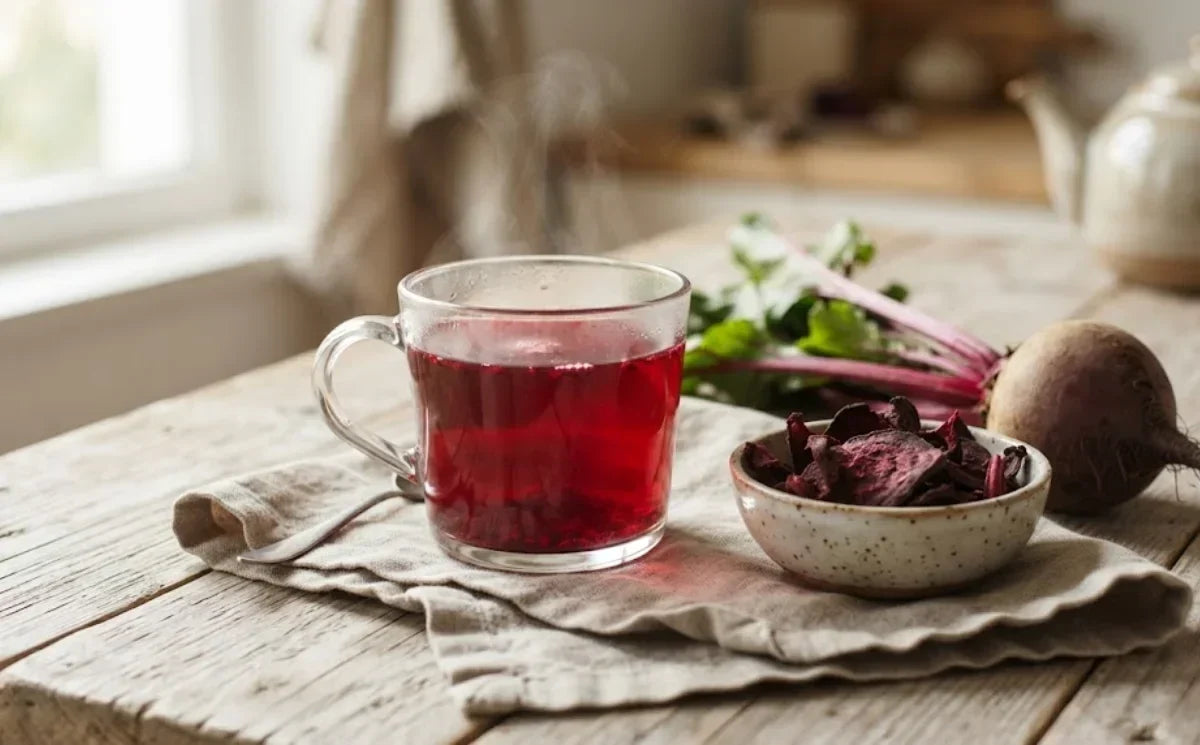
Our beet tea is designed to be brewed simply: fill a mug or glass three-quarters full with hot water, add the dried ruby beet, and let it steep for 5 to 6 minutes, adjusting the time to taste. Our organic sun-dried ruby beet tea is brewed exactly this way, a genuinely easy, no-fuss preparation compared to juicing fresh beets.

Beet Tea Side Effects
Beet tea is generally very well tolerated, but a few things are worth knowing:
- Beeturia. A pink or reddish tint to urine (or stool) after consuming beets is harmless and simply reflects the natural pigment (betalain) passing through the body.
- Oxalate content. Beets contain oxalates, which can be a consideration for people prone to certain types of kidney stones. If you have a history of kidney stones, it's worth discussing beet consumption with your doctor.
- Additive effects with blood pressure medication. Since beets genuinely can lower blood pressure, combining regular beet tea with prescribed antihypertensive medication can have an additive effect, which isn't necessarily harmful but is worth your doctor knowing about, particularly if you take vasodilating medication.
- Mild digestive effects are occasionally reported with larger quantities of beets, though this is uncommon at typical tea-drinking amounts.
A Note on Medical Guidance
This article is intended as general information and is not a substitute for medical advice. If you have high blood pressure or are taking blood pressure medication, please speak to your doctor before making beet tea a regular part of your routine, particularly around potential additive effects with prescribed treatment.
Final Thoughts
Beetroot's blood pressure research is genuinely solid, but it's specifically built around concentrated juice, not steeped tea, and being honest about that gap matters more than borrowing juice-study numbers to market a cup of tea. Ruby beet tea is still a pleasant, low-risk way to bring more beetroot into your diet, just one to enjoy as part of a broader healthy pattern rather than a direct substitute for the clinical dosing studied for blood pressure.
If you'd like to try it, SFMart's organic sun-dried ruby beet tea is USDA and CCOF certified, and our broader organic tea collection has other traditional, caffeine-free options worth exploring alongside it.


