
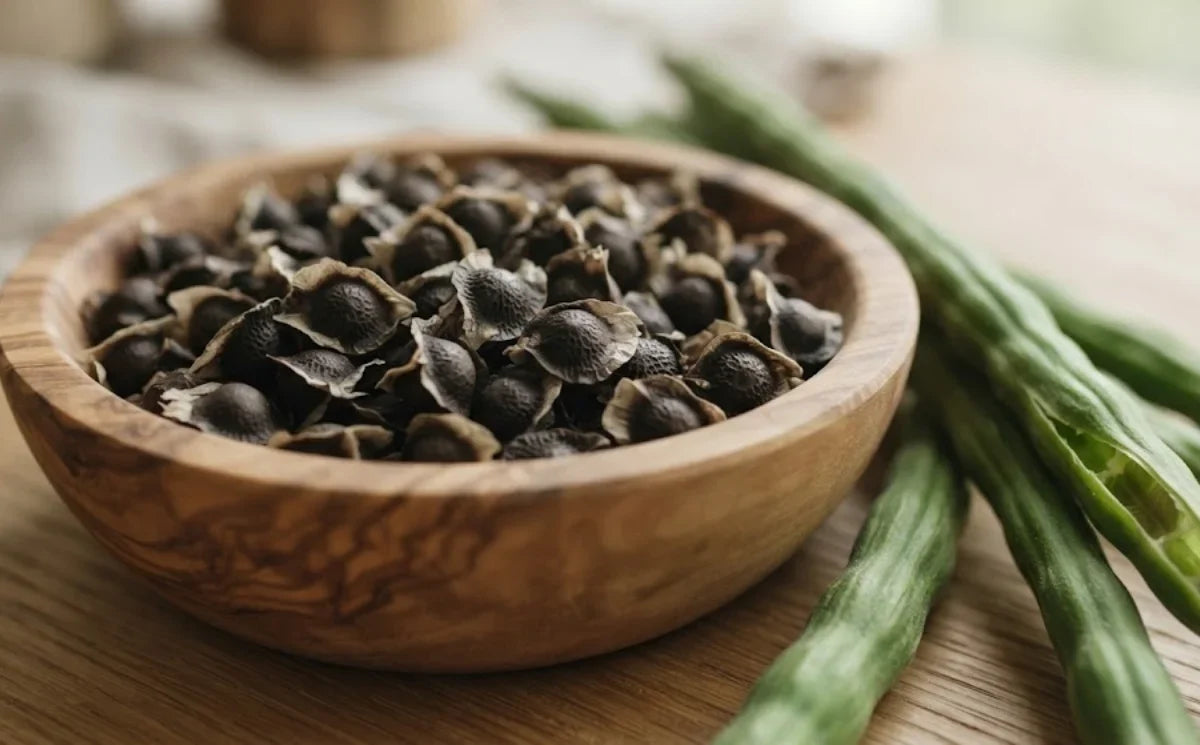
Moringa has picked up the "miracle tree" nickname for a reason, nearly every part of the plant, leaves, pods, bark, and seeds, has a place in traditional medicine somewhere in the world. The seeds specifically have become popular as a small, potent daily addition to a health routine, but "potent" cuts both ways here, and getting the dosage wrong is a more realistic risk than most enthusiastic articles let on.
At SFMart, moringa seeds are a product we field genuine dosage and safety questions about, so this guide covers what's actually established, what's still uncertain, and how to eat them sensibly.
Quick Answer
A commonly cited safe daily dosage for moringa seeds is 3 to 6 seeds per day for adults, starting with just 1 to 2 seeds if you're trying them for the first time and increasing gradually as your digestive system adjusts. Moringa seeds are generally well tolerated in moderate amounts, with research pointing to potential benefits for blood sugar regulation, blood pressure, and antioxidant intake, though much of this evidence comes from animal studies or small human trials rather than large-scale clinical research, and the FDA has not formally reviewed moringa for safety or effectiveness.
People taking medication for diabetes, blood pressure, or thyroid conditions, along with anyone pregnant or breastfeeding, should speak to a doctor before adding moringa seeds to their routine, since the same compounds responsible for potential benefits can meaningfully interact with these conditions and medications.
What Are Moringa Seeds, Exactly?
Moringa seeds come from the pods of the Moringa oleifera tree, sometimes called the drumstick tree, native to parts of South Asia and widely cultivated across Africa and Asia today. The seeds are rich in plant compounds including flavonoids and phenolic acids, along with fatty acids, and they're eaten raw, roasted, or brewed into tea, distinct from moringa leaf powder, which is a different, more commonly researched part of the plant with its own separate dosage guidance.
How Many Moringa Seeds Should You Eat Per Day?
Most sources converge on a similar range: 3 to 6 seeds daily for adults is commonly cited as a reasonable, moderate amount. If you haven't tried moringa seeds before, starting with just 1 to 2 seeds and paying attention to how your body responds over a few days is the more cautious approach, since moringa's potency means a smaller dose is often sufficient, and more isn't necessarily better.
It's worth being clear that there's no official, government-established recommended daily allowance for moringa seeds specifically, so these figures reflect commonly cited guidance from herbal and nutrition sources rather than a regulated dosing standard.
How to Eat Moringa Seeds
Moringa seeds have a distinctly bitter, slightly peppery taste, which surprises a lot of first-time buyers expecting something milder. A few common approaches:
- Raw, on an empty stomach. Some people prefer eating seeds first thing in the morning, believing this supports better absorption, though this is based more on traditional practice than controlled research.
- Roasted. Lightly roasting the seeds mellows the bitterness considerably and is a popular way to make them easier to eat consistently.
- Soaked. Soaking seeds in water for several hours before eating is another common method for reducing bitterness and, some report, easing digestion.
- Brewed as tea. Crushed or lightly crushed seeds steeped in hot water for a few minutes make a simple moringa seed tea, a gentler way to consume them if eating the whole seed isn't appealing.
Whichever method you choose, chewing the seeds thoroughly rather than swallowing them whole is generally recommended, both for better digestion and because the outer seed coat can be tough.
Moringa Seed Benefits: What the Research Actually Supports
It's worth separating traditional use from what's genuinely been studied in humans, since a lot of moringa content blurs the two together.
Blood sugar support has the most research behind it, though most of the strongest studies focus on moringa leaf powder specifically rather than seeds. Clinical trials on leaf powder have shown modest improvements in post-meal blood glucose in people with prediabetes or diabetes, though the effect size is generally described as mild to moderate, considerably less than prescription diabetes medication, and moringa is not a substitute for prescribed treatment.
Blood pressure may be modestly affected too; some small studies have found lower blood pressure readings after moringa consumption, alongside moringa's reputation for having a mild diuretic effect, though again, human research remains limited compared to what would be needed to confirm this reliably.
Antioxidant intake is one of the more consistently supported claims, since moringa seeds do contain measurable levels of flavonoids and phenolic compounds with antioxidant activity in lab studies, similar in principle to the antioxidant compounds found in other whole, minimally processed foods.
Beyond these, moringa seeds are commonly credited with supporting digestion, immune function, and skin health, though these claims rest more on traditional use and preliminary or animal research than robust human clinical trials, and the FDA has not reviewed moringa for safety or effectiveness in any of these areas.
Moringa Seeds for Blood Sugar: What to Actually Know
This is one of the more genuinely researched areas, but it comes with a real caution attached. Because moringa may have a genuine blood-sugar-lowering effect, combining it with prescribed diabetes medication carries a real risk of blood sugar dropping too low, a condition called hypoglycemia.
Anyone on diabetes medication should talk to their doctor before adding moringa seeds regularly, and should monitor blood sugar more closely if they do, rather than assuming a natural product is automatically risk-free alongside prescribed treatment.
Moringa Seed Side Effects
Moringa seeds are generally considered well tolerated in moderate amounts, but side effects do show up, particularly at higher doses:
- Digestive upset. Nausea, mild diarrhea, stomach cramps, and gas are the most commonly reported side effects, generally at doses above what's typically recommended, which is part of why starting low and increasing gradually matters.
- Blood sugar drops. As above, this is a genuine concern specifically for anyone on diabetes medication.
- Blood pressure drops. Similarly, anyone on blood pressure medication should be cautious, since combining the two could lower blood pressure more than intended.
- Thyroid interactions. Some research suggests moringa may affect thyroid function, which is relevant for anyone taking thyroid medication specifically, and worth discussing with a doctor beforehand.
Is Moringa Safe to Take Every Day?
For most healthy adults, moderate daily use, within the commonly cited 3-to-6-seed range, appears to be well tolerated based on available evidence, though it's worth repeating that large-scale, long-term human safety data is still limited.
Moringa is generally not recommended during pregnancy, since certain parts of the plant have a traditional history of use as a uterine stimulant, and while this concern is more strongly associated with the bark and root than the seeds specifically, the more cautious approach is to avoid moringa altogether during pregnancy unless specifically advised otherwise by a doctor. The same caution is generally extended to breastfeeding, given the limited safety data available.
Final Thoughts
Moringa seeds are a genuinely nutrient-dense, potent addition to a daily routine when eaten in moderate amounts, but "potent" is the operative word, and the same compounds behind their potential benefits are exactly what make medical interactions and dosage worth taking seriously rather than assuming more is automatically better.
If you're ready to try them, SFMart's organic sun-dried moringa seeds are grown and processed under USDA and CCOF organic certification. As with any new supplement, particularly one this concentrated, starting with a small amount and speaking to a doctor if you're on any regular medication is the sensible way to begin.
This article is intended as general information and is not a substitute for medical advice. Moringa has not been reviewed by the FDA for safety or effectiveness. Speak to your doctor before adding moringa seeds to your routine, particularly if you are pregnant, breastfeeding, or taking medication for diabetes, blood pressure, or thyroid conditions.


