
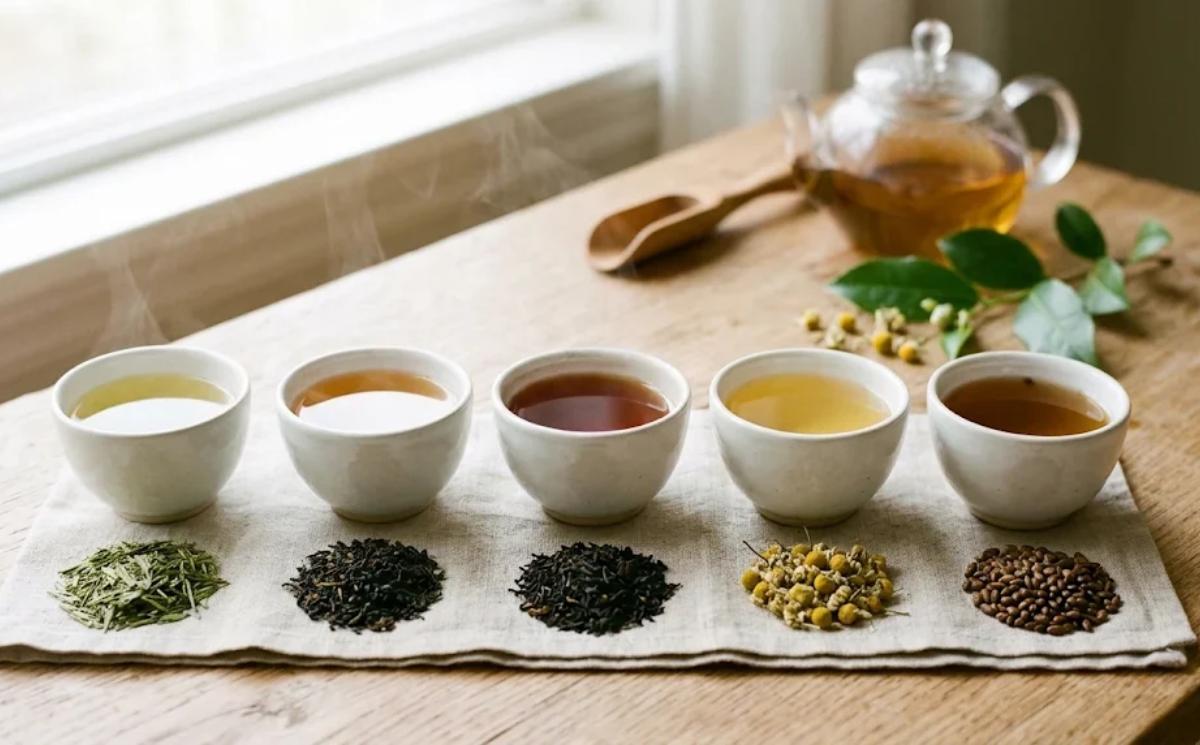
Walk into any tea aisle and you'll see green, black, white, oolong, herbal, barley, chamomile, matcha and more, each with its own health claims. So what is the healthiest tea to drink? Is green tea really the best? And does it matter whether the tea is organic? The honest answer is that there is no single "healthiest" tea. Green tea and other teas from the tea plant (Camellia sinensis) have the most research behind them, herbal and grain teas offer different benefits, and the best choice is the one you will enjoy regularly, unsweetened, in sensible amounts. This guide compares the main types, explains what the evidence does and doesn't show, and flags who should take extra care.
Quick Answer
Green tea is the most commonly recommended "healthiest" tea because it has the most research and is rich in catechins such as EGCG, but black, white and oolong tea are also good choices, and herbal teas can add variety. Research links regular tea drinking with potential benefits, but studies are mostly observational and results are mixed, so tea is best seen as a healthy habit, not a treatment. Drink it unsweetened, watch the caffeine, and talk to your doctor if you're pregnant, have a health condition or take medication.
Healthiest Teas at a Glance
|
Tea |
Source |
What it's known for |
Caffeine |
Good to know |
|
Green tea |
Tea plant |
Catechins (EGCG), the most studied |
Moderate |
Light, grassy; avoid over-steeping |
|
Matcha |
Tea plant (whole powdered leaf) |
Concentrated green tea compounds |
Higher |
You drink the whole leaf, so quality matters |
|
Black tea |
Tea plant |
Flavonoids (theaflavins) |
Moderate to higher |
Bold; common as an everyday tea |
|
White tea |
Tea plant |
Lightly processed |
Lower to moderate |
Delicate flavor |
|
Oolong tea |
Tea plant |
Between green and black |
Moderate |
Complex flavor |
|
Herbal teas (chamomile, mint, ginger, etc.) |
Herbs, flowers, roots |
Varies by herb |
Usually none |
Not from the tea plant; evidence varies |
|
Barley, corn and grain teas |
Roasted grains |
Caffeine-free, nutty |
None |
See our barley tea guide |
(Caffeine levels vary by brand, leaf and brewing, so treat these as general comparisons.)
What Does the Research Say About Tea and Health?
Harvard Health's overview of tea research (which we could only read in summary) describes tea as a source of plant compounds such as flavonoids, and notes that many studies link regular tea drinking to benefits for heart health and other outcomes, while pointing out that much of the research is observational and results are not always consistent. In plain terms:
- Tea may be good for you, but studies mostly show associations, not proof that tea causes the benefit.
- Preparation matters. Adding lots of sugar, syrups or milk-based creamers changes the picture.
- Dose and type vary between studies, so there is no exact "healthy dose".
We recommend reading your own doctor's advice if you want tea for a health condition.
The Main Types of Tea
Green tea
Made from unfermented leaves. It is the most researched tea because of its catechins, especially EGCG. It is often what people mean by "the healthiest tea". Brew with water that is hot but not boiling and avoid steeping too long to limit bitterness.
Matcha
Matcha is powdered green tea, so you consume the whole leaf. It has more caffeine per serving than steeped green tea. Because you drink the leaf, choose a trusted, well-sourced product.
Black tea
Fully oxidized, with a robust flavor. It contains flavonoids, though in a different form than green tea. It is the most common tea in many homes and works well with a splash of milk.
White tea
Lightly processed from young leaves and buds, with a delicate flavor and generally lower caffeine.
Oolong tea
Partially oxidized, between green and black. Many people enjoy its complex taste.
Herbal teas
Herbal teas, or tisanes, aren't made from the tea plant, so they don't have the same compounds as green or black tea. Each herb is different:
- Chamomile is a popular choice for evenings.
- Peppermint and ginger are commonly used after meals.
- Others such as hibiscus, rooibos and lemon balm have their own profiles.
Evidence for herbal teas is generally more limited, and some herbs interact with medicines, so check with your doctor if you take medication. See also bitter melon tea for blood sugar, where we explain that evidence is limited, and our guide to herbs for a healthy immune system.
Barley and grain teas
Roasted barley and corn teas are caffeine-free and popular in East Asia. See health benefits of barley tea and roasted barley tea. Browse organic tea and organic sun-dried tea.
So, Which Is the Healthiest?
- If you want the most researched option: green tea.
- If you want a robust everyday cup: black tea.
- If you want something gentle or caffeine-free: herbal or grain tea.
- If you want variety: rotate several types, for example with organic tea variety packs.
The best habit is a plain, unsweetened cup you enjoy and drink regularly.
Does Organic Matter?
Organic tea is grown under certified organic standards, which restrict most synthetic pesticides and fertilizers. It doesn't change the tea's basic type, and there isn't strong evidence that it's more nutritious. Some drinkers choose it because tea leaves are brewed unwashed. Read our comparison of normal tea vs organic tea and our earlier post on organic tea benefits.
How to Make Your Tea Healthier
- Skip the sugar, or use a little. Bottled and bubble teas can be high in sugar.
- Use quality leaves and store them airtight, away from light and moisture.
- Don't over-brew. Follow the pack's time and temperature.
- Watch the caffeine later in the day if you're sensitive.
- Don't rely on tea for medical problems. See a doctor.
Who Should Be Careful?
- Caffeine sensitivity, anxiety, sleep problems or heart rhythm issues: choose decaf or herbal, and limit amounts.
- Pregnancy and breastfeeding: talk to your doctor about caffeine and herbal teas.
- Medications: tea and herbs can interact with some medicines, including blood thinners. Ask your doctor or pharmacist.
- Iron deficiency: tea can reduce iron absorption from food when drunk with meals, so ask your doctor if this applies to you.
- Children: avoid caffeinated tea, and ask a pediatrician about herbal teas.
This is general information, not medical advice.


